What plumbers charge in Lewisburg
Lewisburg’s housing stock, with 88.1% of homes built before 1980 (U.S. Census Bureau, ACS 2024), means that pipe repairs here often involve old cast iron or galvanized lines. In practical terms, the material and age of your pipes set both the risk and the price. Most homeowners in Lewisburg live in single-family homes, and repeated repairs indicate you’re not just unlucky—you’re on the classic path to full repiping. If you’re getting quoted above-average prices, it’s often due to access: tight basements and finished walls make everything cost more to do right.
It’s also important to know that each job has two prices: you pay a premium if you need an emergency fix—nights, weekends, or when water is actively running everywhere. If you can wait for a scheduled visit, you save. That’s the first fork for your wallet. Below are typical ranges for this area, shaped by material, access, and whether you need a crew right now or next week.
| Service |
Scope |
Emergency rate |
Standard rate |
| Emergency repair — burst pipe |
locate, open, repair section, restore service |
$550–$1,100 |
$325–$1,100 |
| Water heater replacement (gas, 40–50 gal) |
remove old, install, test, haul away |
$1,750–$2,600 |
$1,100–$2,600 |
| Drain cleaning — main line |
augering or hydro-jet, camera if needed |
$350–$800 |
$200–$500 |
| Sewer line spot repair |
excavate or reline a failed section |
$1,850–$11,000 |
$1,850–$11,000 |
| Whole-house repipe |
replace supply lines throughout, patch and finish |
|
$3,200–$7,800 |
| Water service line replacement |
street to house, excavation and restoration |
|
$5,100–$11,000 |
Estimates for a typical Lewisburg home. Access difficulty and pipe material move these figures more than anything else.
Spot repairs or whole-house repipe?
In Lewisburg, the decision between a spot fix and a whole-house repipe is clear if you know what to watch for. If you’ve had two or more leaks on the same pipe material in three years, that’s a failing system, not a streak of bad luck—patching once or twice makes sense, but at that point, investing in a repipe is a better use of your money. The telltale signs include falling pressure throughout the house, not just one fixture; rusty or discolored water when you first turn on a faucet; obvious corrosion on exposed joints; and a pattern of pinhole leaks.
In Lewisburg Borough’s older homes, original galvanized supply lines and cast iron drains almost always mean you’ll be considering repipe or drain replacement sooner than you think. If you’re weighing copper against PEX, know that PEX is quicker to install and easier on the budget, but copper remains the long-haul choice if you want peace of mind. Either way, remember: the plumbing cost is often just the start—restoring drywall or original plaster after the pipes go in can rival the plumbing labor. In vintage houses, especially with plaster or lath walls, you’ll want a realistic quote on wall repair before pulling the trigger on a full repipe.
| Situation |
Recommendation |
Cost |
Reasoning |
| One leak, accessible, modern pipe |
Spot repair |
$325–$1,100 |
Modern materials hold up; fix and monitor |
| Two or more leaks in 3 years |
Partial repipe |
$3,200–$5,200 |
Multiple failures mean underlying decay |
| Galvanized supply, pressure loss |
Full repipe |
$3,200–$7,800 |
Galvanized pipes fail from the inside first |
| Polybutylene anywhere in the house |
Full repipe |
$3,200–$7,800 |
Known failure risk; insurance often requires replacement |
| Cast iron drain with root intrusion |
Camera, then reline or replace |
$1,850–$11,000 |
Old drains split or collapse, especially with roots |
| Suspected lead service line |
Test, then replace the lateral |
$5,100–$11,000 |
Health risk plus likely insurance mandate |
Choosing a water heater in Lewisburg
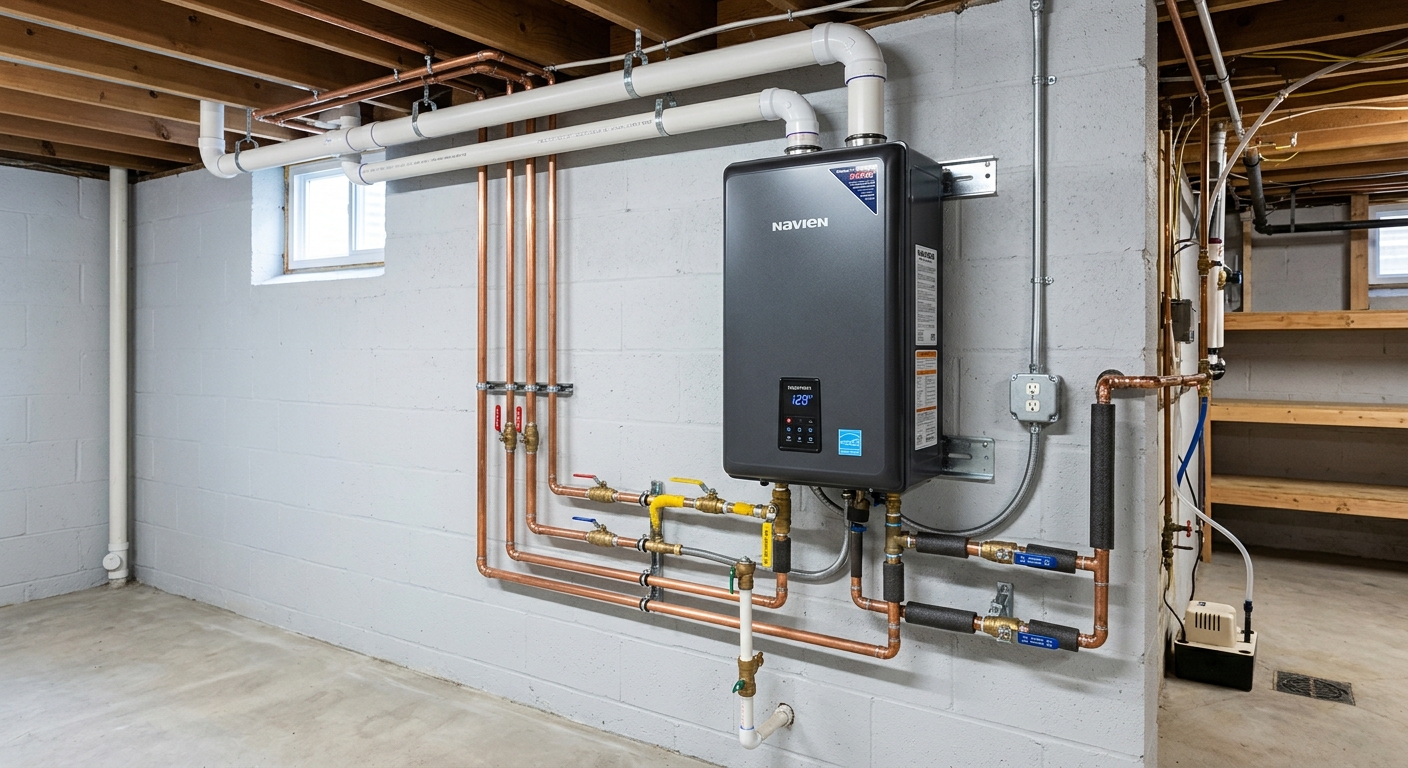
Lewisburg’s mix of older homes and tight basements shapes your best choices for water heaters. The standard gas or electric tank heater is cheapest up front and remains the default for most homes—expect a lifespan of 8–15 years. Tank units lose some heat constantly (standby losses), but they’re simple and easy to replace. Tankless gas models promise endless hot water, but require special venting and often a larger gas line, both of which push the average install toward the top end of the typical $1,750–$2,600 price. That surprise is common in older homes. Heat pump water heaters cost about the same to install as a tankless, run for pennies, but need a good volume of air and throw out cold air and noise—something to consider in Lewisburg’s typical chilly basements. Always size for the first-hour rating, not just gallons—if your morning showers overlap or you run the dishwasher first-thing, you’ll hit the tank’s limit fast if undersized.
Modern code requires an expansion tank if you have a check valve or pressure regulator, and a pan with a drain is good insurance in finished basements. Most water heater failures in Lewisburg are tank leaks, not minor control issues; a leaker is usually a replacement, not a repair. Permits are required in Lewisburg Borough for replacements, so factor in that step.
| Type |
Installed cost |
Service life |
Operating cost |
Best when |
| Gas tank, 40–50 gal |
$1,100–$2,600 |
8–12 yrs |
moderate |
Existing gas line, basement or utility space |
| Electric tank, 40–50 gal |
$1,100–$1,750 |
10–15 yrs |
high |
Limited gas access, simple install |
| Gas tankless |
$1,750–$2,600 |
18–25 yrs |
low-moderate |
Major remodel, high demand, space saver |
| Heat pump water heater |
$1,750–$2,600 |
13–15 yrs |
lowest |
Large, unfinished basement, all electric home |
Frozen pipes in Lewisburg: prevention and thaw
Lewisburg gets long, harsh winters, with frost reaching down 36 inches and design temperatures as low as 2°F. Those numbers, plus Pennsylvania’s highest snow loads, mean pipes in unheated spaces freeze hard—and fast—if left exposed. Pipes burst not at the frozen section but between the ice plug and a closed faucet, where pressure spikes as the ice expands. The result is often a break in a spot you can’t see, flooding a basement or crawlspace before you know it.
Common vulnerable spots in Lewisburg homes: pipes in exterior walls, unheated crawlspaces, uninsulated garages, hose bibs left charged, and attic runs in older homes. For prevention: insulate every exposed length, especially anywhere near a foundation or wall; add heat tape (on a thermostat) for the most at-risk spots; let a faucet run a slow trickle on nights below 10°F; open sink cabinet doors to share heat; and always shut down and drain exterior spigots ahead of the first hard freeze. Don’t use an open flame, propane torch, or space heater to thaw—a hair dryer, heating pad, or portable heater are safer, slower choices.
After a pipe bursts, a simple repair can quickly reach $550–$1,100 for emergency response. Spending a fraction of that on insulation and annual checks pays back fast, especially in Lewisburg’s older, often under-insulated homes.
Emergency rates versus scheduled work in Lewisburg
In Lewisburg, calling a plumber after hours comes with a real price jump. The emergency premium covers not just overtime labor and the expense of after-hours dispatch, but also a quick-diagnosis fee—by definition, the crew is rolling on short notice, with little prep, often in the dark or severe weather. That means a trip charge on top of the labor rate, all pushed upward by urgency.
Here’s what’s truly an emergency in Lewisburg: active flooding from a burst pipe, no water service at all, sewage backing up into the home, or the smell of gas—anything causing immediate damage or with a safety risk. Everything else (a steady drip, a single clogged drain, a leaking toilet tank) is inconvenient but not catastrophic and can wait until business hours to avoid a premium. The difference is real money: that same pipe leak fixed as an emergency might run $550–$1,100, versus $325–$1,100 for a scheduled standard repair.
Everyone in Lewisburg should know where their water main shutoff is—often found where the water line enters the basement near the front foundation wall. Turn clockwise to close, and use fixture shutoffs under sinks or behind the toilet for isolated problems. With the main off and the leak stopped, you’ve just downgraded an emergency to routine work.
Who is allowed to do plumbing work in Pennsylvania
In Pennsylvania, plumbing is not licensed at the state level. That surprises many homeowners, but it’s enforced municipally—so every city, borough, or township sets its own requirements. In Lewisburg Borough, plumbing permits are issued and enforced by the Lewisburg Borough Codes Office. A plumber licensed in Philadelphia or Pittsburgh could have no credential at all in Lewisburg or the surrounding townships. The right question for any contractor is: “Are you permitted to work by the code office in this municipality?” Not all are.
In Lewisburg Borough, you’ll need a plumbing permit for any new or replacement water or sewer service line. However, minor fixture repairs like a faucet or trap swap inside your home usually don’t need one. Inspections are handled by the local codes office. For any contract over $500, Pennsylvania’s Home Improvement Consumer Protection Act requires a written, signed contract with a 3-business-day right of cancellation, and contractors must register with the Pennsylvania Office of Attorney General—verify their number at hic.attorneygeneral.gov. Always ask for proof of workers’ compensation and check it through WCAIS (wcais.pa.gov) before hiring; coverage is required for all employers working in Pennsylvania.
How to find a good plumber in Lewisburg
In Lewisburg, start by verifying that your plumber is registered for home improvements at hic.attorneygeneral.gov and is actually permitted to work in your borough or township—municipal licensing is the rule here. Plumbing work in Lewisburg Borough requires municipal permits and inspections, and the contractor’s insurance should name your address. Always check for proof of workers’ compensation at wcais.pa.gov. In this thin rural market, many companies charge a travel fee outside the main Lewisburg–Mifflinburg corridor, so compare quotes carefully.
Key checks before agreeing to any major job:
- PA Attorney General HIC registration is current and listed
- Allowed to pull permits in your municipality (ask the codes office to confirm)
- Shows insurance naming your property
- Proof of workers’ compensation on file with WCAIS
- Runs own crew, not just a dispatcher
- Emergency call pricing is explained, not hidden
- Provides a written contract on any job over $500
- Gives references for recent jobs in your township or borough
- Knows when a plumbing permit is (and isn’t) required locally
- Explains restoration costs for walls, floors, and landscaping
- Documents condition with before/after camera footage or pressure tests for big repairs
- Discloses if work may disturb lead paint in pre-1978 homes
Red flags: anyone quoting a big repipe or sewer job in Lewisburg without camera evidence or a pressure test to justify the scope. In a rural market, be wary of companies without a local presence—travel surcharges without local support are common.
Frequently asked questions — plumbing in Lewisburg
Repair or replace a leaking water heater?
A leaking water heater in Lewisburg almost always means replacement, not repair. The homes here tend to have electric or gas tank heaters installed in tight basements, and tank leaks are rarely worth fixing—by the time you see water, the inside of the tank has already failed from rust. While a failed valve or fitting can be fixed for the cost of a minor repair ($325–$1,100), a wet tank signals the end of its life. Replacement with a new 40–50 gallon gas or electric model typically falls between $1,100–$2,600. Trying to patch a tank risks a repeat leak and possible water damage. Always shut off the power or gas and water supply before calling your plumber, as this can prevent a minor leak from becoming major property damage.
Does Pennsylvania license plumbers at the state level?
No, Pennsylvania does not license plumbers at the state level. Every municipality—like Lewisburg Borough—sets its own permit and inspection requirements. This means a plumber working legally in Lewisburg may not be authorized in a neighboring township, and vice versa. Always confirm that your plumber is allowed to pull a permit and work in your specific municipality. While HIC registration with the Pennsylvania Office of Attorney General is mandatory for jobs over $500, this registration is for consumer protection, not technical licensing. Check with your local codes office for permit requirements and be sure the person you hire can legally do the work where you live.
Should I leave a faucet dripping in cold weather?
In Lewisburg, with our long winters and a frost depth of 36 inches, it’s smart to let a faucet drip very slowly during extreme cold—especially if you have pipes in exterior walls or unheated basements. That drip keeps water moving, making it much less likely the line will freeze and burst. When a frozen pipe thaws, the burst occurs between the ice plug and the next closed valve, often flooding a finished basement or crawlspace. One simple drip can help you avoid a rush call for a burst repair, which can cost $550–$1,100 as an emergency. But match this tactic to the risk: prioritize pipes at the outer edges of the house or running through unheated areas, not those deep inside the home.
How much does sewer line repair cost in Lewisburg?
Sewer line spot repair in Lewisburg costs between $1,850–$11,000, with most projects landing near the middle of that range. The price hinges on several factors unique to our area: whether access requires street excavation (common in older Lewisburg neighborhoods), the presence of original cast iron sewer lines prone to root intrusion, and how close your home is to main routes like U.S. 15 or PA 45. Technicians will usually run a camera to confirm the problem before quoting a final price. Always ask to see footage and get a detailed scope of work. Older homes in the borough are especially likely to face higher restoration costs for sidewalks, landscaping, or plaster repairs after the pipe is fixed.
Am I responsible for the water line under the street?
In central Union County, including Lewisburg, you are responsible for the water service line from your house to the curb stop—typically located near the edge of your property, though Lewisburg Borough commonly places these close to the property line. If the section under the street fails, that replacement is usually on the homeowner, not the water company. Expect to pay $5,100–$11,000 depending on the length and whether street or sidewalk restoration is needed. Always ask for a clear scope and a restoration plan before signing a contract for water service line replacement.
Why do all my drains drain slowly at once?
When every drain in your Lewisburg home is slow, the issue is usually beyond a single fixture: it’s a blockage in the main sewer line or a collapsed cast iron pipe, which is common in houses built before 1980. It can also happen when roots have intruded at an offset joint. The quick fix—a drain auger, hydro-jet, or camera—typically costs $200–$500 for a main line cleaning if scheduled, but severe cases needing excavation or relining push the bill much higher. If you have a septic system, check the tank’s level first—backups from a full or failing tank will affect every drain. Don’t keep running water if you start to see backup; that risks sewage entering the home.
How much does a water heater replacement cost in Lewisburg?
Water heater replacement in Lewisburg runs from $1,100–$2,600 for a standard 40–50 gallon gas or electric unit, including removal of the old tank, installation, and haul-away. Tankless and heat pump models cost more to install, partly due to the need for venting and electric or gas line upgrades in older homes. Most failures are tank leaks, and with nearly nine out of ten homes built before 1980 in Lewisburg Borough, expect installation logistics—tight stairs, plaster walls, or pipe routing—to play a big part in your final price. Make sure a drain pan and expansion tank are quoted in the total if local code requires them.
Do older Lewisburg homes have galvanized pipes?
Yes, many homes in Lewisburg, especially those built before 1960, still have original galvanized water lines. This pipe material fails from the inside out, with rust narrowing the bore and reducing pressure. If you’ve noticed rusty or brown water on first draw or persistent pressure loss throughout your house—not just at one faucet—it’s a sign that the pipes may be due for replacement. The cost to replace all the supply lines in a typical home here is usually $3,200–$7,800. Delaying this work risks leaks in places you can’t see and potential water damage to plaster walls and original floors.
What do I do about a burst pipe right now?
If a pipe bursts in your Lewisburg home, the most important step is to shut off your water main, which is often in the basement near where the line enters the house at the front wall. Turn the valve clockwise until it stops. Open a couple of faucets to drain the line and reduce pressure. Next, turn off electricity to the affected area if water is near outlets or appliances, then call a plumber. Most emergency burst pipe repairs in Lewisburg cost $550–$1,100 when immediate service is needed, but you can cut that price by stopping the flow and waiting for regular business hours. Quick action minimizes water damage, which often ends up costing more than the plumbing fix itself.