Plumbing costs in Shillington — 2026
Shillington’s older homes—96.7% were built before 1980 (U.S. Census Bureau, ACS 2024)—present plumbing challenges that directly affect what you pay for work on your house. In this part of Berks County, large stretches of 1940–1970 housing mean plumbing jobs often deal with aging cast iron drains and galvanized supply lines. These pipe materials age into trouble: galvanized steel clogs or leaks with corrosion, and cast iron drains rust through and collapse. As a homeowner here, you’re not paying the same flat rates found in new developments; construction era and access are what drive your actual bill.
The biggest variable isn’t just material or labor—it’s whether your call is an emergency. The same repair costs far more at 11 pm with water pouring onto the basement floor than during business hours. For Shillington’s 1,543 owner-occupied homes (U.S. Census Bureau, ACS 2024), plan higher for urgent jobs, especially in tight crawlspaces or homes where the original piping still lurks behind drywall. Below, you’ll see local ranges for the most common jobs.
| Service |
Scope |
Emergency rate |
Standard rate |
| Emergency repair — burst pipe |
locate, open, repair section, restore service |
$600–$1,200 |
$350–$1,200 |
| Water heater replacement (gas, 40–50 gal) |
remove old, install, test, haul away |
$1,850–$2,800 |
$1,200–$2,800 |
| Drain cleaning — main line |
augering or hydro-jet, camera if needed |
$350–$800 |
$200–$500 |
| Sewer line spot repair |
excavate or reline a failed section |
$1,950–$12,000 |
$1,950–$12,000 |
| Whole-house repipe |
replace supply lines throughout, patch and finish |
|
$3,400–$8,400 |
| Water service line replacement |
street to house, excavation and restoration |
|
$5,400–$12,000 |
Estimates for a typical Shillington home. Access difficulty and pipe material move these figures more than anything else.
What's in the water here
If your home in Shillington is served by the Reading Area Water Authority, your drinking water comes from a public utility that publishes annual water quality reports upon request, showing results for everything from lead to chlorine. Most homeowners here are on municipal water—which means you don’t have to guess about contaminants, but you still have the same headaches from hardness. Mineral scale from hard water tends to shorten the life of water heaters and can clog up showerheads and faucets, especially in older plumbing systems with narrow supply pipes. It is common to see scale build-up inside tanks and fixtures in this region.
Aggressive water can also eat through copper supply lines, causing pinhole leaks over time—sometimes surprising, but real in homes with original 1950s or 1960s copper. If a plumber recommends a softener, know that the math for payback is rarely on the homeowner’s side unless you have truly hard water at your tap and want spotless fixtures. Whole-house filtration makes sense if your water utility’s report shows something of concern, but point-of-use filtration (like a kitchen filter) typically covers most needs unless you’re worried about every faucet. Any treatment system should solve a specific problem; the “one-filter-fits-all” upsell is rarely needed. Out in the Berks County townships on private wells, you’re responsible for water testing—no utility does it for you. Get a lab test before buying any equipment.
Finding a hidden leak in Shillington
Suspect a leak? Start with the no-cost meter test: turn off every faucet and appliance, then check your water meter (in or near your basement). If you see the small triangle or dial spinning, that means water is leaving the system—usually a hidden supply-side leak, not a dripping faucet. This is the easiest way to confirm if you even need a plumber.
When you need professional help, expect these main methods: Acoustic listening equipment can pick up leaks behind walls or below floors—usually costing about what you’d pay for basic leak detection. Thermal imaging cameras help find hot water leaks in walls by showing unusual temperature patterns. For especially stealthy leaks, tracer gas (nitrogen/hydrogen mix) is injected and tracked—more involved, useful for concrete slab homes, and toward the higher end of diagnostic costs. The key to a fair job: good plumbers locate, then open up, not the other way around. Plumbers should not cut into walls or floors until the leak is traced to within a few inches. For slab leaks, careful detection is essential; for leaks inside wall cavities, listening and cameras get you there. Irrigation or yard line leaks are typically confirmed with pressure testing and sometimes camera scoping—don’t settle for guesswork here.
How to find a good plumber in Shillington
In Shillington, it’s not enough to ask, “Are you licensed?”—you need credentials recognized by your specific municipality. For contracts above $500, contractors must have Home Improvement Contractor (HIC) registration via the Pennsylvania Office of Attorney General. Confirm it at hic.attorneygeneral.gov. In this region, cities like Reading require a separate, local plumbing trade license for permit work. Always ask for an insurance certificate with your address and verify workers' compensation coverage at wcais.pa.gov for the company and the job location. Some plumbers run their own crews, others subcontract—ask directly. You want clear, up-front emergency pricing in this dense market: Shillington’s proximity to Reading means you can find both well-rated companies and out-of-market outfits; be clear who you’re hiring.
- Check HIC registration online
- Confirm local trade license for your town or borough
- Ask for proof of insurance with your property named
- Verify workers' compensation at the official state registry
- Request a written contract for any job over $500
- Demand up-front disclosure of emergency rates
- Ask if the company uses its own employees or subs
- See previous job references and local addresses
- Get scope-of-work details before work starts
- Request camera footage for drain, sewer, or repipe job
- Require a pressure test or clear diagnostic justification before large jobs
- Check EPA Lead RRP credentials for pre-1978 work
Red flags: No written contract for jobs over $500, vague pricing, or any sewer or repipe job without camera evidence or pressure testing—these are real issues in an area with moderate demand and a mix of long-established and fly-by-night operators.
Verifying a Shillington plumber's credentials
Pennsylvania does not issue a statewide plumbing license. In Berks County, all trade licensing for plumbing is municipal or, in many townships, not required at all. The City of Reading is the only place locally where a municipal plumbing license is granted and enforced—contractors pulling permits there must be specifically registered. If you live in Shillington, ask every plumber: “Are you licensed to do plumbing here?” and do not assume anything about licenses issued in another town. This municipal system means you must get local, not just state-level, proof.
Permits are needed in Reading for any plumbing system installation, alteration, or replacement beyond simply swapping a fixture—think new pipes behind walls, moving a fixture, or replacing a water heater with a model that isn’t like-for-like. In many Berks County townships, simple faucet or showerhead swaps don’t need permits, and you may see tradespeople working without one for basic fixture replacement. Still, when in doubt, ask your municipal code office what’s required for your specific project. Always demand written contracts for any job over $500, and check the contractor’s workers’ compensation coverage at wcais.pa.gov. Insurance policies should name your address and cover the active business—be wary of generic paperwork. And, if your project involves disturbing any pre-1978 painted surfaces, check for EPA Lead RRP compliance at certifiedrenovatorsearch.epa.gov.
What construction era means for your pipes
Nearly every home in Shillington was built before 1980, so your plumbing system is standing on several decades of material science—and its weak points are predictable. Supply piping from the 1940s–1970s era is likely galvanized steel or early copper. Galvanized frequently clogs or fails at threaded joints, while old copper can suffer pinholes if the water is especially aggressive. Drain lines are commonly cast iron, and those from mid-century may rust through or collapse, especially beneath the slab or in damp basements. The main sewer line is often original vitrified clay tile, making it prone to tree root invasion and joint separation. If your water service hasn’t been replaced, it could be lead, a known issue in Reading and adjacent areas. With this age of housing, you’re rarely on your first water heater—many are on their third or fourth replacement, and improper venting and sediment are recurring problems. The upside? Once you replace lines or appliances, you’re good for decades with modern materials. But don’t expect to hold off forever—early warning signs from pipe era tell you what jobs are coming next.
Winter pipe failures in south-central Pennsylvania
In Shillington, winter brings real risk for pipes with a 30-inch frost depth and a 12 °F winter design temp. The culprit for bursts isn’t usually the freeze spot itself; when water freezes, it expands and plugs the pipe, but the actual rupture usually pops up between the ice plug and the next closed valve as pressure rises. This is why water may flood a basement or wall—nowhere near where ice formed. Pipe failures are common in exterior walls (especially bathrooms and kitchens with cabinets along outside), unheated crawlspaces, attached garages, and anywhere pipes run through attics or overhangs. Hose bibs and laundry room plumbing in garages are among the most frequent sites for winter breaks.
Prevention comes down to a few basic steps: Pipe insulation is cheapest, paying for itself many times over compared to a $600–$1,200 repair bill. Heat tape works for pipes that absolutely cannot be rerouted or better insulated. Letting a faucet farthest from the main trickle in a hard freeze keeps water moving, preventing freezing. Opening cabinet doors at sinks against exterior walls helps by keeping heat circulating to the pipes. The biggest must-do is draining and shutting off outside hose bibs before the first hard frost. If something does freeze, your safest thawing bets are a hair dryer, heat gun (on low), or a wrap-around heating pad—never an open flame, which can set old framing alight much faster than you think. Preventing a freeze-up is always less costly than calling for a burst pipe repair at midnight in January.
Frequently asked questions — plumbing in Shillington
How much does sewer line repair cost in Shillington?
Sewer line spot repair in Shillington typically ranges from $1,950–$12,000 depending on the depth, length, and accessibility of the damaged section. Most repairs for a single break or collapse come in near the middle of this range, but costs can quickly jump if the work involves a deep dig in a tight backyard, working around old trees, or addressing a fully collapsed section. Homes built before 1980 usually have vitrified clay tile or cast iron laterals, which are prone to failures and require specialized equipment and permits for repair. Always ask for camera footage to verify the problem before approving any work—replacing pipe “blind” is a big risk in Berks County’s older neighborhoods.
Repair or replace a leaking water heater?
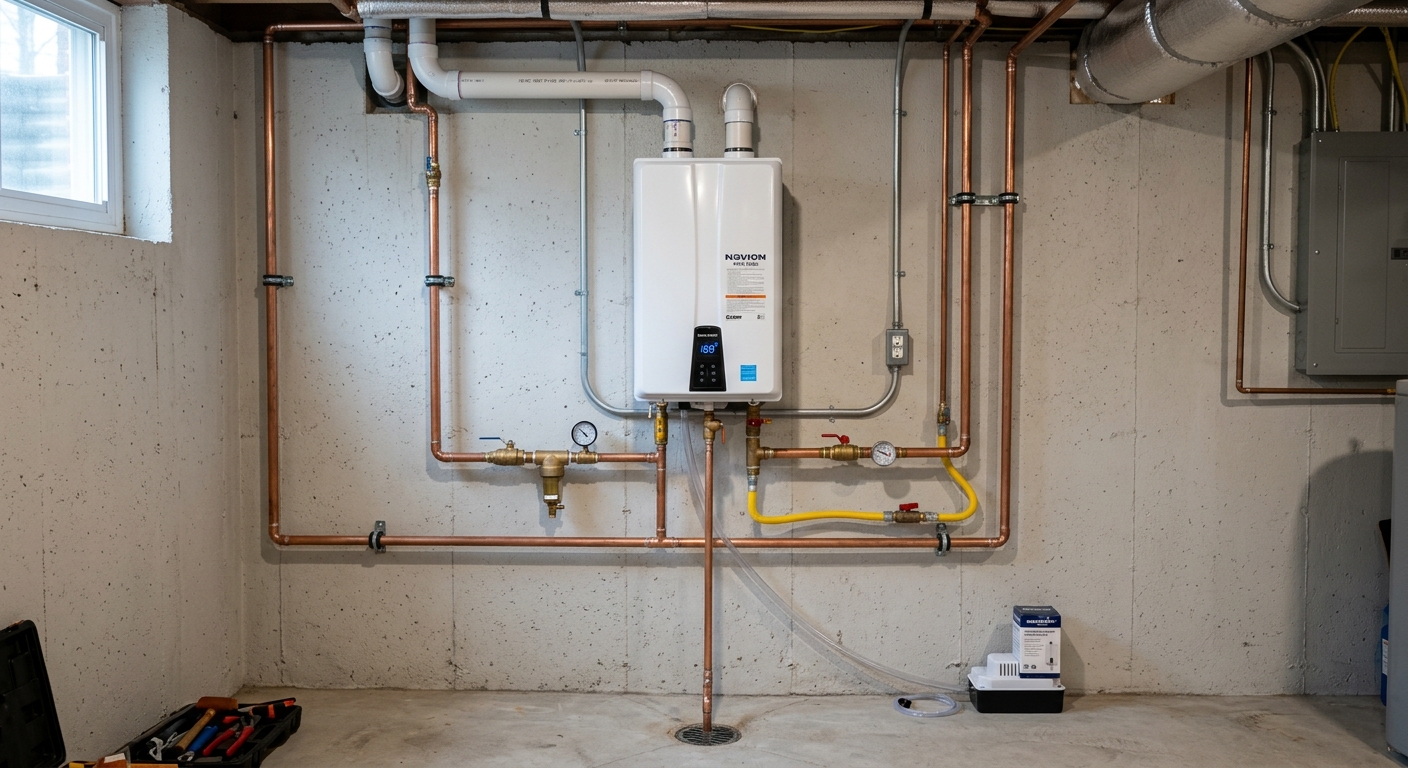
In Shillington, the decision comes down to age and severity. A minor leak at the drain valve or a loose connection can sometimes be repaired for less than a new heater, but if your tank itself is leaking—especially common after 10+ years of Berks County water exposure—it's time for replacement. Most houses here burn through a 40–50-gallon water heater every 8 to 12 years, partly due to scale from hard water. Replacing a typical gas water heater will run $1,200–$2,800. If your heater is old and leaking from the bottom, don't sink money into repairs—the tank has failed and replacement is the only safe choice.
What do I do if a pipe is frozen but not burst?
If you discover a frozen pipe in your Shillington home, turn off the water supply at the main shutoff (usually in the basement), but leave faucets open. Then gently thaw the pipe with a hair dryer, an electric heating pad, or a space heater pointed at the vulnerable section—never use an open flame or torch, especially in old wood-framed homes common in Berks County. Once thawed, restore slow water flow through the pipe to prevent refreezing. If you notice leaks or suspect a crack after thawing, call a plumber before turning water fully back on—a burst can lead to a major emergency repair costing $600–$1,200 if it goes bad.
How much does a water heater replacement cost in Shillington?
The total for replacing a standard 40–50-gallon gas water heater in Shillington runs between $1,200–$2,800. Homes built before 1980 often require permit fees, haul-away, new venting, and sometimes minor code upgrades. If your heater is in a tight basement or needs re-piping, expect costs toward the upper end. Be wary of quotes that sound much lower than this range—they often don’t include haul-away or permit, which are both common requirements in Berks County.
Does Pennsylvania license plumbers at the state level?
No—Pennsylvania does not issue a statewide plumbing license. In Shillington and surrounding Berks County communities, plumbing licensing is strictly handled by municipalities. For example, the City of Reading administers its own plumbing license for any permitted work. If a plumber tells you they have a “state license,” ask for proof they are allowed to work in your specific municipality and verify their Home Improvement Contractor (HIC) registration. This is critical—without a local license, a plumber can’t pull required permits, delaying jobs or exposing you to uninspected work. Always confirm before agreeing to any job over $500.
Who pays to replace a lead service line in Shillington?
In most of Shillington, as in much of Reading, replacement of a lead water service line is considered the homeowner’s responsibility from the building to the curb or property line. The City of Reading is running a long-term replacement program, but unless you are included in a special utility project, you will likely need to pay for replacement—which typically costs $5,400–$12,000 depending on access and length. Always verify which part of the line is your liability and ask your water supplier about funding or assistance programs before hiring a contractor.
How do I shut off the water to my house?
In a typical Shillington home, the main shutoff is in the basement, near where the water service line enters (often at the front wall). Turn the valve handle clockwise (“righty-tighty”) until it stops. Always know the location before an emergency—and test it once a year in case the valve corrodes, which is common with older galvanized or lead services in this area. Shutting off water promptly when you see a leak can keep repairs closer to the lower end, around $350, instead of needing emergency service with significant damage.
How hard is the water in Shillington?
Most Shillington homes on Reading Area Water Authority supply will have moderately hard water, which creates mineral scale in water heaters and fixtures. While hardness varies by source, Berks County’s mineral content leads to regular scale buildup, especially in older galvanized supply piping. Over time, hard water can shorten the lifespan of appliances and fixtures, occasionally justifying a softener. However, the up-front cost of installation and ongoing salt expense means most owners do not see dramatic savings. Instead, focus on regular water heater maintenance and point-of-use filters where needed—costly whole-house systems aren’t always worth it.
Is my water line lead?
In Shillington and the greater Reading area, many homes built before 1950—sometimes even up to 1970—may have a lead service line from the curb to the home. If your incoming line is a dull gray metal that scratches bright, bends easily, and is unthreaded at joints, there’s a fair chance it’s lead. The City of Reading is replacing many known lead lines, but Berns County homes outside the city limits are usually the homeowner’s responsibility. If you suspect yours is lead, contact the Reading Area Water Authority and consider a plumber’s assessment. Replacement averages $5,400–$12,000, but removing lead from your drinking water line is worth it for long-term health—especially in homes with children.