Canonsburg plumbing prices by job type — 2026
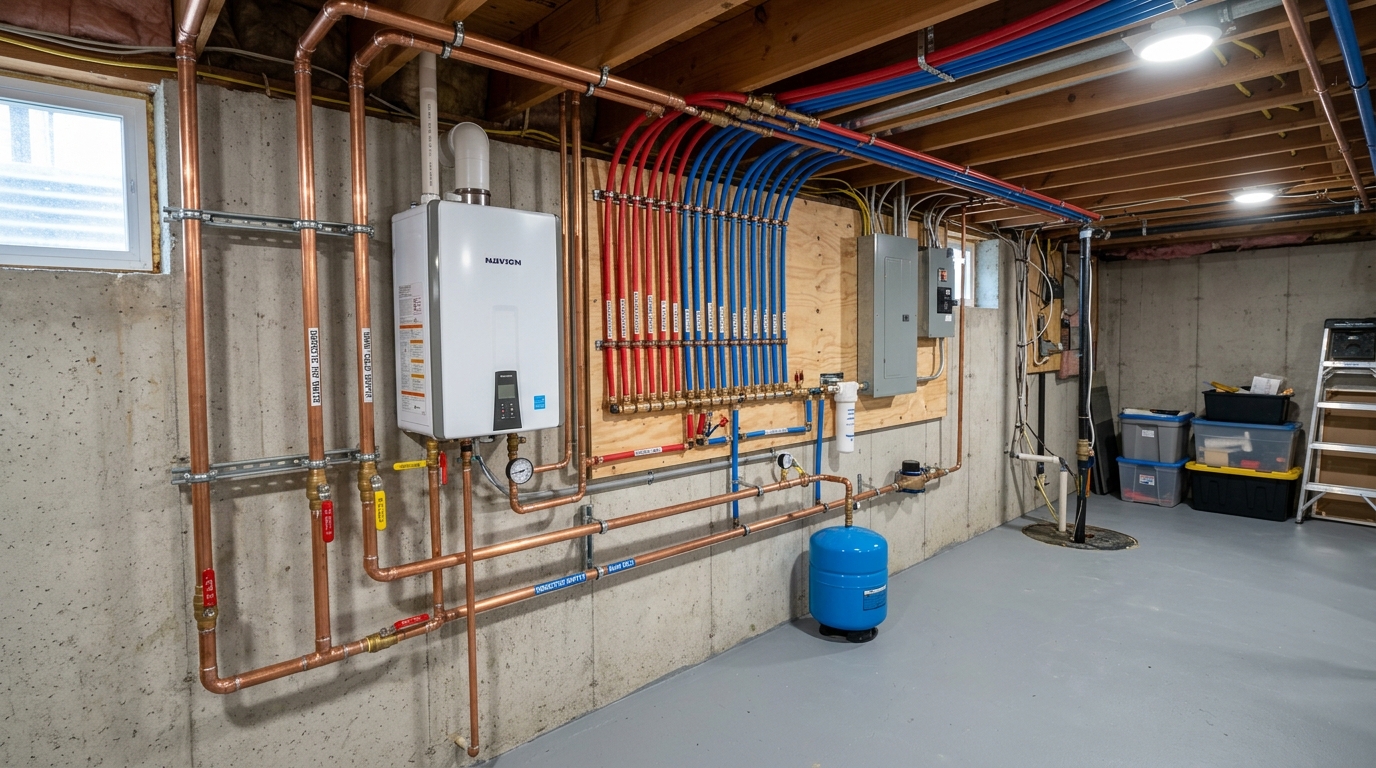
Canonsburg’s plumbing costs track closely with the rest of Washington County’s southern suburbs, with key price differences driven by home age and whether you call during an emergency. Most home plumbing jobs run lower when scheduled ahead, but if a burst pipe or leak forces a late-night call, expect to pay toward the upper end. Keep in mind, 75.1% of local homes were built before 1980 (U.S. Census Bureau, ACS 2024), which means older pipe materials like copper or even galvanized steel, often leading to more invasive repairs or full repipes. In neighborhoods like Peters Township, rapid development from the 1980s to 2000s led to widespread copper-to-PEX repiping jobs over the past decade. If your home falls in either the older or 1980s–2000s era, your piping and its problems will likely fit one of those categories—and so will your repair bill.
The same work can be quoted at two very different prices, depending on whether you’re dealing with a water geyser at midnight or booking a standard appointment. An emergency call typically means a higher minimum, particularly after-hours or on weekends, while planned work brings the rate down and lets you plan around it.
| Service |
Scope |
Emergency rate |
Standard rate |
| Emergency repair — burst pipe |
locate, open, repair section, restore service |
$600–$1,200 |
$350–$1,200 |
| Water heater replacement (gas, 40–50 gal) |
remove old, install, test, haul away |
$1,900–$2,800 |
$1,200–$2,800 |
| Drain cleaning — main line |
augering or hydro-jet, camera if needed |
$350–$800 |
$200–$500 |
| Sewer line spot repair |
excavate or reline a failed section |
$2,000–$12,000 |
$2,000–$12,000 |
| Whole-house repipe |
replace supply lines throughout, patch and finish |
$4,800–$8,400 |
$3,500–$8,400 |
| Water service line replacement |
street to house, excavation and restoration |
$7,800–$12,000 |
$5,400–$12,000 |
Estimates for a typical Canonsburg home. Access difficulty and pipe material move these figures more than anything else.
Detection methods and what they cost
Before calling a plumber, there’s a simple leak check you can do yourself: turn off all faucets, shut off appliances, and check your water meter—if the dial is still moving, you’ve got a supply side leak somewhere on your property, and this test costs nothing. If that check confirms a leak but you can’t spot the source, that’s when it’s time to bring in a pro.
Professional leak detection in Canonsburg usually starts with acoustic listening devices to “hear” water moving through walls or under floors. This runs $200–$400 for a site visit. For elusive leaks, especially in older homes with pipe runs hidden deep in plaster or concrete, thermal imaging cameras can pinpoint damp spots for around $250–$500 per visit. For slab leaks—pipes buried under basements—specialists may use tracer gas (inert, harmless) and sensitive sniffers to find tiny escapes, typically from $350–$800. Hidden irrigation or yard leaks get located with electronic line locators—expect $350–$800 for a thorough sweep.
In every case, a reputable Canonsburg plumber will use these tools before suggesting any demo. If a contractor wants to start opening walls or cutting floors before using these methods, that’s backwards for local practice—always locate first, open second. With Canonsburg’s many pre-1980 homes, tracing a hidden leak efficiently can mean saving hundreds in unnecessary wall or floor repairs.
Licensing and permits for plumbing work in Canonsburg
Pennsylvania does not issue a statewide plumbing license—each municipality may set its own licensing requirements. This means a plumber licensed to work in Washington or Peters Township might not be permitted in Canonsburg unless they have met the local rules. The right question isn’t “are you licensed?” but “are you licensed to work in Canonsburg Borough?”
For projects in the City of Washington, interior plumbing alterations involving new fixtures often require a city plumbing permit, and the local Code Enforcement Office performs inspections. In the surrounding townships, like North Strabane, replacing an existing faucet usually does not trigger a plumbing permit. It’s always best to check with your township’s code office before starting any work that involves pipe changes, fixture moves, or water heaters to avoid permit headaches.
While there’s no Pennsylvania plumbing license to verify, contractors must register as Home Improvement Contractors (HIC) with the Pennsylvania Office of Attorney General for any contract over $500. You can verify a plumber’s HIC registration at hic.attorneygeneral.gov. Workers’ compensation coverage is mandatory for all employers and can be checked via the state’s WCAIS system (wcais.pa.gov), giving peace of mind that any worker in your home is covered. For jobs over $500, the Home Improvement Consumer Protection Act requires a written contract, and you cannot legally be asked to waive your insurance deductible.
Camera inspection, relining and replacement
In most Canonsburg homes, you own the sewer lateral from your foundation right up to where it connects with the township main, which often means your responsibility runs all the way into the street. This is a big deal if a break or backup happens—repairs or replacements are on the homeowner, not the borough or utility company.
Initial symptoms range from one slow drain (likely a branch issue) to every drain gurgling or sewage backing up at the lowest fixture—which points to a main line problem. Before anyone quotes digging or relining your Canonsburg lateral, insist on a camera inspection: this confirms the problem (roots infiltrating old clay tile, collapsed or offset joints from ground movement, or “bellies” where wastewater pools). Experienced plumbers will share the video so you see the damage yourself.
Open-cut replacement involves trenching and is still common where access is straightforward. In high-value landscaping or driveways, trenchless relining offers a way to reline the existing pipe internally with minimal disruption. Costs fluctuate, but access and depth—along with pipe material—are the biggest price movers.
For rural Washington County townships relying on septic, an entirely different set of problems emerges: tank pumping should happen every 3–4 years; drainfield failure (with soggy yards and chronic backup) means a more costly soil remediation, not pipe repair. Whatever the scenario, never accept a sewer quote in Canonsburg without seeing the camera footage—the footage is your receipt for a real problem.
What a plumbing quote should contain
Plumbing quotes in Canonsburg typically come in two forms: flat rate and time-and-materials. Flat rate means you see the total up front and the plumber eats any overages; it’s built-in risk for the contractor and certainty for you. Time-and-materials can be cheaper if the job goes smoothly, but as complexity increases, so does the bill. Neither is wrong—it’s not knowing which you’ve agreed to that burns homeowners here.
Look for a diagnostic fee, usually $50–$150, which might apply to your balance if you proceed. The quote should spell out exactly what’s being opened, repaired, and restored—don’t accept a price with no scope. Restoration (patching drywall, painting, floor finishes) is often where things get left vague, and you want it written in or out. All permits should be included and priced. Another detail many miss is the difference between labor and manufacturer’s parts warranty; they’re not the same, and repairs on labor after one year can wipe out any “savings.” If the bid is for emergency work, make sure after-hours rates are clear up front—nothing is more frustrating than a surprise charge.
| Line item |
What to look for |
Red flag if… |
| Billing model |
flat rate or hourly, stated up front |
unstated |
| Diagnostic fee |
amount, and whether it credits |
vague |
| Scope |
what is opened, repaired and restored |
price with no scope |
| Restoration |
drywall and finish explicitly in or out |
silent |
| Permit |
included and priced |
'not needed' |
| Parts |
brand and model for fixtures |
'standard fixture' |
| Warranty |
labour period stated separately |
parts only |
Frozen pipes in Canonsburg: prevention and thaw
Winters in Canonsburg can be harsh, with a frost depth of 36 inches and a winter design temperature of just 8°F. The combination of severe freeze-thaw and older housing stock creates a perfect storm for frozen pipes, especially in exterior walls, unheated crawlspaces, garages, or anywhere lines sit above the frost line. The most common cause isn’t the ice itself—it’s the pressure that builds between a frozen plug and a closed faucet, bursting pipes away from the frozen spot itself.
To prevent this headache, insulate all visible lines (especially in basements and garages), install heat tape on vulnerable stretches, and let a trickle run during extreme cold snaps. Opening cabinet doors under sinks along outside walls helps keep pipes warmer, and every Canonsburg homeowner should shut off and drain outdoor spigots before the first hard freeze. For vacated homes, winterizing (draining the entire system) is worth every penny.
If pipes do freeze, never use an open flame—stick with a hair dryer, a space heater pointed at the trouble spot, or warm towels. If you open a faucet and just a trickle comes out, leave it open to reduce pressure as things thaw. If you return to a burst, you’ll be looking at $600–$1,200 for a typical emergency repair in Canonsburg—preventing the freeze in the first place is always cheaper than a 2 a.m. flood clean-up in January.
How to find a good plumber in Canonsburg
With moderate market density in Washington County, most reputable plumbers in Canonsburg will have some local references. Always start by verifying HIC registration for any contract over $500 at hic.attorneygeneral.gov. For plumbing, remember that licensing in Pennsylvania is handled municipally, so check with the Canonsburg Borough office that your contractor is approved to work there—not just any city. Confirm insurance certificates that name your property directly, and for any company sending a crew, check their workers’ compensation stands up using WCAIS (wcais.pa.gov). Ask whether the company uses its own employees or subs out work, which matters for accountability. Any plumber should spell out emergency callout charges before dispatch.
- Verify HIC registration with the Pennsylvania Office of Attorney General
- Check that the contractor is licensed for Canonsburg or your specific township
- Request an insurance certificate naming your property address
- Use WCAIS to confirm active workers’ comp if a crew is coming
- Ask if work is done by the business’s own plumbers or subcontractors
- Require a written bid with scope and parts listed
- Don’t accept emergency rates without disclosure before dispatch
- For sewer or repipe jobs, require camera footage or pressure test results
- Ask if permit costs are included on jobs beyond simple repairs
- Avoid contractors dodging written contracts for jobs over $500
- Check if labor and parts warranties are provided separately
- Look for specific local references, not just general reviews
If a plumber wants to quote replumbing your whole home or digging up your sewer line with no camera footage and no pressure or location test, that’s a red flag. In Canonsburg, these jobs are too big and disruptive to trust to guesses or “I’ve seen this before” claims.
Frequently asked questions — plumbing in Canonsburg
Should I wait until business hours to call?
If water is pouring out, ceilings are bulging, or toilets are backing up from every fixture, don’t wait—those emergencies get worse by the hour in Canonsburg, especially with our freeze-thaw cycles damaging pipes overnight. You’ll pay an emergency rate, typically $600–$1,200 for a burst pipe, but it’s less than the cost of ruined floors or collapsed drywall that can happen if you delay. If it’s a slow drip you can shut off at the fixture valve or a running toilet, waiting for business hours can save you money and gives you time to vet contractors. Just be honest about the risk: in older Canonsburg homes, hidden leaks can rapidly escalate to something much bigger if left alone overnight, particularly in winter.
Should I repipe my Canonsburg home or keep repairing?
In Canonsburg, the decision often comes down to the age of your system. If your home was built before the 1980s (which describes 75.1% of our housing), it likely has aging copper or even galvanized pipes. A series of leaks, reduced water pressure, stains, and recurring pinholes mean the system is reaching the end of life. The cost of a whole-house repipe here runs $3,500–$8,400, typically in the middle of this range. If you’re facing more than one major repair a year, these patch jobs add up fast. Homes built during the 1980s–2000s suburban boom are usually better candidates for isolated repairs unless you spot PEX degradation or major valve issues throughout.
Who owns the sewer lateral, me or the city?
In Canonsburg and most of Washington County, the property owner is responsible for the sewer lateral from the house all the way to its connection at the main—sometimes including the section that runs beneath public sidewalks or even the street. The city or township maintains only the main line. If you have a backup or line failure, all repairs, which can run from $2,000–$12,000 for spot repair or even more for a full replacement, are your responsibility. That’s why camera inspections are so heavily stressed before any quote—without proper footage, it’s easy to pay more than needed or get the wrong repair entirely.
Can I do my own plumbing work in Canonsburg?
Pennsylvania has no statewide plumbing license, but each municipality around Canonsburg sets its own permit and inspection rules. In most Washington County townships, straightforward repairs—like swapping a faucet—can be DIY with no permit. But if you’re adding fixtures or making alterations to the plumbing system, you almost always need a permit and inspection (especially in the City of Washington). Always check first, as unpermitted work can cause serious legal issues if you sell or experience a defect. Professional repairs run $350–$1,200 for emergency leaks, a common call after unsuccessful DIY, where you risk water damage and more cost than hiring out.
How do I prevent frozen pipes in Canonsburg?
Canonsburg’s winter design temp of 8°F and a 36-inch frost depth mean pipes in exterior walls, unheated crawlspaces, or garages are vulnerable. Prevention is simple and cheap compared to thawing or repair: insulate exposed lines, use heat tape for trouble spots, let a small trickle run during deep freezes, and open cabinet doors under sinks on exterior walls. Don’t forget to shut off and drain outdoor faucets before the first hard freeze. If you miss these steps and a pipe bursts during a cold snap, you’re looking at $600–$1,200 for an emergency repair. Prevention steps cost a fraction and avoid major messes.
What does emergency plumbing cost in Canonsburg?
The cost varies by job, but for emergency callouts—such as burst pipes, major leaks, or sewer backups—most Canonsburg plumbers charge between $600–$1,200 for the initial repair. This covers locating, accessing, and restoring service for a single section. Fixing bigger problems like a main sewer line backup or sectional failure can run into the thousands, depending on depth and pipe condition, so it’s always best to act fast on any water out-of-place before it gets worse. Standard business hour rates are often several hundred dollars less, so call during regular hours if you can safely wait.
How much does a water heater replacement cost in Canonsburg?
For a typical Canonsburg home, replacing a 40–50 gallon gas water heater with hauling away the old unit runs $1,200–$2,800. Emergency replacements (such as late-night tank failures and leaks) come in closer to the upper end, with labor and after-hours fees. For planned replacements, you’ll have a wider choice of models and simpler scheduling, often at the lower range. Older homes may need minor plumbing upgrades or vent changes, so ask for an all-inclusive quote, not just the heater cost. Never authorize a replacement sight-unseen if you have an older or complex installation.
How hard is the water in Canonsburg?
Most Canonsburg homes receive water from Pennsylvania American Water’s Washington District, which sources water from surface supplies with a moderate mineral content. You may notice scale build-up on fixtures and inside water heaters, especially in older plumbing. It’s not extreme, but over years, hard water can shorten the life of tanks and some appliances. If your water heater is more than eight years old, you might see reduced efficiency or louder operation—one reason why replacements often run $1,200–$2,800. Simple in-line filters or a basic water softener are all most Canonsburg homeowners need to address typical hardness.
What does discoloured water on first draw mean?
Discolored water when you first open a tap in Canonsburg—especially after a few hours of sitting—usually means sediment or rust buildup inside your pipes, not a water utility issue. Older homes with galvanized or aging copper pipes are most likely to show yellow, brown, or metallic-tasting water at first draw. Flushing the tap for 30 seconds often clears it, but if it persists, it may point to deteriorating pipe material. Replacing supply lines in a typical Canonsburg house runs $3,500–$8,400, though most don’t need a full repipe for mild discoloration alone. Keep an eye out for stains in sinks or laundry, which can indicate it’s time to inspect further.