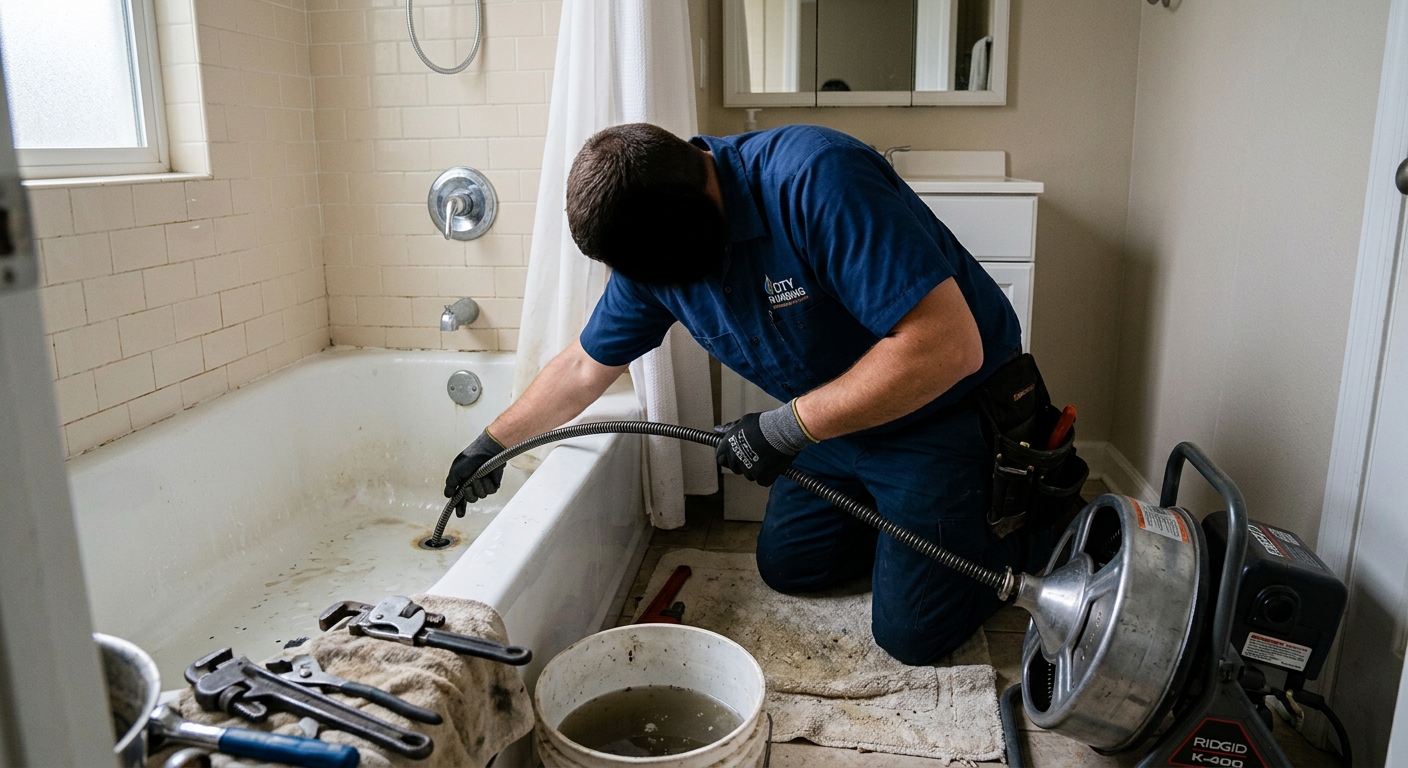
What plumbers charge in West View
In West View, plumbing costs are closely tied to the age and construction of the area’s homes. With 84.9% of local homes built before 1980 and a 70.2% homeownership rate (U.S. Census Bureau, ACS 2024), it’s no surprise that the most common jobs often relate to old galvanized and cast-iron plumbing. The era your house was built usually predicts the kind of pipes it has, and those materials determine what’s most likely to fail—affecting both the urgency and the price.
The same plumbing job carries two different price tags depending on whether you call it in as an emergency. A burst pipe at 2 a.m. costs more not just because of labor but because plumbers shuffle their entire day to get you water. Standard, scheduled work lets you shop, plan and avoid that premium.
| Service |
Scope |
Emergency rate |
Standard rate |
| Emergency repair — burst pipe |
locate, open, repair section, restore service |
$600–$1,200 |
$350–$1,200 |
| Water heater replacement (gas, 40–50 gal) |
remove old, install, test, haul away |
$1,850–$2,700 |
$1,200–$2,700 |
| Drain cleaning — main line |
augering or hydro-jet, camera if needed |
$350–$800 |
$200–$500 |
| Sewer line spot repair |
excavate or reline a failed section |
$1,950–$12,000 |
$1,950–$12,000 |
| Whole-house repipe |
replace supply lines throughout, patch and finish |
|
$3,400–$8,300 |
| Water service line replacement |
street to house, excavation and restoration |
|
$5,400–$12,000 |
Estimates for a typical West View home. Access difficulty and pipe material move these figures more than anything else.
Galvanized, copper, PEX, cast iron
Much of the plumbing in West View, like throughout central Allegheny County, traces directly to building booms between 1900 and 1950—an era that gave us miles of galvanized steel and cast-iron pipe. Galvanized supply lines look grey and dull, are magnetic, and have threaded joints. They corrode from the inside out, gradually restricting your water flow and eventually leaking. Copper, which began replacing galvanized in the 1950s, is easily spotted by its reddish-gold color and soldered joints; it lasts decades, but can develop pinholes, especially with aggressive water. PEX (flexible plastic tubing, mostly blue or red) is today’s standard, with compression or crimped brass fittings; it’s quick to install, but can have trouble at fittings if low-quality parts are used. Polybutylene (dull gray or blue plastic, typically with metal crimp rings) was used from the late 1970s to the mid-1990s and is now considered a liability that can fail without warning.
On the drain side, cast iron (heavy, black, and magnetic) typically shows up in older homes from the street main up through the 1970s. These pipes get brittle and may crack or clog with scale after fifty years or so. If you see a thick, orange-brown tile in your main sewer lateral, that’s clay, common before 1980, and it almost always fails at the joints as roots intrude. Newer homes use PVC or ABS, both rigid white or black plastic, with long expected service life but vulnerable to crushing if buried shallow.
| Material |
Typical era |
Failure mode |
Service life |
| Galvanized steel supply |
pre-1960 |
internal corrosion, pressure loss |
40–60 yrs |
| Copper supply |
1950s–present |
pinhole leaks, joint failure |
50–70 yrs |
| Polybutylene supply |
late 1970s–1995 |
fitting failure, sudden bursts |
unreliable |
| PEX supply |
2000s–present |
fitting or UV degradation |
40–50 yrs |
| Cast iron drain |
pre-1975 |
corrosion, cracking, scale |
50–75 yrs |
| Clay tile sewer lateral |
pre-1980 |
root intrusion at joints, offset |
50–60 yrs |
| PVC / ABS drain |
1970s–present |
joint separation, crushing |
50+ yrs |
Finding a hidden leak in West View
If you suspect a hidden leak in your West View home, the first step is free and simple: do the meter test. Shut off all water-using fixtures inside and outside. Then, watch your water meter—if the small leak indicator or dial is still moving, you have a supply-side leak somewhere in the house or up to the curb.
Professional plumbers use a set of diagnostic tools to zero in on leaks without opening walls blindly. Acoustic listening helps pinpoint leaks in copper or steel by amplifying the sound of the spray. Thermal imaging works best for hot-water leaks, especially in finished walls or under slabs. For the trickiest cases, like a slab leak or hidden irrigation line, tracer gas (usually helium or hydrogen) is injected into the pipe, and a sensor “sniffs” for its escape. Expect detection fees in the $350–$1,200 range for specialized leak location—separate from the cost to open and fix.
Don’t let anyone start tearing out drywall or floors before positively locating the leak. Good plumbers only cut when they know exactly where; guesswork is a red flag. Whether it’s a leak in a wall, under a slab, or outdoors, getting the location right saves money and avoids unnecessary mess.
What urgency costs you
The single biggest swing in what you pay a plumber in West View comes down to urgency. Emergency work brings a premium—often double—because of after-hours dispatch, overtime labor, and the need to re-prioritize jobs on the spot. The first hour will usually cost the most, with higher trip charges and a rush to diagnose under pressure.
If you’re facing water pouring through a ceiling or sewage backing up into a tub, you’re in true emergency territory. Also, if your home has no water at all or there’s any suspicion of a gas leak, call immediately and expect to pay emergency rates—$600–$1,200 for a burst pipe repair. But if you’re looking at a slow drip, a running toilet, or one slow drain, you can usually wait for a standard appointment and pay much less—$350–$1,200 for that same repair during regular hours.
Convert panic into planning: learn where your main water shutoff is—it’s typically at the point where the main line enters your basement or crawlspace. If the leak is at a sink or toilet, each fixture usually has its own shutoff valve. Turning these off can turn a crisis into a manageable project, giving you time to choose who to call and what schedule to demand. Knowing this single step often saves hundreds and a ruined evening.
Verifying a West View plumber's credentials
In Pennsylvania, plumbing isn’t licensed statewide—the state leaves it to each municipality. For West View jobs, especially those that tie into Pittsburgh’s system, licensing and inspection run through the Allegheny County Health Department’s Plumbing Program. That means “licensed” is a local term; a plumber can be certified in Pittsburgh or another township, but that paper means nothing unless it’s recognized where the work’s being done. Always ask, “Are you licensed here in West View?” not just “Are you licensed?”
A permit from the Allegheny County Health Department is required for any new or altered plumbing systems—not just full remodels but for major re-pipes, new fixtures that change drains, or added bathrooms. Minor swap-outs like a faucet or showerhead most often go unpermitted, which is accepted local practice.
Any contract over $500 needs a written agreement and a registered Home Improvement Contractor (HIC) number, found at hic.attorneygeneral.gov. For every working plumber, insurance and workers’ compensation are mandatory—always ask for proof and verify workers’ comp through WCAIS (wcais.pa.gov). If your home was built before 1978, federal rules on lead-safe work apply, and you can check a contractor’s lead certification at certifiedrenovatorsearch.epa.gov. Don’t assume—ask and confirm.
Plumbing systems in West View homes
Most West View homes were built before 1980, as are 84.9% of houses in this area (U.S. Census Bureau, ACS 2024). That era puts you square in the crosshairs for galvanized steel or early copper water lines, often joined to cast iron drains and sometimes clay tile on the sewer lateral. It’s likely that some supply pipes are already on their second or third material if prior owners kept up with replacements.
Older homes often feature evidence of patchwork repairs—newer copper or PEX tubing in visible runs and relic galvanized tucked behind walls. Water heaters are more likely to be on their second or third unit. If your main drain hasn’t been replaced, it’s probably cast iron or clay tile, prone to scale build-up or root intrusion. The service line out to the street could be lead, galvanized, or newer copper, especially in neighborhoods where replacement has been underway.
While newer homes in outlying parts of Allegheny County might show polybutylene (especially if built in the late 1970s to mid-1990s), West View’s age makes PEX rare except in remodels. Knowing your house’s era gives you a pretty good guess at what’s lurking behind the walls—and what your next repair bill might look like.
Service line material and drinking water in West View
In West View, your water is supplied by the Pittsburgh Water and Sewer Authority, which manages lines up to your curb. The line from the street main to your home typically splits responsibility: the utility owns one section, and as the homeowner, you’re on the hook for your own lateral. Recent years have seen a clear push to replace thousands of lead service lines in Allegheny County.
Here’s what matters: many replacement programs only cover the utility section, leaving you responsible for your part. You can identify your service line at the entry point in your basement—scratch it with a key; if it’s soft, dull gray, and non-magnetic, it’s likely lead. Galvanized pipe is harder and magnetic. Copper is pinkish, and PEX or plastic is obviously non-metallic. Use a magnet as a quick double-check.
If only part of a lead line is replaced, it can increase lead levels in water temporarily after work by disturbing accumulated scale. That’s why it’s important to know what material you’re dealing with before and after any replacement. Contact the Pittsburgh Water and Sewer Authority directly to check their inventory and see if your address is slated for work, and ask specifically if the homeowner side is included. Never assume replacement has already occurred—many alleys and streets will not be done for years.
Full water service line replacements typically run $5,400–$12,000, depending on length and access. If you need to repipe inside as well, expect $3,400–$8,300.
Frequently asked questions — plumbing in West View
Can I do my own plumbing work in West View?
Most small plumbing repairs—like changing a faucet or replacing a toilet—are commonly done by homeowners in West View without a permit or inspection. Officially, any changes that alter your plumbing system (new drains, re-routing supply lines, or adding fixtures) require a permit from the Allegheny County Health Department and must be performed by someone licensed for the local jurisdiction. If you tackle something complex on your own, you risk trouble with insurance or future home sales. For jobs over $500, even as a homeowner, you’re bound by Pennsylvania’s Home Improvement Consumer Protection Act for contracts and rights. When in doubt, call the Health Department or ask a locally licensed plumber—uninspected “DIY” work on major systems can end up costing far more if you need to fix code violations later.
Am I responsible for the water line under the street?
In West View, your responsibility starts at the property line—usually where the water service line enters your basement or crawlspace. From that point outward to the main, the Pittsburgh Water and Sewer Authority is typically in charge, but it isn’t always a neat split; sometimes the “homeowner side” includes every bit under your yard right up to the curb. Generally, repairs or replacement of your lateral (the line from house to curb) are your cost, not the utility’s—replacements can cost between $5,400–$12,000 depending on distance and ground conditions. Check with the Authority for any available assistance. It’s always wise to clarify exactly where your liability ends before hiring a contractor or agreeing to service.
What does repiping a house cost in West View?
A whole-house repipe in West View, replacing all aging supply lines in an older home, typically costs between $3,400–$8,300, depending mostly on access and finished surfaces. Most West View homes were built before 1980, so many are due for this work—especially if you have a mix of galvanized and copper visible. Costs go up with plaster walls, finished basements, or tight workspaces. A straightforward ranch house is less than a two-story brick with little access. If you suspect leaks in more than one place or notice very low pressure everywhere, a repipe can be a long-term fix that saves repeated patch jobs. Always get a detailed scope in writing before you commit.
Is a tankless water heater worth it in West View?
While tankless water heaters are more energy-efficient and provide endless hot water, they aren’t always the right choice in older West View homes—especially those with original pipe sizes or circulation quirks. A typical standard tank replacement runs $1,200–$2,700, while a tankless system can cost much more, especially if you need to upgrade gas or venting. If you’re on the fence, consider your family’s hot water usage, how long you plan to stay in the home, and your willingness to maintain a more complex appliance. The savings might take years to pay back, but for some, the convenience is worth it.
Should I leave a faucet dripping in cold weather?
In West View’s deep winter, with a design temp of 8°F and common freeze-thaw cycles, leaving a slow drip at the coldest fixture can keep pipes from freezing—especially those that run through unheated spaces. While it’s not a permanent fix, it’s a good stopgap if you can’t get vulnerable pipes re-routed or insulated before a cold snap. If you forget and a pipe bursts, emergency repairs might run $600–$1,200. Long-term, better to insulate or add heat tape than rely on this old trick, but for cold nights, it’s a practical (if slightly wasteful) form of insurance.
What do I do if sewage is backing up?
If you have sewage backing up into a fixture in your West View home, stop using water immediately, open windows for ventilation, and call a licensed plumber. This is a true emergency—beyond health risks, water damage can escalate fast. Emergency main line snaking or jetting typically costs $350–$800. For older homes with clay tile or cast-iron sewers, root intrusion and scale are common causes. Don’t pour chemicals or try to force the blockage downstream—these can make things worse or damage old pipe. A professional will first clear the main line, then run a camera to check for breaks or root balls, giving you a plan for permanent repair if needed.
What causes low water pressure in West View homes?
Chronic low water pressure is almost always a sign of old galvanized steel supply pipes—still found in much of the local housing stock. As these pipes corrode from the inside, the opening narrows and cuts flow throughout the house, often showing up as weak showers or slow fills. A full repipe, in the $3,400–$8,300 range for a typical West View house, is usually the lasting cure. At the faucet level, blocked aerators or failing pressure regulators can be the culprit, but if the problem is everywhere—and your neighbors don’t have it—you’re likely due for updated plumbing.
Do older West View homes have galvanized pipes?
Yes, many older homes in West View, especially those built before 1960, still run on sections of galvanized steel pipe. You’ll know them by their dull gray appearance, threaded connections, and strong magnetic pull. Over time, these pipes corrode internally, restricting water pressure and increasing the risk of leaks. If you’re dealing with repeated repairs or orange-stained water, a repipe is in your near future and typically costs $3,400–$8,300. If you suspect galvanized lines, have a plumber verify and give an honest estimate—they’ll know the local material patterns as well as anyone.
How much does sewer line repair cost in West View?
Spot repairs to the main sewer line in West View typically fall between $1,950–$12,000. The wide range covers both a simple dig-and-repair of a single root-intruded clay joint and a full interior reline under a driveway or street section. Older homes tend to have either clay tile or cast-iron pipes, both well past their original service lives. If your main backs up repeatedly or a camera shows a break, plan for more than just a cleaning—a structural repair is usually the lasting fix. Always ask for a proof camera before and after, both for peace of mind and future home sales.