What plumbers charge in West Cocalico
West Cocalico homeowners should expect plumbing costs that reflect the area’s era of housing and the urgent nature of many calls. With 57.9% of homes built before 1980 and a homeownership rate of 93.4% (U.S. Census Bureau, ACS 2024), many properties face the challenges that come with aging piping. This drives demand for services like galvanized-to-copper or PEX repiping, especially since Lancaster city’s stock of pre‑1940 row and twin homes sets the pattern for older plumbing systems in the region. In plumbing, the decade your house was built predicts what pipes are in your walls—and those materials decide both failure type and the repair bill.
One key detail: emergency calls—whether from a burst pipe on a freezing morning or a leaking water heater—always cost more than scheduled work, no matter the job or material. For the same repair, expect to pay a premium if you’re calling after-hours, during a holiday, or when water is soaking your basement carpet.
| Service |
Scope |
Emergency rate |
Standard rate |
| Emergency repair — burst pipe |
locate, open, repair section, restore service |
$600–$1,200 |
$350–$1,200 |
| Water heater replacement (gas, 40–50 gal) |
remove old, install, test, haul away |
$1,950–$2,800 |
$1,200–$2,800 |
| Drain cleaning — main line |
augering or hydro-jet, camera if needed |
$350–$800 |
$200–$500 |
| Sewer line spot repair |
excavate or reline a failed section |
$2,000–$12,000 |
$2,000–$12,000 |
| Whole-house repipe |
replace supply lines throughout, patch and finish |
— |
$3,500–$8,600 |
| Water service line replacement |
street to house, excavation and restoration |
— |
$5,600–$12,000 |
Estimates for a typical West Cocalico home. Access difficulty and pipe material move these figures more than anything else.
Choosing a water heater in West Cocalico
When it’s time for a new water heater in West Cocalico, you’ll be choosing between traditional tank, tankless, or a heat pump water heater. Each comes with trade-offs, and the cheapest install doesn’t always win once you factor in lifespan and operating costs.
Tank heaters—gas or electric—are the least expensive upfront and are what most area homes were built with. They’re easy to swap, but lose energy to standby heat. Tankless units give endless hot water, but in this part of Pennsylvania, a gas tankless setup often requires a larger gas line and new venting. That can add a surprise charge, so always confirm if your gas piping and vent are ready before you commit. A heat pump water heater is the lowest to run, but it needs a fair amount of room and makes noise. Placing one in a finished basement can be a mistake since it both cools the air and adds sound.
Sizing by first-hour rating matters more than the tank gallon number; for a household of four in West Cocalico, aim for a first-hour rating of 60–70 gallons. Expansion tanks are a code requirement in nearly every swap now, and a proper drain pan with a floor drain can limit water damage when—not if—the tank eventually springs a leak. The most common failure is the tank rusting out, not the controls.
| Type |
Installed cost |
Service life |
Operating cost |
Best when |
| Gas tank, 40–50 gal |
$1,200–$2,800 |
8–12 yrs |
moderate |
existing gas line, want fastest swap |
| Electric tank, 40–50 gal |
$1,200–$1,950 |
10–15 yrs |
high |
no gas available, lowest upfront cost |
| Gas tankless |
$1,950–$2,800 |
18–25 yrs |
low-moderate |
space is tight, endless hot water matters |
| Heat pump water heater |
$1,950–$2,800 |
13–15 yrs |
lowest |
ample basement space, mild utility rates |
Plumbing systems in West Cocalico homes
In West Cocalico, the majority of homes were built before 1980, so few plumbing systems are truly modern. Supply pipes are often copper or even the last stretches of galvanized steel, while drain lines show up as cast iron or—in ranches and split-levels built in the ‘60s through late ‘70s—sometimes clay tile for the sewer lateral. Water heaters in these homes are rarely original; most are on at least a second replacement. Expect to find PEX upgrades on recent sales, especially if prior owners have prepped for resale or lived through a burst pipe scare.
Newer subdivisions in West Cocalico, with single-family homes predominating, sometimes have builder-grade fixtures from when the home went up, and it’s possible for late ‘70s to early ‘90s homes to have polybutylene piping—a known failure point. Water heaters in these newer homes are usually nearing the end of their first useful life, often right around the 12–15 year mark. “Newer” doesn’t mean “trouble-free”; it means leaks happen at joints and fittings rather than mid-span, and that it’s worth checking for polybutylene before assuming you’re in the clear.
Sewer laterals: the pipe you own and can't see
The sewer lateral is the segment of pipe running from your house to the public sewer main—and in most places, West Cocalico included, the homeowner owns it from the foundation all the way to the street. This is the pipe most folks forget about until they face sewage in the basement. Trouble usually starts quietly: a slow drain here, a gurgle there. When every toilet and tub gurgles or backs up at once, odds are high the mainline is blocked downstream of your house. At that point, camera inspection by a knowledgeable plumber beats guessing. An inspection is fast and gives proof—don’t let anyone dig a trench or sell you a spot repair without showing you the camera footage first.
For homes in rural townships outside Lancaster city, septic systems are common and bring their own set of warnings. Persistent slow drains may mean the tank itself is overdue for pumping, which is typically needed every three years, or that the drainfield is saturated. With public sewer, issues like root intrusion—especially in older clay tile laterals—bellies in the pipe, and offset joints are what we see most. A full replacement now often goes trenchless (lining or pipe-bursting) instead of open-cut. Both methods are effective, but lining is usually less disruptive to landscaping or hard surfaces.
Pipe materials in West Cocalico homes and how they fail
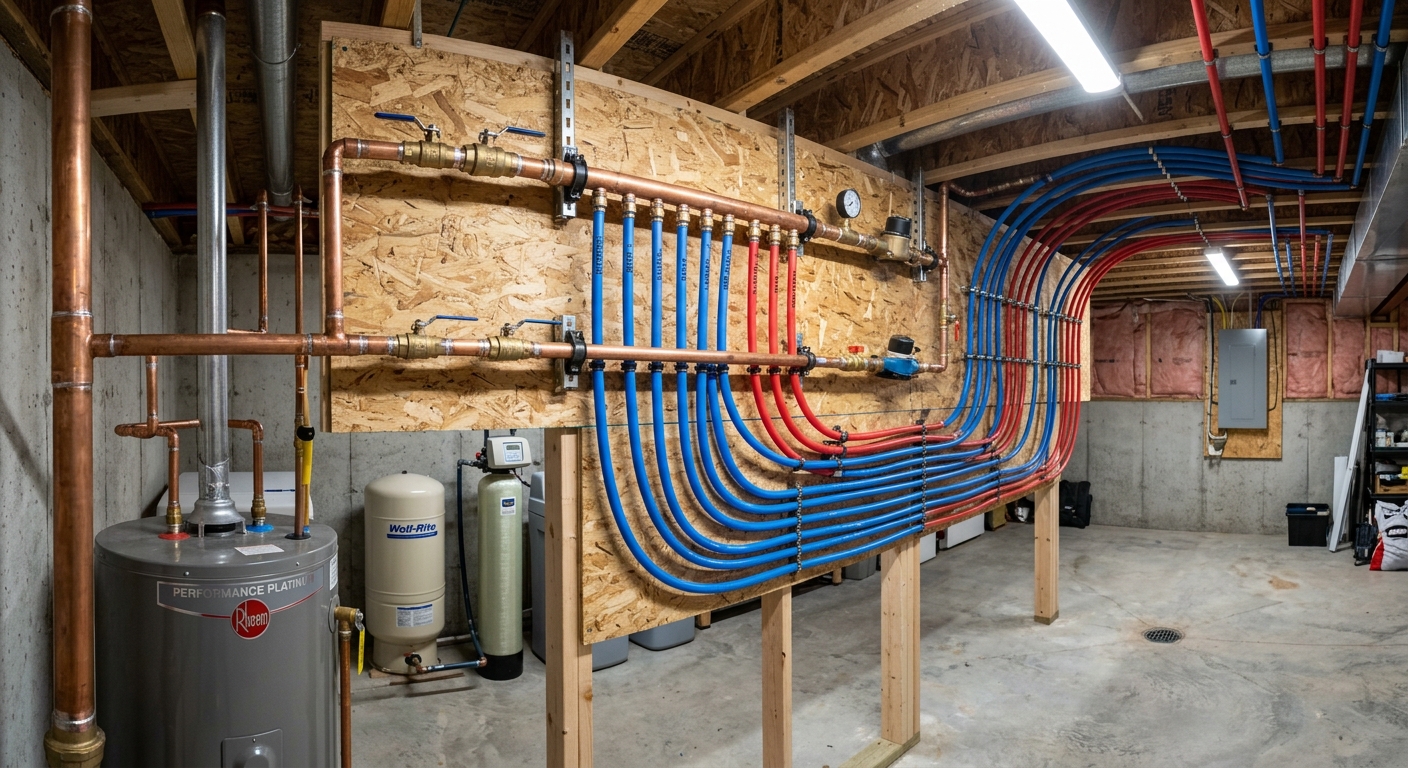
Pipe material tells the story of a home's era—and its future repairs. In Lancaster city and its surrounds, much of the pre‑1940 stock relied on galvanized steel for supply, which roughens and closes up from inside before it ever leaks outright. Since the 1950s, copper has dominated, but even it eventually pinholes in spots, especially if the water chemistry is harsh. Starting in the late 1970s, polybutylene was the cheap, flexible stuff—now uninsurable in many places because it suddenly bursts, typically at fittings. Today’s PEX is reliable, but has its own Achilles’ heel: UV light and low-quality brass fittings. For drains, cast iron was common until about 1975. It usually fails by corrosion and cracking—fifty years on, that time is now. Clay tile sewer laterals are even older and fail at every joint when roots find a way in.
To identify what’s in your own house, find an exposed pipe and do the scratch and magnet test: galvanized is gray and magnetic; copper is bright, reddish, and won't take a magnet; polybutylene is gray/blue plastic; PEX is white, blue or red and bends easily. Cast iron is dark, heavy, and rings if tapped. Knowing your home's era lets you guess how many years are left before a leak or low-flow problem.
| Material |
Typical era |
Failure mode |
Service life |
| Galvanized steel supply |
pre-1960 |
internal corrosion, pressure loss |
40–60 yrs |
| Copper supply |
1950s–present |
pinhole leaks, joint failure |
50–70 yrs |
| Polybutylene supply |
late 1970s–1995 |
fitting failure, sudden bursts |
unreliable |
| PEX supply |
2000s–present |
fitting or UV degradation |
40–50 yrs |
| Cast iron drain |
pre-1975 |
corrosion, cracking, scale |
50–75 yrs |
| Clay tile sewer lateral |
pre-1980 |
root intrusion at joints, offset |
50–60 yrs |
| PVC / ABS drain |
1970s–present |
joint separation, crushing |
50+ yrs |
Lead service lines in West Cocalico
Within Lancaster city, the City of Lancaster Water Bureau supplies most properties and has identified thousands of potential lead service lines. The active multi‑year inventory and replacement program is ongoing, but here’s the catch: the service line runs from the main in the street through to your house, and in most situations, you own the section from the curb inward. The utility may only replace its portion, not the full run, which means part-lead, part-copper installations are common. These partial replacements can actually release more lead into your water for a short period, because disturbing the old pipe flakes scale from the inside.
If you want to check your own line, locate where the pipe enters the foundation. Scratch an area clean: lead is soft, shiny, and nonmagnetic. If it’s lead from curb to house, replacement is the best solution. Cost in West Cocalico is often in the $5,600–$12,000 range, depending on length and restoration. The City of Lancaster Water Bureau keeps a published service line inventory—visit their site or call for your property’s details, and ask what share they cover. If your address isn’t in the city, contact your local municipal authority directly; don’t assume you’re included in the city’s program just because you’re nearby.
Who is allowed to do plumbing work in Pennsylvania
Pennsylvania plumbing licenses are handled at the municipal level, not by the state. There is no Pennsylvania-wide plumbing license or trade board. In practice, that means a plumber with credentials in one municipality—like Lancaster city—holds no automatic right to work in West Cocalico or its townships. If you’re hiring for anything beyond a faucet swap, ask plainly, “Are you licensed to do plumbing here?” For contracts over $500, the plumber also needs Home Improvement Contractor (HIC) registration from the Pennsylvania Office of Attorney General. You can verify this at hic.attorneygeneral.gov.
Permits are required in Lancaster city for any plumbing work that changes, expands, or adds value to a property; minor repairs like faucet or toilet internal part swaps typically don’t need a separate permit. In surrounding townships, each enforces its own rules, usually via a codes or zoning office. Inspections (if required) will be conducted by the municipality, not a state inspector. All employers must carry workers’ compensation—this can be verified through the state’s WCAIS system (wcais.pa.gov). Ask for both HIC registration and a workers’ comp certificate when you compare bids—that is the consumer’s protection under the Home Improvement Consumer Protection Act. Don’t be misled by references to nonexistent statewide plumbing licenses.
Frequently asked questions — plumbing in West Cocalico
Should I reline or replace my sewer line?
Sewer lateral relining and full replacement both solve root intrusion or collapsed piping, but not every home in West Cocalico is a good candidate for lining. Older clay or cast iron pipes with only joint failures and no sagging or total collapse may benefit from a trenchless liner—less mess, less time. But severe bellies, offsets, or a total collapse under your driveway or street may demand open-cut replacement. Always have a plumber run a camera and show you the footage before deciding. Relining typically falls in the $2,000–$12,000 range, as does spot excavation, so price alone shouldn’t drive your call. If your line runs under trees or hardscaping, a liner can avoid thousands in restoration, but beware companies that push relining for every issue—sometimes a dig really is necessary.
How much does sewer line repair cost in West Cocalico?
Sewer line repair in West Cocalico usually falls between $2,000–$12,000. The wide price range comes down to the length and depth of the failed section, the need to cross a driveway or street, and what’s required to restore the landscaping afterward. Most homeowners see repairs closer to the middle of that range when only a spot repair is needed and access is reasonable. Relining without excavation can limit costs, but if camera inspection finds offsets or a belly below the frost line, excavation may be required. Always get at least one quote with camera footage—never pay for a dig based on guesswork.
How do I verify a plumber's licence and insurance?
In Pennsylvania, there is no statewide plumbing license. Instead, check for Home Improvement Contractor (HIC) registration—required for any job over $500—at hic.attorneygeneral.gov. For insurance, ask for a certificate showing current workers’ compensation coverage, which you can confirm on the WCAIS system (wcais.pa.gov). In West Cocalico, licensing is municipal, not statewide. That means you should always ask if the plumber is specifically licensed or permitted to do work in your township. When comparing bids, confirm both insurance and HIC registration, not just a business card or logo. Legitimate contractors are used to providing these documents, especially since whole-house repipes and water heater replacements often cross the $500 contract threshold.
Does insurance cover a burst pipe in West Cocalico?
Most standard homeowners insurance policies in West Cocalico and throughout Lancaster County do cover sudden, accidental water damage from a burst pipe. That generally includes both the pipe repair (typical emergency cost is $600–$1,200) and resulting cleanup. However, insurance won’t pay for neglect, slow-leak damage missed over months, or for upgrading to new pipes after the fact. Make sure to document your loss with photos and keep any broken pipe sections. Pennsylvania law prohibits any contractor from waiving your deductible—don’t let anyone offer to “cover it” to win your business. Quick professional repairs, written receipts, and good documentation help claims go smoothly.
Do older West Cocalico homes have galvanized pipes?
Yes, many older homes in West Cocalico still have stretches of galvanized steel piping, especially those built before 1960. Galvanized starts smooth but corrodes from inside, gradually lowering your water pressure or even clogging outlets. Over half of local homes pre-date 1980 (U.S. Census Bureau, ACS 2024), so this is a common find during small repairs or main shutoff swaps. Replacement with copper or PEX is usually the long-term fix. A whole-house repipe typically runs in the $3,500–$8,600 range here, depending on home size and how much finished wall needs to be patched.
Should I leave a faucet dripping in cold weather?
In West Cocalico, overnight temperatures can dip well below freezing, especially with an average winter design temp of 12 °F and notable freeze-thaw cycles. Leaving a slow drip on the coldest nights can reduce the risk of a burst pipe in poorly-insulated areas—but this is a temporary measure, not a fix. Any faucet fed by pipes in exterior walls, crawlspaces, or unconditioned basements is most at risk. If you do get a burst, expect a typical emergency repair cost of $600–$1,200. Longer-term, better insulation or rerouting exposed pipes is the safest—and usually cheaper—option than repeated repairs and water damage.
How long should a water heater last in West Cocalico?
Most standard tank water heaters in West Cocalico last 8–12 years for gas and 10–15 years for electric, depending on water hardness and sediment buildup. Heat pump models can go 13–15 years, while tankless units, if serviced properly, sometimes reach 18–25 years. The majority of replacements happen because the tank itself rusts through, not due to thermostat or control failure. Water heater swaps typically run $1,200–$2,800, including haul-away of the old unit, code-required expansion tank, and fresh shutoff. If your heater is pushing its teens, budgeting for replacement or at least inspecting for rust at the bottom pan is a smart move.
Why do plumbers charge a diagnostic fee?
Diagnostic fees in West Cocalico—often rolled into the first hour of labor or service call charge—cover travel time, skilled troubleshooting, and even just getting tools on the road for an emergency. While some companies waive these fees if you move forward with the repair, others apply it regardless, especially during after-hours calls or when every local shop is busier than usual. For example, emergency drain clearing might run $350–$800, part of which accounts for the on-site diagnosis. Getting to the root of plumbing problems, especially with older pipe materials, takes experience and equipment that costs money to operate.
What do I do about a burst pipe right now?
If you have an active burst in West Cocalico, first shut off the main water valve—often located where the line enters the basement or crawlspace. Open a faucet at the lowest point in your home to drain the system and relieve pressure. Move valuables away from the leak and call an emergency plumber right away; expect a typical repair in the $600–$1,200 range, depending on access and location. Don’t use electrical devices in wet areas, and snap photos for your insurance claim if there’s any property damage. The sooner water flow is stopped and the break is isolated, the less cleanup you’ll face. Many homes in this area have older piping, so a quick response keeps damage from spreading behind walls or below floors.