What plumbers charge in South Whitehall
South Whitehall, home to over 21,000 residents and a high homeownership rate of 80.4% (U.S. Census Bureau, ACS 2024), sees plumbing costs shaped by a few key local factors. Most houses here went up after 1950 — part of the tract housing boom that also filled Upper Macungie. This era matters for plumbing: it means a high chance of copper supply lines or, in more recent remodels and repairs, PEX. Copper and PEX both hold up well, but they age differently, and the work to repair or replace them can carry very different price tags. More than six in ten houses here date to before 1980, so pipe material and access drive costs more than home size or even fixture count.
Plumbing pricing in South Whitehall always comes down to timing: the same repair—say, a burst pipe—can cost twice as much after hours or on a holiday. Emergency calls require immediate dispatch, overtime labor, and, sometimes, creative parts sourcing, all of which the price reflects. For homeowners, understanding the spread between standard and emergency rates helps avoid sticker shock. For the most common jobs—leaks, water heater swaps, main line drain clearing—you’ll see a “typical” price and a higher emergency band. Whole-house repipes and water service line replacements are less likely to be true emergencies, but even these can jump in cost if immediate remediation is needed.
| Service |
Scope |
Emergency rate |
Standard rate |
| Emergency repair — burst pipe |
locate, open, repair section, restore service |
$650–$1,250 |
$375–$1,250 |
| Water heater replacement (gas, 40–50 gal) |
remove old, install, test, haul away |
$2,000–$2,900 |
$1,250–$2,900 |
| Drain cleaning — main line |
augering or hydro-jet, camera if needed |
$350–$800 |
$200–$500 |
| Sewer line spot repair |
excavate or reline a failed section |
$2,100–$12,500 |
$2,100–$12,500 |
| Whole-house repipe |
replace supply lines throughout, patch and finish |
|
$3,700–$9,000 |
| Water service line replacement |
street to house, excavation and restoration |
|
$5,800–$12,500 |
Estimates for a typical South Whitehall home. Access difficulty and pipe material move these figures more than anything else.
Verifying a South Whitehall plumber's credentials
Pennsylvania does not issue a statewide plumbing license. In Lehigh County, including South Whitehall, licensing is managed at the municipal level. This means that a plumber licensed in Allentown is not automatically cleared to work in South Whitehall or any other neighboring township. Here, the real question is not just “Are you licensed?” but “Are you licensed to do plumbing work in this township?” If a contractor says yes, ask which municipal office issued it and, if you want to be thorough, verify with the City of Allentown Building Office—they oversee permitting and trade licensing countywide via municipal or third-party UCC offices.
Most plumbing alterations, including water heater replacements, require a building permit in Lehigh County municipalities like South Whitehall. For very minor, like-for-like fixture repairs inside a home, permits usually aren’t needed, but anything involving new pipe, structural penetrations, or gas lines triggers an inspection and paperwork under the Pennsylvania Uniform Construction Code (UCC).
Insurance is mandatory—by law, all employers must carry workers' compensation, which you can verify yourself at the WCAIS system (wcais.pa.gov). Homeowners should also check that the plumber is registered as a Pennsylvania Home Improvement Contractor (HIC) if the contract will be over $500, which can be confirmed at hic.attorneygeneral.gov. This HIC registration is for consumer protection and doesn’t substitute for a local plumbing license or permit. The bottom line: check both the local license and statewide registration—anything less won’t fly if you need to make a claim.
Water heater replacement decisions
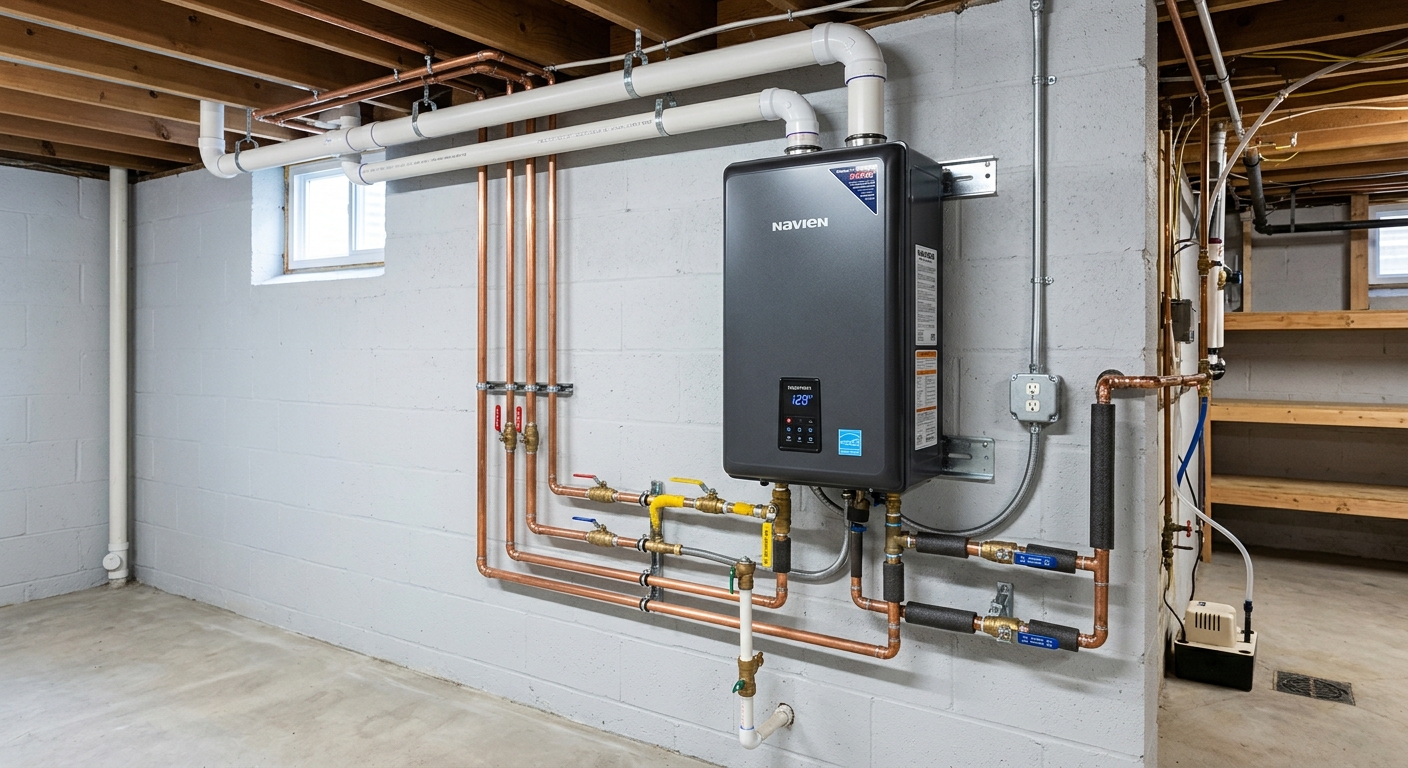
Choosing a new water heater in South Whitehall really means choosing between gas or electric tank, tankless, or the modern heat pump water heater. Most post-1950 homes here have gas available, but with the trend toward energy conservation and remodels, electric and heat pump units are now common too.
Gas tank water heaters are the lowest upfront cost, typically lasting 8 to 12 years, but they lose heat (standby losses) and will eventually leak at the tank base. Electric tanks cost about the same to install but run at a higher annual energy cost. Tankless gas heaters give endless hot water, but the install frequently involves upgrading the gas line and vent—a surprise expense. These can last 18 to 25 years, which does offset some of that upfront cost, but rarely enough to make up the install delta unless your hot water use is unusually high. Heat pump water heaters cost less to run, but need a certain amount of warm air volume (so a cold, tiny basement is no good), cool the space they’re in, and are louder than most people realize—important if your finished basement is meant to be livable.
For any replacement, focus on first-hour rating (how much hot water it can supply in an hour from recovery and storage combined) instead of just gallons. South Whitehall’s housing era means many original water heaters were undersized for today’s multi-bath needs. Always add an expansion tank, plus a drain pan and floor drain if possible. Most failures are in the tank itself, not the controls, and once a tank leaks, it’s never worth repairing.
| Type |
Installed cost |
Service life |
Operating cost |
Best when |
| Gas tank, 40–50 gal |
$1,250–$2,900 |
8–12 yrs |
moderate |
gas is available, budget-focused |
| Electric tank, 40–50 gal |
$1,250–$2,000 |
10–15 yrs |
high |
no gas, easy swap, lower install |
| Gas tankless |
$2,000–$2,900 |
18–25 yrs |
low-moderate |
endless hot water, big families |
| Heat pump water heater |
$2,000–$2,900 |
13–15 yrs |
lowest |
warm, open basement, electric service |
What a plumbing quote should contain
Homeowners in South Whitehall will see two basic billing models from plumbers. Flat rate jobs bundle everything under one number, shifting risk to the contractor—good if you value price certainty and hate surprises. Time and materials is exactly what it sounds like: you pay for however many hours and parts it takes. This may come out cheaper if the job’s simple and access is straightforward, but it’s wide-open for unforeseen costs if walls need opening or old piping throws curveballs. More important than which model is knowing, in writing, which you’re signing up for.
Always check for a diagnostic fee (the plumber’s charge to show up and diagnose). On straightforward jobs, the fee is commonly credited against the work if you proceed. The quote itself should spell out exactly what’s opened, repaired, and restored afterwards—don’t settle for just a line-item price. Permits and inspections raise costs, but should be included and priced. Wall, floor, and ceiling restoration after the pipe is fixed: specifically listed as included, or not. For anything involving fixtures, look for brand and model. Warranties should clearly separate labor (the plumber’s work) from manufacturer coverage on parts. If after-hours rates could be triggered, this needs to be clear up front.
| Line item |
What to look for |
Red flag if… |
| Billing model |
flat rate or hourly, stated up front |
unstated |
| Diagnostic fee |
amount, and whether it credits |
vague |
| Scope |
what is opened, repaired and restored |
price with no scope |
| Restoration |
drywall and finish explicitly in or out |
silent |
| Permit |
included and priced |
'not needed' |
| Parts |
brand and model for fixtures |
'standard fixture' |
| Warranty |
labour period stated separately |
parts only |
Freeze risk and what to do about it
South Whitehall sits in a region of Pennsylvania where the frost depth is 36 inches and the winter design temperature is a sharp 4°F. That climate, together with 6,100 heating degree days and spells of severe ice-dam exposure, means that even post-1950 homes here see their share of frozen pipes. It isn’t the ice itself that breaks the pipe—it’s the pressure buildup between the frozen plug and the closest closed valve that does the damage, so the rupture can show up a few feet or yards away from where the freeze happened.
The most vulnerable pipes are those in exterior walls (especially under kitchen sinks), garages, unheated crawl spaces, and attics. Hose bibs are high-risk if not drained before the freeze. Prevention costs less than repair: start with foam insulation for exposed pipes in unheated spaces, then add heat tape for stubborn runs. On the year’s coldest nights, opening cabinets under sinks or letting a faucet trickle—farther from the street is best—can keep water moving and prevent a freeze. Always shut off and drain outdoor spigots before first hard freeze each fall. If you do find a frozen section, use a hairdryer, heating pad, or heat lamp to thaw it—never an open flame, which quickly turns a nuisance into an emergency.
Fixing a burst supply line in South Whitehall, especially in an emergency, typically runs from $650–$1,250, much higher than the cost of preventive insulation and proper seasonal prep.
Dating your plumbing by what it's made of
In South Whitehall and Upper Macungie, the post-1950 tract housing boom points squarely to copper supply pipes for much of the local housing stock, with PEX showing up in whole-house or partial repipes since the 2000s. Galvanized steel lines show up less often, but some pre-1960 houses or older remodel zones still have them. Each material tells a story: galvanized steel rusts from inside out, slowly choking water flow before springing leaks. Copper lasts long but eventually suffers pinholes—usually due to water chemistry, not installation. Polybutylene had a couple of decades of use, failing most often at plastic-to-metal fittings and now avoided by insurers. PEX is easy to identify by its flexibility and color (red, blue, or white), and is now standard for replacements. Drain lines offer their own clues: cast iron in older homes corrodes and cracks after 50-75 years, while clay tile sewer laterals, often found in the area’s oldest properties, let in roots at the joints. Modern plastic (PVC or ABS) is a sign of either new construction or a recent update.
To check your pipes, do a scratch test where visible: galvanized steel reveals silver-gray, is magnetic, and has threaded joints. Copper is reddish and joined by soldered fittings. Polybutylene looks gray-blue, is flexible, and uses crimp rings. PEX is flexible, colored, and also crimped or clamped. Drains: cast iron is thick, dull, and heavy; clay is brown and segmented; PVC/ABS is bright white or black and glued. Knowing your plumbing’s era and material lets you estimate how much useful life you have left—and when to budget for repairs or a repipe.
| Material |
Typical era |
Failure mode |
Service life |
| Galvanized steel supply |
pre-1960 |
internal corrosion, pressure loss |
40–60 yrs |
| Copper supply |
1950s–present |
pinhole leaks, joint failure |
50–70 yrs |
| Polybutylene supply |
late 1970s–1995 |
fitting failure, sudden bursts |
unreliable |
| PEX supply |
2000s–present |
fitting or UV degradation |
40–50 yrs |
| Cast iron drain |
pre-1975 |
corrosion, cracking, scale |
50–75 yrs |
| Clay tile sewer lateral |
pre-1980 |
root intrusion at joints, offset |
50–60 yrs |
| PVC / ABS drain |
1970s–present |
joint separation, crushing |
50+ yrs |
The point where patching stops making sense
For South Whitehall’s mix of 1950s-onward homes, most water lines are now copper or have been replaced by PEX. Here’s a hard rule: two or more separate leaks on the same supply line material in a three-year span is the point where patching becomes wasting money. It’s not just bad luck—it’s the piping’s age catching up. Clues beyond leaks include falling water pressure everywhere (not just at one tap), rust-colored water on first draw, joints that are visibly corroded, and pinhole leaks showing up repeatedly.
When it’s time to repipe, most homeowners compare copper (costlier and longer-lasting) with PEX (lower cost, easier install, but less time-proven). Doing a full repipe is preferable in most cases, especially if access is straightforward—South Whitehall’s tract housing design often means pipes run in basements and open framing, which helps. Don’t forget the true cost isn’t just pipes: in homes with plaster walls (common in 1950s-era builds), the patch and finish work can sometimes rival the repipe labor. The economics shift in rear additions and finished basements, where access and restoration make spot repairs less attractive.
Homes built in the area’s tract boom are frequent candidates for copper-to-PEX repipes—it’s not about chasing every leak, but deciding it’s time to start over and avoid future headaches.
| Situation |
Recommendation |
Cost |
Reasoning |
| One leak, accessible, modern pipe |
Spot repair |
$375–$1,250 |
isolated failure, no pattern |
| Two or more leaks in 3 years |
Partial repipe |
$3,700–$6,000 |
pattern, original piping failing |
| Galvanized supply, pressure loss |
Full repipe |
$3,700–$9,000 |
corrosion, clogging lines |
| Polybutylene anywhere in the house |
Full repipe |
$3,700–$9,000 |
known failure risk, hard to insure |
| Cast iron drain with root intrusion |
Camera, then reline or replace |
$2,100–$12,500 |
limited lifespan, repair feasible if isolated |
| Suspected lead service line |
Test, then replace the lateral |
$5,800–$12,500 |
health and code-driven replacement |
Frequently asked questions — plumbing in South Whitehall
How much does a water heater replacement cost in South Whitehall?
In South Whitehall, replacing a standard 40–50 gallon gas water heater usually lands between $1,250–$2,900 installed, including haul-away of the old unit. What pushes you to the higher end? If you switch to tankless, need a larger gas line, or run into code-required upgrades—like expansion tanks or drain pans—costs can rise. Emergency replacements, especially during evenings or weekends, hit the top of this range. Be sure your quote spells out whether it includes the permit, as most water heater replacements here require one. Given that many homes were built in the 1960s and 1970s, odds are your current heater is due after a decade or more of service.
Is a water softener worth it in South Whitehall?
South Whitehall generally receives water from the municipal utility, drawing from sources that aren’t considered unusually hard for northeastern Pennsylvania. Most modern appliances and fixtures in post-1950 homes here hold up well without a softener, unless you’re seeing visible scale or feel your water is “hard” to the touch or taste. A water softener can reduce mineral buildup, which might help if you have vintage 1960s plumbing or specific water concerns. The cost to install a softener is typically less than a single spot repair for scale-related leaks ($375–$1,250). For most residents, unless you’re experiencing clear symptoms of hard water, a softener isn’t a must-have in South Whitehall.
Should I wait until business hours to call?
In South Whitehall, making the call after hours can double your cost for the same plumbing repair. For a true emergency—like a pipe actively leaking or a failed water heater flooding the basement—it’s worth the emergency rate ($650–$1,250 for a burst pipe). But if water is shut off and damage is controlled, waiting until the next business day can save you hundreds. Regular clogs, slow leaks, or routine fixture swaps are almost always best scheduled during business hours. If in doubt, a good local plumber will talk you through whether you truly need after-hours dispatch or can wait.
Does Pennsylvania license plumbers at the state level?
Pennsylvania does not have a statewide plumbing license. In South Whitehall, licensing is all handled at the municipal level. That has practical consequences: a plumber licensed to work in Allentown isn’t automatically licensed in South Whitehall. Instead, always ask, “Are you licensed to work in this township?” For anything over $500, also verify their Home Improvement Contractor registration at hic.attorneygeneral.gov. None of these steps add to your price directly, but cutting corners on credentialing can cost you later with insurance claims or failed inspections.
Should I leave a faucet dripping in cold weather?
In a South Whitehall winter, with frost depth at 36 inches and a design low of 4°F, opening a far faucet to a slow trickle can absolutely help prevent pipes from freezing in extreme cold snaps. This is particularly important in older homes or those with pipes running through exterior walls, garages, or unheated crawlspaces—the local building stock puts plenty of pipes at exposure risk. The “damage avoided” is significant: thawing and fixing a burst line after the fact can run $650–$1,250 or more, far above the negligible cost of a little extra water on the coldest nights.
Am I responsible for the water line under the street?
In South Whitehall, homeowners are typically responsible for the water service line running from the house all the way to the property’s connection at the street—this includes any line that may run under sidewalks or right of way, but not the city main itself. If that line needs replacement due to leak or failure, all excavation and restoration is on the homeowner, and the bill can easily reach $5,800–$12,500. If you suspect a leak, a plumber or utility can help determine where the issue lies and what is yours versus the utility’s responsibility.
How much does a plumber cost in South Whitehall?
For most routine plumbing work in South Whitehall, you’re looking at between $375–$1,250 for a standard non-emergency repair (like a single burst pipe or a leaky valve). Things get pricier after hours or on holidays, approaching the upper end or beyond depending on job complexity and urgency. For larger jobs like full whole-house repiping or sewer work, numbers rise quickly—the median for a whole-house supply repipe is $6,000, typical for local post-1950s homes that are seeing their original piping reach retirement age.
How long should a water heater last in South Whitehall?
The typical lifespan for a tank-style water heater in South Whitehall is 8–12 years for gas units and 10–15 years for electric. That’s for the 40–50 gallon sizes most homes here use. The failure usually isn’t the thermostat or electronics—it’s the tank itself corroding through. Replacements average $1,250–$2,900 depending on model, access, and after-hours surcharges. Tankless options last longer, 18–25 years, but cost more up front. If your water heater is approaching its “teen years,” it’s smart to budget for replacement before it fails and leaks.
Do older South Whitehall homes have galvanized pipes?
Yes, but mostly in homes built pre-1960—so you’ll find them in a minority of the houses in South Whitehall, but enough to notice. Galvanized steel supply lines corrode from the inside and lose water pressure long before you see visible leaks. The standard fix is full or partial repiping, running $3,700–$9,000 if you go copper or PEX throughout the house. If you’re dealing with chronic low pressure or brownish water that clears after running a few minutes, it’s a strong sign galvanized pipes are to blame and may be due for replacement.