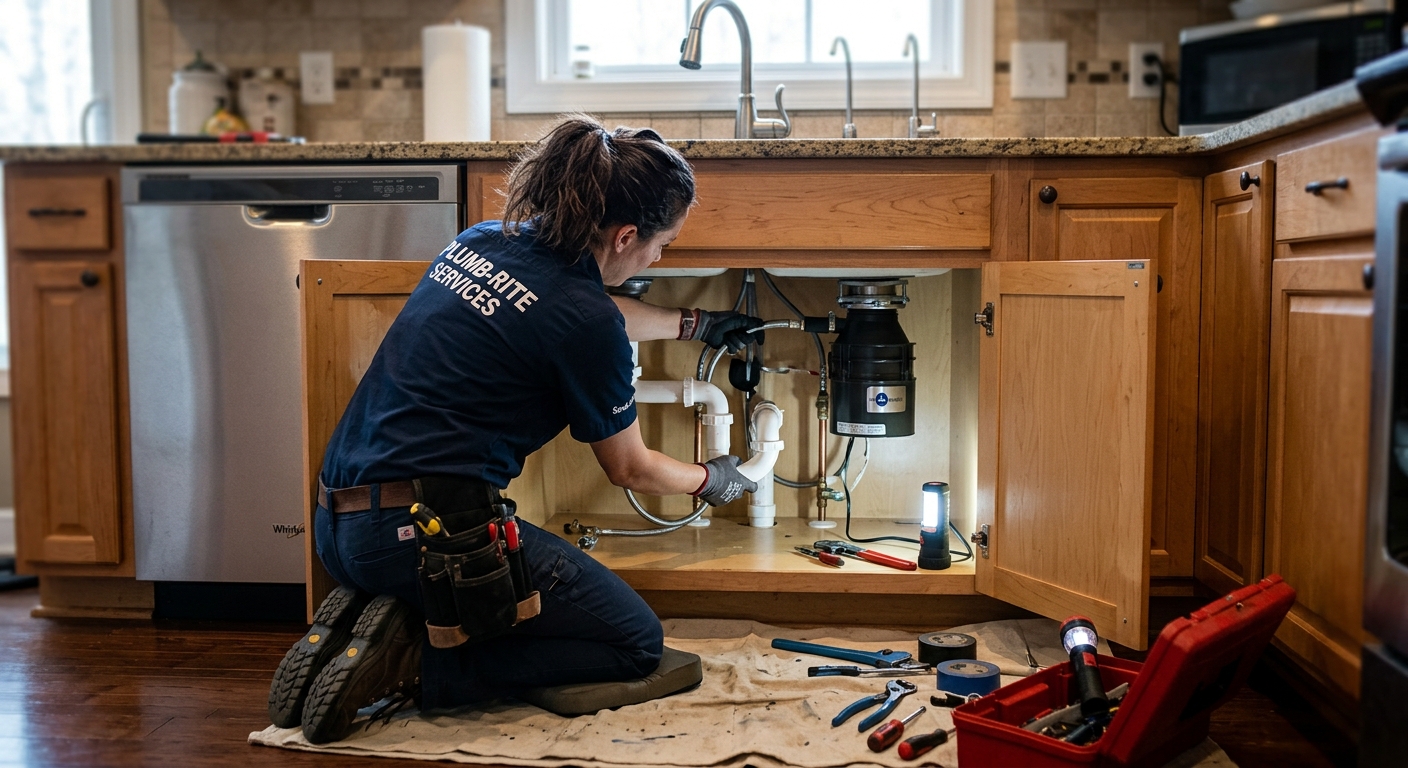
Nanticoke plumbing prices by job type — 2026
In Nanticoke, most homes were built before 1980, with nearly 90.6% of local houses falling into this category (U.S. Census Bureau, ACS 2024). That age impacts not just how often plumbing fails but also how complex and expensive the repair will be. Much of Wilkes-Barre and Hazleton has pre-1940 multifamily housing with legacy galvanized piping—these older pipes bring more hidden leaks and access issues than what you'd find in newer tracts. Because material and access dominate costs, two homes on the same street can see a big price gap for the same repair.
In plumbing, there are always two price tags: one for routine work and a steeper one for emergency calls. Emergency repairs—especially active leaks and burst pipes—carry a surcharge for after-hours labor and the urgency of getting your water system back online. If you catch a problem early, you’ll land closer to the routine rate. Wait for a flood at 7 p.m. on a Saturday, and it will be the high end of the range.
| Service |
Scope |
Emergency rate |
Standard rate |
| Emergency repair — burst pipe |
locate, open, repair section, restore service |
$550–$1,100 |
$325–$1,100 |
| Water heater replacement (gas, 40–50 gal) |
remove old, install, test, haul away |
$1,750–$2,600 |
$1,100–$2,600 |
| Drain cleaning — main line |
augering or hydro-jet, camera if needed |
$350–$800 |
$200–$500 |
| Sewer line spot repair |
excavate or reline a failed section |
$1,850–$11,000 |
$1,850–$11,000 |
| Whole-house repipe |
replace supply lines throughout, patch and finish |
– |
$3,200–$7,800 |
| Water service line replacement |
street to house, excavation and restoration |
– |
$5,000–$11,000 |
Estimates for a typical Nanticoke home. Access difficulty and pipe material move these figures more than anything else.
Who is allowed to do plumbing work in Pennsylvania
Pennsylvania does not issue a statewide plumbing license. Instead, licensing is handled on the municipal level. For Nanticoke homeowners, this means a plumber licensed in Wilkes-Barre, for example, may not automatically be permitted to work in your neighborhood unless they’ve met the specific requirements for that municipality. The real question isn’t “Are you licensed?” but “Are you licensed to work here?” For any major plumbing job—especially anything over $500—a contractor must register as a Home Improvement Contractor (HIC) with the Pennsylvania Office of Attorney General. You can verify this registration at hic.attorneygeneral.gov.
Workers’ compensation insurance is mandatory for any employer and should be verified using the WCAIS system (wcais.pa.gov) to ensure you’re not left exposed if there’s an accident on your job. In Wilkes-Barre, a permit is required for plumbing work that involves new or altered supply or drain lines. The city’s Code Enforcement Office inspects completed jobs, but in surrounding rural townships, responsibility may fall to a different official or, if a municipality has opted out, to L&I itself.
For any contract over $500, you are entitled by the Home Improvement Consumer Protection Act to a written contract and a three-day right to cancel. Also, a legitimate contractor cannot legally waive your insurance deductible. These are basic consumer protections every Nanticoke homeowner should expect.
What construction era means for your pipes
In Nanticoke, with more than 90% of homes built before 1980, almost every plumbing job deals with older materials and systems. Many Wilkes-Barre and Hazleton homes in this region still run on legacy galvanized steel supply lines. That kind of pipe corroded from the inside out, reducing flow and producing rust-colored water, especially when first turning on a faucet after hours of inactivity. Drainage in these homes is often cast iron, which can crack or let tree roots in where the pipes are buried. If the sewer line is original, there’s a good chance it’s vitrified clay tile—the joints in these tend to leak, inviting root intrusion.
Water service lines from the street in houses this age could be galvanized, copper, or even lead—lead was commonly used right through the middle of the 20th century. Most water heaters in these homes are on at least their second or third replacement, so the supply shutoffs and dielectric unions often need as much work as the tank itself.
Younger Nanticoke homes—rare here—sometimes have builder-grade copper or even polybutylene, a grey plastic that’s notorious for splitting. If you see gray tubing and plastic fittings, especially in housing from the late 1970s through mid-1990s, that’s polybutylene, and it’s a ticking time bomb best addressed with a full repipe.
Winter pipe failures in northeastern Pennsylvania
Nanticoke winters are hard on plumbing, with frost pushing 36 inches deep and a winter design temperature of just 4°F. High snow load, as seen across the Poconos, makes insulation even more critical—ice dams are common and can extend cold temperatures into otherwise protected wall cavities. The classic burst pipe doesn’t usually split where it freezes; the ice expands to seal the pipe. The real trouble shows up between that blockage and your closed faucet; pressure builds until the pipe ruptures downstream.
Vulnerable locations in Nanticoke homes include pipes run along exterior walls, in unheated crawlspaces or garages, hose bibs left charged into winter, and—less often—in attics without insulation. Preventing freeze-ups starts with proper insulation and keeping pipes out of cold spaces wherever possible. Heat tape works for runs that can’t be relocated, and in extreme cold, let a faucet trickle—moving water is far less likely to freeze. Opening under-sink cabinet doors on outside walls allows warmer house air to circulate. Always remember to shut off and drain outdoor spigots before hard freeze season.
If lines do freeze, use an electric heat gun or hair dryer, never an open flame, to thaw carefully from the tap back toward the ice. A burst pipe emergency repair in Nanticoke typically runs $550–$1,100 if attended urgently, so every preventive step buys you real peace of mind—at a fraction of the cost.
Water quality and what it does to your pipes
Most Nanticoke homes get water from Pennsylvania American Water or one of several local borough suppliers. Every public water utility issues an annual water quality report you can request to see what’s in your tap. Hardness in local water causes scale to build up in water heaters and on fixture aerators, shortening the life of both. Aggressive (low pH) water can actually eat away at older copper from the inside, leading to pinhole leaks that are invisible until you get water stains.
Water softeners are sometimes recommended, but in most of Luzerne County, the economics often don’t pay back the install cost unless your fixture life is unusually short or the scale is especially heavy. Whole-house filters are only a must in homes with chronic sediment or odd tastes; most households get the solution they need from a good point-of-use filter under the kitchen sink.
If your Nanticoke home has its own well (as in some townships), no one is publishing a water report for you—routine testing for coliform bacteria, hardness, and common metals is up to you. Think twice before signing up for any high-dollar filtration system without independent test results showing what you’re fixing.
Water heater replacement decisions
Choosing a replacement water heater in Nanticoke comes down to more than up-front price. Traditional storage tank water heaters—gas or electric—are still the cheapest to install and have the most forgiving vent and space requirements. Expect them to last 8–12 years for gas, and 10–15 for electric, though high mineral content in local water can knock a couple years off either. Tankless gas heaters bring endless hot water and take up less floor space, but they’re about $1,750–$2,600 installed and often require both a larger gas line and modern venting—costs that can surprise in homes built before 1980.
Heat pump water heaters are efficient and make sense in homes with the right utility rates, but they require more open air space and cool down the room they’re in—they’re quieter than a dehumidifier but you’ll notice if it’s in a finished basement. Electric tanks have higher operating costs in our climate but are simple and reliable for many Nanticoke owners.
For sizing, always look for the first-hour rating—how much hot water you can draw in a rush—not just gallons. Every install here needs a pan, a drain, and in most cases, an expansion tank to satisfy up-to-date code requirements. Most water heater failures are tank ruptures, not control problems; don’t wait for a flood to schedule a replacement.
| Type |
Installed cost |
Service life |
Operating cost |
Best when |
| Gas tank, 40–50 gal |
$1,100–$2,600 |
8–12 yrs |
moderate |
Existing gas line, moderate demand |
| Electric tank, 40–50 gal |
$1,100–$1,750 |
10–15 yrs |
high |
No gas available, budget-conscious |
| Gas tankless |
$1,750–$2,600 |
18–25 yrs |
low-moderate |
Higher upfront budget, endless supply |
| Heat pump water heater |
$1,750–$2,600 |
13–15 yrs |
lowest |
Good airflow, utility rates favor electric |
When to repipe a Nanticoke home
In Nanticoke and Wilkes-Barre, homes with legacy galvanized or polybutylene piping suffer from repeated leaks as the material fails with age. If you’ve had two or more leaks in three years, or you’re seeing rusty water and pressure loss throughout the house—not just at a single faucet—it’s time to stop patching and start planning for a repipe. Discoloration or a metallic taste on first use, visible corrosion at pipe joints, and pinhole leaks that reappear even after repair are all signs of a system at the end of its life.
PEX piping is now standard for most repiping jobs: it’s flexible, resists scale and corrosion, and goes in faster (and more gently through old framing) than copper. Copper still has its place, but is at a price premium. The hidden cost most Nanticoke homeowners miss is the drywall and plaster repair, especially in pre-1940 multifamily stock. In those homes, restoration work can be as expensive as the plumbing labor itself.
Partial repiping makes sense where you have modern pipe and the failures are isolated. But with legacy galvanized or builder-grade polybutylene throughout, a whole-house repipe is money better spent than ongoing repairs.
| Situation |
Recommendation |
Cost |
Reasoning |
| One leak, accessible, modern pipe |
Spot repair |
$325–$1,100 |
Material still has service life left |
| Two or more leaks in 3 years |
Partial repipe |
$3,200–$5,200 |
Pattern of failure developing |
| Galvanized supply, pressure loss |
Full repipe |
$3,200–$7,800 |
System-wide flow and corrosion issues |
| Polybutylene anywhere in the house |
Full repipe |
$3,200–$7,800 |
Premature material failures common |
| Cast iron drain with root intrusion |
Camera, then reline or replace |
$1,850–$11,000 |
Roots mean the drain is compromised |
| Suspected lead service line |
Test, then replace the lateral |
$5,000–$11,000 |
Lead is a health hazard—complete replacement only |
Frequently asked questions — plumbing in Nanticoke
How deep do water lines need to be buried in Nanticoke?
To protect against our typical winter frost depth of 36 inches, water lines in Nanticoke should be buried at least 3 feet below the surface. This keeps the pipe well below the zone where freezing can occur, even in the coldest spells (winter design temperature is just 4°F). Sometimes older homes in pre-1940 construction neighborhoods have lines at shallower depths. If a line does freeze and burst, the emergency repair cost is likely between $550–$1,100. When replacing your service line, be sure the contractor follows the local standard and backfills properly to avoid shifting, which can damage the new pipe over time.
Should I repipe my Nanticoke home or keep repairing?
If you’ve had two or more leaks in the same material within three years—especially in legacy galvanized or polybutylene piping—continual repair is usually just throwing good money after bad. Those materials are prone to repeated failure, with pre-1980 construction in Nanticoke and Wilkes-Barre being particularly vulnerable. A full repipe in a typical house runs $3,200–$7,800, but it puts an end to ongoing disruption, water damage risk, and future repair costs. In homes with modern copper or PEX, and only a single accessible leak, repair is often the better route. Always factor in the cost to patch walls and ceilings after the plumbing is replaced—especially in older homes with plaster.
What does emergency plumbing cost in Nanticoke?
Emergency plumbing rates in Nanticoke are higher than scheduled or routine repairs because plumbers are called out after hours or on short notice. For example, fixing a burst pipe or sudden leak after hours usually costs $550–$1,100. Emergency drain cleaning can land in the $350–$800 range. If you have a plumbing emergency, be prepared to pay a premium for speed and availability. Mill towns and pre-1980 houses can be harder to access, which also bumps up the total cost if walls or floors need to be opened for repairs.
What counts as a plumbing emergency?
In Nanticoke, any active water leak—especially one you can’t contain—counts as a plumbing emergency. Burst pipes, rapid leaks threatening finishes or your foundation, total loss of water pressure, main sewer backups, or no hot water at all in winter (when pipes might freeze) all need urgent attention. Letting these go risks much larger water damage bills, and if an emergency call is required, repair costs typically run $550–$1,100 for a burst pipe or leak. If the issue only means inconvenience but you can safely wait (like a fixture dripping into a sink), you’ll save money by scheduling routine service.
Am I responsible for the water line under the street?
In most of Luzerne County, homeowners are responsible for the water service line from their house all the way to the curb stop or main connection, sometimes even under the sidewalk or street. If you have an older service line—especially galvanized or lead—it’s your job to replace it if it leaks or fails. Full service line replacement, including excavation and restoration, typically costs $5,000–$11,000 in Nanticoke. If you’re unsure where your responsibility begins, check with your water utility or municipality before starting any work.
How do I find a hidden water leak?
Most hidden leaks show up as sudden changes in your water bill, unexplained damp spots, or discoloration on ceilings and walls. In Nanticoke homes, especially older ones, leaks in galvanized or copper lines can run behind plaster for months before you see water damage. The fix usually involves cutting open walls or flooring to access the pipe. Common detection methods include moisture meters, infrared imaging, and sometimes acoustic sensors. After locating the leak, an accessible repair costs $325–$1,100, but if significant demolition is required, costs rise. Always shut off your main supply if you suspect an active leak until a contractor assesses the problem.
Do older Nanticoke homes have galvanized pipes?
Yes—most Nanticoke and Wilkes-Barre houses built before 1960 still have some or all of their supply piping in galvanized steel, unless it's already been replaced. This older material corrodes internally, causing water pressure drops, rusty water, and leaks at threads and joints. If you have recurring leaks, or your water is brownish after sitting, it may be time for a full repipe, often costing $3,200–$7,800. Galvanized pipes are common enough that spot repairs won’t usually solve the issue unless you’re just buying temporary time.
How much does a plumber cost in Nanticoke?
Plumbing costs in Nanticoke depend on the job, the urgency, and how hard it is to access old piping. An emergency repair for a burst pipe runs $550–$1,100, while routine drain cleaning can be as little as $200–$500. Major jobs, like water heater replacement, typically cost $1,100–$2,600. Prices tend to be higher in areas with older multifamily housing, like much of Wilkes-Barre and Hazleton, because access and pipe material take more time and skill to work with.
Who inspects plumbing work in Nanticoke?
Plumbing inspections in Nanticoke are governed by the Pennsylvania Uniform Construction Code, which is enforced at the municipal level. In neighboring Wilkes-Barre, the City Code Enforcement Office handles all contractor licensing and plumbing inspections—including permits for new or altered supply or drain lines. In Nanticoke, your local code office or building department will inspect completed plumbing work to ensure it meets the UCC standard. Always verify that your contractor carries proper insurance (workers’ compensation can be checked at wcais.pa.gov) and holds Home Improvement Contractor registration, required for any contract over $500.