What plumbers charge in Milton
Plumbing costs in Milton, Pennsylvania are shaped by both our housing stock and the unique rural market here in Northumberland County. With 80.1% of homes built before 1980 and a homeownership rate of 43.2% (U.S. Census Bureau, ACS 2024), most jobs involve older systems and tougher access. In Coal Township and Shamokin, where 1900–1930 row and miner housing dominates, original galvanized piping is still common—leading to regular whole-house repipes with copper or PEX. Construction era predicts what material you’re dealing with, and that, in turn, usually decides if you’re in for a small repair or a major overhaul.
In Milton, one job can carry two very different price tags: emergency calls are billed at a premium compared to scheduled work. A burst pipe repair after hours can cost you double compared to a scheduled fix. Always ask if you can wait for a standard rate.
| Service |
Scope |
Emergency rate |
Standard rate |
| Emergency repair — burst pipe |
locate, open, repair section, restore service |
$550–$1,100 |
$325–$1,100 |
| Water heater replacement (gas, 40–50 gal) |
remove old, install, test, haul away |
$1,700–$2,500 |
$1,100–$2,500 |
| Drain cleaning — main line |
augering or hydro-jet, camera if needed |
$350–$800 |
$200–$500 |
| Sewer line spot repair |
excavate or reline a failed section |
$1,800–$11,000 |
$1,800–$11,000 |
| Whole-house repipe |
replace supply lines throughout, patch and finish |
|
$3,200–$7,700 |
| Water service line replacement |
street to house, excavation and restoration |
|
$5,000–$11,000 |
Estimates for a typical Milton home. Access difficulty and pipe material move these figures more than anything else.
Verifying a Milton plumber's credentials
In Pennsylvania, plumbing licensing is not statewide. Each municipality decides if it requires plumbers to be locally licensed, so a pro with credentials in one town may be unlicensed next door. In Northumberland County—including Milton and its surrounding townships—there is no known countywide plumbing license requirement. If you are in Sunbury, permits and inspections are handled by the Sunbury Code Enforcement Office. In Milton itself and in the rural townships nearby, local offices set the own rules. Always ask your contractor if they are licensed in your specific municipality, because a state credential does not exist for plumbers here.
When it comes to permits, replacing or altering interior plumbing systems in Sunbury nearly always requires a permit. In Milton, like-for-like swaps of fixtures—such as changing out a faucet or toilet—often proceed without one. Plumbing contractors working over the $500 threshold must carry Home Improvement Contractor (HIC) registration, which you can verify at hic.attorneygeneral.gov. All employers must also carry workers’ compensation, which can be checked at the WCAIS system (wcais.pa.gov).
There is no state-issued plumbing licence or registry, so don’t be misled by anything claiming to be one for Milton. Always ask your local office or code enforcement if you’re unsure. If your home was built before 1978, confirm that your plumber follows the EPA Lead RRP Rule. For contracts over $500, Pennsylvania requires a written agreement and grants you a three-day cancellation right, and waiving your homeowner’s insurance deductible is not legally allowed.
The leak you can hear but can't see
Before you call a pro, there’s one test every Milton homeowner can do for free: the meter check. Shut off every inside and outside fixture, then watch your water meter. If the moving dial doesn’t stop, you’ve got a hidden leak on your supply side. This pinpoints that water is escaping somewhere between the meter and your home’s plumbing, often before you see any damage.
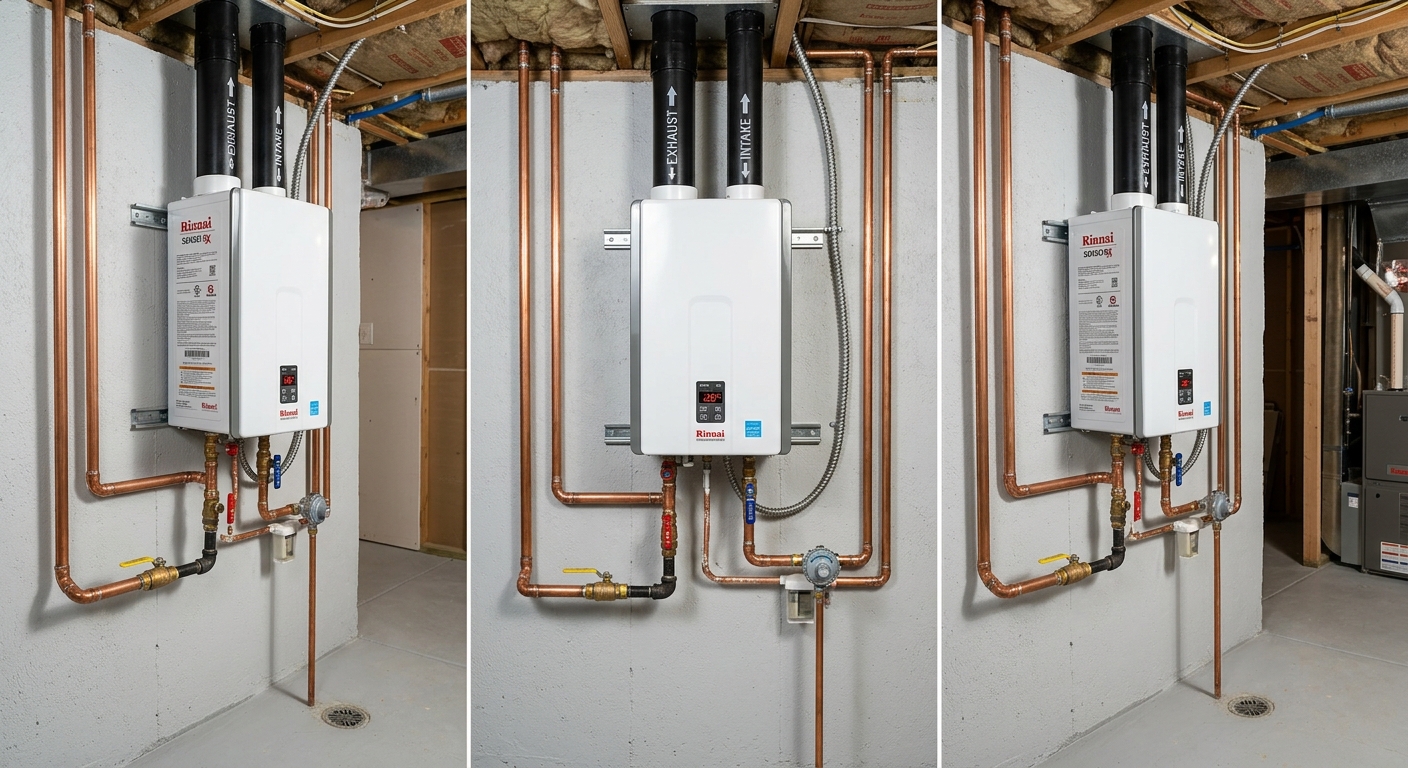
Professional leak locating starts with acoustic listening—listening devices can pinpoint leaks behind walls or under floors—expect this to run in the low end of the $325–$1,100 range, especially if bundled with the repair. Thermal imaging is another noninvasive tool for spotting hidden moisture. In slab homes or where pipes are buried, tracer gas (usually nitrogen or a safe refrigerant) can help nail down the location; the equipment cost can move the price toward the higher end. Slab leaks (rare in Milton but not unknown) are nearly always found this way. For leaks inside wall cavities or running lines outside, the best plumbers take the time to confirm location before touching a saw. Opening walls before locating the line of failure is the mark of either inexperience or someone looking to pad the work.
Professionals should talk you through what they’re doing and explain the method before you approve wall or floor cuts. In old housing, minimizing disruption matters—less demo means less patching later.
Choosing a plumbing contractor
Start by verifying two things: that your contractor is registered as a Home Improvement Contractor (HIC) in Pennsylvania (hic.attorneygeneral.gov), and that any municipal licence required is valid where your property sits. In Northumberland County, this can change by crossing a street—ask your local office directly. Never skip the insurance step: ask for a certificate of insurance naming your property and verify active workers’ compensation coverage through the WCAIS system (wcais.pa.gov).
Find out if the company uses its own crews or subs out work. For emergencies, make sure service call pricing—including after-hours dispatch rates—is explained up front. In thin rural markets like this part of Pennsylvania, travel surcharges to outlying townships are common, so keep an eye out for them in your quote.
- Check HIC registration at hic.attorneygeneral.gov
- Confirm municipal licence applies to Milton or your township
- Ask for an insurance certificate naming your address
- Verify workers’ compensation via wcais.pa.gov
- Get a written contract for jobs over $500
- Ask if work will be subcontracted or done by employees
- Require all pricing in writing, including travel charges
- Demand before/after camera footage for sewer or drain work
- Do not accept a “repipe” or major repair quote without proof (no-pressure-test, no-footage is a red flag)
- Never sign away your right to cancel in three days for large jobs
- For pre-1978 homes, verify EPA Lead RRP compliance
- Avoid any contractor who offers to "take care of" your insurance deductible—that’s prohibited
A real warning sign here is anybody offering a whole-house repipe or sewer replacement with no camera footage, no clear explanation, and no pressure testing to prove the need. In our rural market, the low number of contractors means it pays to check twice—don’t let scarcity force a rushed or padded job.
What's in the water here
For most Milton residents, water comes from Pennsylvania American Water’s Sunbury-area system—which means your water’s quality and mineral content will be reflected in their annual water quality report. You can request this directly from the utility. Public systems here generally supply moderately hard water, which leads to scale accumulation inside fixtures and can shorten water heater life, but it doesn’t usually demand immediate action.
Aggressive or “soft” water, which can cause copper pinholes, is not a headline issue in Milton systems. Softening systems are often marketed on the promise of equipment protection and longer appliance life, but in most local homes, the payback isn’t there—the cost of a standard water heater replacement ($1,100–$2,500) simply doesn’t justify thousands spent on whole-house treatment unless you have well-documented issues. Whole-house filters can help if sediment or odor is a problem, but most homeowners with good public supply do better with point-of-use units at the kitchen sink.
For homes on private wells—common outside Sunbury and Shamokin—nobody publishes a water report for you. In those cases, periodic testing for bacteria, nitrates, and lead is the gold standard, and treatment equipment should be matched to real problems, not sales pitches.
Winter pipe failures in north-central Pennsylvania
North-central Pennsylvania winters are harsh—our ground frost depth is 36 inches, and design temps reach 2 °F, with some of the state’s highest snow loads and a long heating season. Most pipe bursts don’t happen where the water actually freezes. Instead, ice forms an internal plug, and as water pressure builds between the frozen spot and a closed tap, the pipe gives way just past the freeze. That’s why you can find water pouring out in a different room than where it got cold.
Vulnerable spots in Milton-area homes are pipes in exterior walls, unheated crawl spaces, attached garages, over garages, or in unconditioned attics. Outdoor spigots (hose bibs) are annual culprits. Prevention, from cheapest to priciest: insulate pipes in these areas; add heat tape to lines in crawl spaces or attics; let a trickle run from the farthest faucet overnight if temps are set to drop well below zero; open cabinet doors under sinks on exterior walls; shut off and drain outdoor spigots before the first freeze.
If a pipe does freeze, use a portable heater in the space, or a hair dryer on metal pipes—never an open flame, which creates more fire calls than thawed pipes. The damage from a full burst usually runs $550–$1,100 for emergency repair. That’s a lot of motivation for some basic prep each winter.
The point where patching stops making sense
There’s a clear rule in old Milton homes: two or more supply leaks in three years on the same material is pattern failure, not bad luck. If you’re seeing falling water pressure throughout the house, brown or rusty water on first draw, visible corrosion at joints, or recurring pinholes, you’re nearing the end of your system’s reliable life.
Copper versus PEX? Both are reliable, but copper is pricier and harder to install in tight spaces, especially around dense row housing as found in Coal Township and Shamokin, where plaster repairs might cost nearly as much as the piping. A whole-house repipe solves pressure and quality problems for good, but be prepared: drywall and plaster patching adds serious cost—sometimes as much as the plumbing itself in 1900–1930 homes.
Partial repipes are reasonable if only one branch is failing, but don’t patch galvanized or polybutylene piecemeal. Always factor in full fixture and wall repairs.
| Situation |
Recommendation |
Cost |
Reasoning |
| One leak, accessible, modern pipe |
Spot repair |
$325–$1,100 |
Caught early; new materials easy to patch without widespread work |
| Two or more leaks in 3 years |
Partial repipe |
$3,200–$5,100 |
Indicates systemic failure; replacing worst sections controls future risk |
| Galvanized supply, pressure loss |
Full repipe |
$3,200–$7,700 |
Galvanized systems clog from inside out; only full replacement solves pressure and discoloration |
| Polybutylene anywhere in the house |
Full repipe |
$3,200–$7,700 |
Material is prone to catastrophic failure, sometimes without warning |
| Cast iron drain with root intrusion |
Camera, then reline or replace |
$1,800–$11,000 |
Root entry signals a serious breach; camera confirms extent before deciding on repair method |
| Suspected lead service line |
Test, then replace the lateral |
$5,000–$11,000 |
Lead creates a health risk; replacement is the only permanent fix |
Frequently asked questions — plumbing in Milton
Do I need a permit for plumbing work in Milton?
In Milton, plumbing permits are typically not needed for simple like-for-like fixture swaps—think faucet or toilet replacements. If you’re taking on interior pipe alterations or moving plumbing, though, you may run into local permit requirements, especially for major work. Sunbury, just next door, does require permits and Code Enforcement inspections for anything beyond fixture changes. Because licensing and permitting is municipal, always check with Milton’s local office to confirm what’s required. For any project over $500, Pennsylvania also requires a written contract under the Home Improvement Consumer Protection Act. Emergency work, such as a burst pipe repair, is often done immediately for safety, but you might need to report or permit the fix after the fact—depending on the scope and how much reconstruction follows. This is most relevant for jobs that run in the $550–$1,100 range or higher.
What do I do about a burst pipe right now?
If a pipe bursts in your Milton home, shut off your main water valve immediately—if you don’t know where it is, now is the time to find out (usually located by your water meter, often in the basement). Then, shut off power to that area if water is near outlets or the breaker panel. Once safe, call a local plumber. Emergency response here typically starts at $550–$1,100 depending on the hour. In Northumberland County, after-hours surcharges are common. Take photos for your insurance, and do not agree to any repairs beyond necessary shut-off and stabilization until you have a written estimate. For contract values over $500, you must be offered a contract and a three-day cancellation window per Pennsylvania law, even in emergencies.
How hard is the water in Milton?
Most Milton residents are supplied by Pennsylvania American Water’s Sunbury-area district, which generally provides moderately hard water. This means scale can build up on fixtures and inside your water heater, shortening its life—but not to an extreme. For the average household, the buildup is a nuisance rather than an urgent problem, and the cost of dealing with it by replacing a water heater every decade ($1,100–$2,500) is usually less than installing and maintaining a whole-house softener. If your home relies on a private well, water hardness could be much higher or lower—wells must be individually tested to know for sure. In public supply, get the latest Consumer Confidence Report to learn what’s coming out of your tap.
What does discoloured water on first draw mean?
In Milton’s older homes—80.1% built before 1980 according to the Census—discoloured water when you first turn on the tap frequently points to corroding galvanized or iron pipes. This is common in Coal Township and Shamokin row homes as well, where original supply lines were not copper or PEX. Brown or rusty water means the pipe walls are breaking down and shedding iron into the flow. If it clears quickly, it’s likely from your own lines, not the street main. This is a sign that patching may not make sense anymore, especially if you notice pressure drops too. The threshold for a proactive repipe is often reached when a couple leaks come along with this discoloration—a typical repipe in Milton runs $3,200–$7,700, but it stops the issue for good. Flushing doesn’t permanently fix it.
What do I do if a pipe is frozen but not burst?
If a pipe in your Milton home is frozen but hasn’t burst, act fast but smart. Open the affected faucet slightly and use gentle heat: a hair dryer on the pipe, warm towels, or a space heater in the room. Never use an open flame—this is a frequent cause of home fires in cold parts of Pennsylvania. If you’re not comfortable or see frost spreading along the pipe, call a plumber. Thawing jobs that don’t involve pipe replacement usually stay in the lower half of the emergency repair band ($325–$1,100). After thawing, check for splits or leaks before closing the space. And prevent next time: insulate exposed runs, let faucets trickle in single-digit temps, and always drain exterior spigots before deep cold hits.
What does drain cleaning cost in Milton?
In Milton and Northumberland County, main line drain cleaning service—like augering a blocked sewer or running a hydro-jet—typically costs $200–$500 if scheduled as a routine visit. If you call out a plumber for an emergency or after hours (like a holiday backup), the price can jump to $350–$800. Camera inspection may be included or added for a modest fee. For drains inside the home, like a kitchen or bathroom sink, costs trend a bit lower but still depend on travel and access. You should always be shown camera footage if the plumber claims a bigger problem (like a broken pipe or root intrusion). In our rural market, avoid high-pressure upsells for additional work unless there’s proof on video.
Is trenchless sewer repair reliable?
Trenchless repair—either pipe relining or bursting with replacement—is a proven technology and works well in Milton’s clay soils and older neighborhoods, provided the underlying sewer hasn’t collapsed fully. For spot repairs and roots, relining can be fast and avoids tearing up yards or drives. Reliable contractors in Milton and the wider Northumberland County area will always perform a camera inspection first and show you the images before recommending this method. The cost runs in the same range as standard spot repair ($1,800–$11,000), depending on access and length. Be wary if a company pushes full replacement or a trenchless fix based only on a brief inspection—you deserve evidence and a clear explanation before committing.
How much does sewer line repair cost in Milton?
Sewer line spot repairs in Milton generally run from $1,800–$11,000, with the typical project landing around the $5,000 mark. What pushes the cost higher are issues like deep mains (common in Coal Township row houses), difficult yard access, or longer runs. Trenchless options help if your line is a good candidate, keeping yard disruption down, but expect higher prices for more complex jobs. Always demand a camera inspection—the footage is crucial for knowing what’s truly needed. If more than one company proposes a full replacement with no supporting video, keep looking. For anything within public street right-of-way, coordinate with both your plumber and the local water utility—the restoration standard on Milton’s older streets can change the price significantly.
Am I responsible for the water line under the street?
In Milton, as in most Pennsylvania towns, homeowners are responsible for the water service line from the property line or curb box all the way into the house—which may mean liability under part of the sidewalk or even under the edge of the street. The local water utility, Pennsylvania American Water, does ongoing replacement of public leads, but in most cases, if your portion fails or tests as leaded, you’ll be given notice and must arrange for your side to be replaced. This is a big job—most runs are $5,000–$11,000 after excavation and surface restoration. Always get multiple bids and check if any local programs help offset the cost for lead line replacement.