What plumbers charge in New Kensington
In New Kensington, plumbing costs depend not just on what breaks but how urgently you need it fixed. Houses here are largely older stock—over 91% built before 1980, most of them single-family homes (U.S. Census Bureau, ACS 2024)—and that greatly affects what goes wrong, especially with copper and galvanized supply lines installed in the post-1945 tracts of nearby Hempfield and North Huntingdon. Age predicts pipe material, and pipe material predicts failure: older copper develops pinhole leaks, while galvanized steel corrodes shut or splits outright.
If you call for a repair during off-hours or while water is actively leaking, you’ll face an emergency rate. The same exact job can be a few hundred more when time is tight—after-hours dispatch, rapid-travel costs, and overtime labor drive that premium. If you can safely schedule or contain the problem overnight, prices drop.
| Service |
Scope |
Emergency rate |
Standard rate |
| Emergency repair — burst pipe |
locate, open, repair section, restore service |
$550–$1,100 |
$325–$1,100 |
| Water heater replacement (gas, 40–50 gal) |
remove old, install, test, haul away |
$1,700–$2,500 |
$1,100–$2,500 |
| Drain cleaning — main line |
augering or hydro-jet, camera if needed |
$350–$800 |
$200–$500 |
| Sewer line spot repair |
excavate or reline a failed section |
$1,800–$11,000 |
$1,800–$11,000 |
| Whole-house repipe |
replace supply lines throughout, patch and finish |
|
$3,100–$7,600 |
| Water service line replacement |
street to house, excavation and restoration |
|
$4,900–$11,000 |
Estimates for a typical New Kensington home. Access difficulty and pipe material move these figures more than anything else.
Water quality and what it does to your pipes
New Kensington’s public water is supplied primarily by the Municipal Authority of Westmoreland County. If you want details on mineral content or contaminant levels, you can request their annual water quality report. Hard water is common; this means more scale in your water heater and fixtures, often shortening the life of both. Scale makes your heater work harder and can choke off flow or clog up valves before anything leaks. On the other hand, water that’s too “aggressive”—slightly acidic or low in minerals—can eat pinholes in copper pipes and accelerate failure.
Softening is popular but not always a money-saver. A softener will stop buildup in your appliances, but most folks break even only if their water heaters or showers are failing much sooner than ten years. If you’re considering a softener, do the math or ask for the utility’s calcium mg/L figure. Whole-house filtration is almost never needed unless there’s a known issue (odor, taste, or very high sediment). For specific concerns like taste or lead, a simple faucet filter is usually enough.
If your home is on a private well, you are on your own for testing—nobody publishes a report, and you should send a sample to a certified lab every year or two. Don’t overspend on fancy equipment unless a test says you need it.
Frozen pipes in New Kensington: prevention and thaw
With a frost depth of 36 inches and a winter design temperature of 8 °F, New Kensington and the rest of Westmoreland County face sharp winter swings and hard freezes. Heavy freeze-thaw cycles, plus clay and shale soils, make pipes especially prone to freezing where they’re shallow, uninsulated, or exposed to drafts. Contrary to what you might guess, a pipe often bursts not at the ice plug itself, but between the frozen section and a closed fixture—pressure builds up and the pipe splits at its weakest point.
The most vulnerable spots are pipes in exterior walls, unheated crawlspaces, garages, hose bibbs, and the occasional run through an unconditioned attic. Prevention is cheap and direct: pipe insulation pays for itself, heat tape works for stubborn short runs, and letting a trickle run from a tap on the coldest nights can save hundreds. Opening cabinet doors under a sink lets room heat circulate; shutting off and draining hose bibbs before the first hard freeze in late fall is a must.
If a pipe does freeze, use a hairdryer or a heat gun—never an open flame. Warm the pipe slowly, starting at the end nearest the faucet. Never use a propane torch; it causes more house fires than it solves pipe problems. If a frozen pipe bursts, emergency repair in New Kensington typically runs from $550–$1,100. A bit of insulation or leaving a faucet trickling beats that bill every time.
Finding a hidden leak in New Kensington
Many leaks are found by homeowners before a pro steps on site. The simplest check is the meter test: turn off all fixtures in the house, watch your water meter, and if the leak indicator dial is spinning, you've got a supply-side leak. This costs nothing and rules out leaks in walls versus run-of-the-mill fixture drips.
When it gets trickier—such as a slab leak, water inside a wall, or a hidden irrigation line—plumbers in New Kensington use professional tools. Acoustic listening devices help pinpoint leaks behind drywall or under a slab and typically run $325–$1,100 including the diagnostic trip. Infrared cameras can spot moisture in walls or ceilings caused by slow-leaking pipes. Tracer gas (injected into a section of pipe) is used if water loss is invisible and hard to hear, mainly for buried runs. Slab leaks, in particular, call for careful location, not a guess-and-demo approach—if a plumber proposes opening up walls or floors before finding the source, get a second opinion.
A good leak hunt combines meter testing, listening, and visual inspection first, then uses imaging or tracer gas only as needed. Don’t pay for hole-punching or drywall removal before a leak is found; in a town with mostly older homes, the risk is more mess and little certainty.
What construction era means for your pipes
In New Kensington, over 91% of homes were built before 1980 (U.S. Census Bureau, ACS 2024), meaning most owners aren’t dealing with original material—especially for fixtures that see heavy use. Those post-1945 suburban tracts in neighboring Hempfield and North Huntingdon are heavy with aging copper and galvanized steel supply lines. In practice, that means pinhole leaks (copper) and slow flow or bursts (galvanized). Most sewer laterals for these homes are original clay tile—prone to tree root intrusion and collapse. Service lines to the street may still be original copper, steel, or, in the oldest neighborhoods, even legacy lead. The Municipal Authority of Westmoreland County continues to inventory and partially replace these, so mixed-metal repairs are not rare.
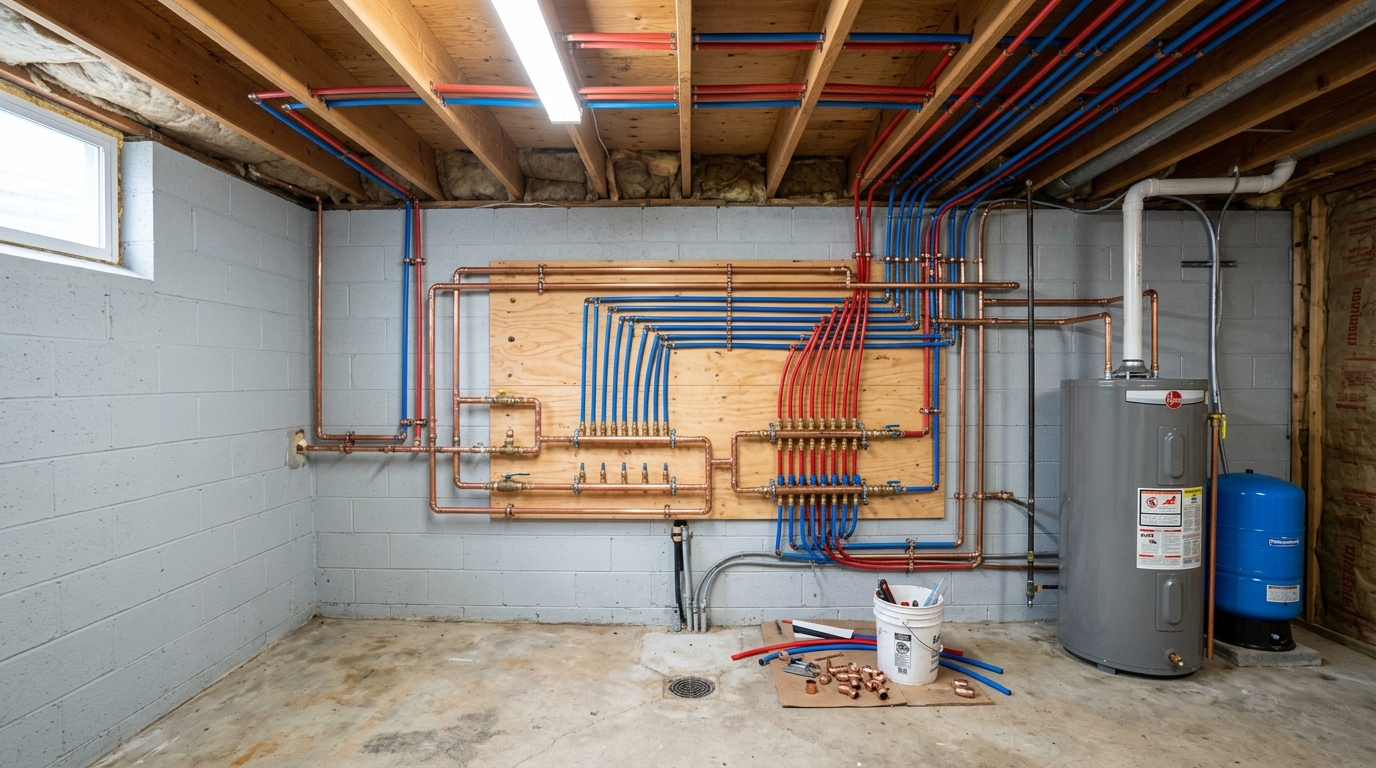
Water heaters in these houses are rarely original; most are on their second or third by now. Drain lines are generally cast iron or clay, both known to develop leaks or “bellies” with age. If you’re buying or maintaining an older New Kensington home, regular checks of exposed piping and at least one round of sewer camera inspection are warranted. Expect repairs and plan for a future repipe—whether in PEX or copper, both are common here—before leaks force your hand.
Verifying a New Kensington plumber's credentials
Pennsylvania doesn’t license plumbers at the state level. Instead, plumbing is licensed—or not—by the local municipality. The City of Greensburg, for example, keeps its own contractor registration for plumbing firms. This means a plumber licensed in one Westmoreland County township might not be legally authorized to work in the next. The right question isn’t “are you licensed”—it’s “are you licensed to work in this municipality?” Always confirm they’re properly registered for the town where the work is taking place.
For jobs over $500, plumbers must have a Pennsylvania Home Improvement Contractor registration issued by the Office of Attorney General (verify at hic.attorneygeneral.gov). A written contract is legally required, and you have a 3-business-day right of cancellation under the Home Improvement Consumer Protection Act. Never work with a contractor who offers to waive your insurance deductible—state law prohibits it.
In Hempfield Township, plumbing work tied to public water or sewer connections usually requires a township construction permit, with inspections by the Planning & Zoning Department. In Greensburg, like-for-like fixture replacements that don’t move or alter piping are ordinary maintenance and typically don’t need a permit. Insurance and workers’ comp can be checked through Pennsylvania’s WCAIS system (wcais.pa.gov); insist the contractor shows current paperwork in their business name.
If lead paint is disturbed in homes built before 1978, the federal EPA Lead RRP Rule applies. You can check for certified renovators at certifiedrenovatorsearch.epa.gov.
What urgency costs you
Needing a plumber in a hurry—especially after hours or with water gushing—costs more than a scheduled, non-urgent repair. The “emergency premium” in New Kensington includes after-hours travel, a standby dispatch fee, overtime pay, and the cost of sending a crew when jobs can’t be stacked for the day. Diagnosis is often done on the clock, not by appointment, so less time is spent sourcing the cheapest fix or workaround.
A true emergency includes scenarios like an active leak flooding your home, total loss of water, sewage backing up into living space, or any gas odor with a water heater or boiler. These demand a call right away—costs ranging $550–$1,100 for a burst pipe during an emergency visit. Less urgent problems—like a dripping faucet, a slow drain, or a running toilet—can almost always wait for business hours and cost much less, usually $325–$1,100 for common leak repairs during regular service, with the low end for simple fixes.
Before you call, know how to turn off the main water valve: this is usually located where the water line enters the basement wall or floor. Most fixture shut-offs are under the sink or behind the toilet—turn these clockwise to close. Containing a leak at the valve level turns most emergencies into work that can be scheduled, saving you hundreds. Don’t pay for after-hours plumbing if you can shut it down and stem the damage until morning.
Frequently asked questions — plumbing in New Kensington
What does discoloured water on first draw mean?
Discolored water in New Kensington—especially that rusty, brown tint when you first turn on the tap—usually points to sediment or mineral buildup in the supply line or old galvanized piping. This is common in older homes where over 91% were built before 1980. Sometimes flushing by the Municipal Authority of Westmoreland County stirs up harmless iron or manganese. If it’s yellow or brown and clears after running cold water for a minute, it’s almost always from your pipes or the main. It’s not uncommon after plumbing work or hydrant use nearby. If water stays colored after prolonged flushing or is paired with a metallic taste, call your plumber. Testing and inspection may run $325–$1,100 if a hidden leak is found or pipes need replacing, but most times it is harmless sediment.
Am I responsible for the water line under the street?
In most New Kensington properties, the homeowner is responsible for the water service line from the home up to and including the curb box or shut-off, which is often located near the sidewalk or property line. The main water line in the street itself is maintained by the Municipal Authority of Westmoreland County. If your section of the water line fails—even under the public tree lawn or driveway—you pay for repair or replacement. A typical water service line replacement locally is $4,900–$11,000, depending on access and restoration. Get a clear map of your utility’s shut-off to know where your responsibility begins and ends. Always ask your water authority if you need clarification, as policies can shift between townships.
How much does a water heater replacement cost in New Kensington?
For a standard gas water heater (40–50 gallons) in New Kensington, replacement—removing the old unit, installing the new one, testing, and haul-away—typically runs $1,100–$2,500. Most jobs land near $1,700. Extra costs appear with tough access (narrow basement stairs are very common), code upgrades, or lead-safe requirements in older homes. Price also shifts if you upgrade to high-efficiency or power vent models. If your heater is 10–15 years old and showing signs of rust or intermittent hot water, replacement now is often cheaper and safer than waiting for a tank failure that could flood your basement. The housing stock in this area means many heaters are already on their second or third life.
Can I do my own plumbing work in New Kensington?
In New Kensington, Pennsylvania law does not prohibit homeowners from doing their own plumbing work in houses they occupy, but the rules aren’t the same everywhere. Local permits matter. In Hempfield Township, any plumbing connected to public water or sewer usually requires a township-issued permit and inspection. In Greensburg, like-for-like fixture replacements that don’t change piping usually don’t need a permit. However, work that moves or alters plumbing—even in your own home—must pass inspection if a permit is required. If you do your own work, you are legally responsible for code compliance and any resulting damage or code penalties. Professional repair for supply leaks, for safety and proper closure, generally runs $325–$1,100; sometimes that’s worth it for peace of mind.
What counts as a plumbing emergency?
In New Kensington, a true plumbing emergency is something that risks property damage or health: an active flooding leak, a sewer backup into the house, no running water, or the smell of gas near a water heater or appliance. These are reasons to call for immediate emergency service, which typically costs $550–$1,100 for urgent repairs. Problems like a slow-draining sink, a faucet drip, or a single cold radiator can almost always be scheduled during regular hours—saving hundreds. Knowing where your main shut-off valve is can turn nearly every “emergency” into planned work. Don’t spend extra unless the situation is truly out of control; preserving your house and health should guide the decision.
Do older New Kensington homes have galvanized pipes?
Yes, many older homes in New Kensington—especially those built in the post-1945 suburban expansion—still have galvanized steel supply lines. Over 91% of local homes were built before 1980, and galvanized was the standard for decades. These pipes corrode from the inside, slowly choking off water flow and often splitting or leaking as they age. Rusty water, low pressure, and pinhole leaks are all signs of failing galvanized. Spot repairs for leaking galvanized can run $325–$1,100, but permanent solutions usually involve whole-house repiping, which is common locally and runs $3,100–$7,600.
Should I leave a faucet dripping in cold weather?
In New Kensington, letting a faucet drip during the coldest snaps really does help prevent frozen pipes—especially where runs are against exterior walls or in unheated basements. With a winter design temp of 8 °F and a frost depth of 36 inches, pipes in older homes here are often near the freeze zone. A slow drip keeps water moving, helping prevent pressure build-up and bursting. The cost of extra water is minimal compared to emergency repairs, which commonly cost $550–$1,100 for a burst pipe. Still, also add pipe insulation where possible: it’s a more permanent fix, and the expense easily offsets one emergency service call.
Is a tankless water heater worth it in New Kensington?
Tankless water heaters deliver endless hot water and slightly better efficiency, but in New Kensington, the payback depends on your hot water habits. In older homes, installation often means upgrading gas lines, venting, and sometimes electrical service—raising installation costs over tank replacements, which usually run $1,100–$2,500. If your family uses a lot of hot water (multiple showers at once), tankless may make sense. For average households, especially those with moderate incomes (median $47,015), a reliable tank heater is usually the better value. Remember, hard water common here can cause faster scaling in tankless units—unexpected maintenance is more likely than with a simple, well-installed tank.
What does repiping a house cost in New Kensington?
In New Kensington, whole-house repiping—replacing all your old galvanized, copper, or mixed-material supply lines—typically costs $3,100–$7,600. The most common reason is aging or corroded pipes in homes built before 1980. This price covers demolition, new piping (usually PEX or copper), reconnection of all fixtures, and patching any walls or ceilings affected. Accessibility is the biggest variable; homes with finished basements or multiple levels hit the higher end. Partial repipes or repairs cost less, but if your home shows repeated leaks, low pressure, or rusty water, a full repipe is usually smarter than chasing leaks one at a time—which quickly adds up to the same total.