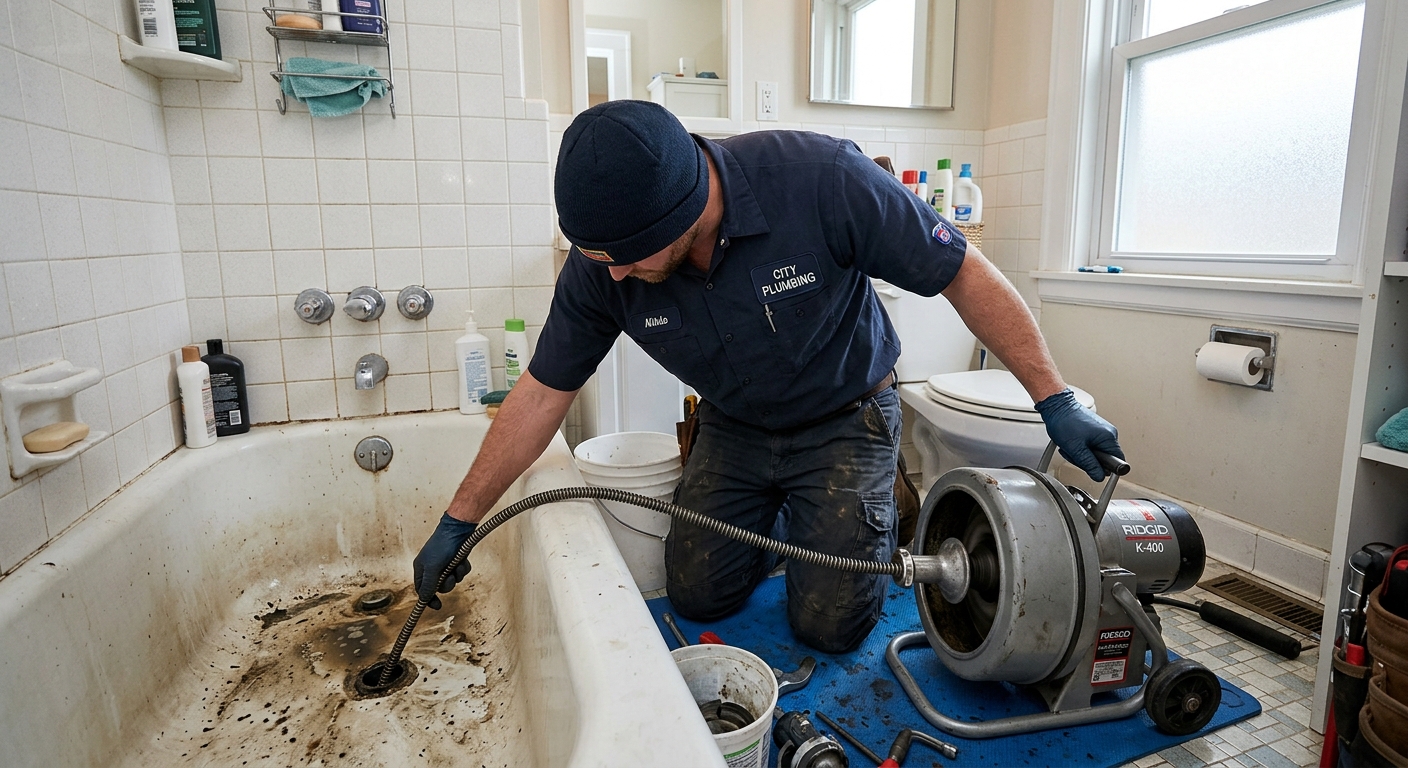
Plumbing costs in Media — 2026
In Media, plumbing costs can swing widely between an emergency call and a scheduled repair. When a pipe bursts on a Saturday night, the price reflects both the urgency and the extra logistics—expect to pay the top end for a quick response. For planned work, the same job can be several hundred dollars less, simply because the plumber can queue the job and order parts ahead of time.
Older homes dominate in Media, with 84.3% built before 1980 (U.S. Census Bureau, ACS 2024). The construction era tells you what’s behind your walls: in houses from the 1945–1975 boom, much of Upper Darby and Lansdowne still has galvanized water lines or clay tile drains. Those materials drive both the problems you’re likely to see and how expensive it is to fix them. Labor can jump if your plumber needs to navigate behind original plaster or work around odd framing inside a rowhouse. For water heaters, most homes have replaced the original at least once—but older tank-style units failing today are usually on their second or third setup.
It’s worth noting that only 17.8% of homes in Media are single-family and fewer than 40% are owner-occupied. That means repair costs can be shared in multis, but individual emergencies fall on the owner—so it pays to know whether you’re looking at a main-service shutdown or a single fixture repair.
| Service |
Scope |
Emergency rate |
Standard rate |
| Emergency repair — burst pipe |
locate, open, repair section, restore service |
$600–$1,200 |
$350–$1,200 |
| Water heater replacement (gas, 40–50 gal) |
remove old, install, test, haul away |
$1,950–$2,900 |
$1,200–$2,900 |
| Drain cleaning — main line |
augering or hydro-jet, camera if needed |
$350–$800 |
$200–$500 |
| Sewer line spot repair |
excavate or reline a failed section |
$2,000–$12,000 |
$2,000–$12,000 |
| Whole-house repipe |
replace supply lines throughout, patch and finish |
|
$3,600–$8,700 |
| Water service line replacement |
street to house, excavation and restoration |
|
$5,600–$12,000 |
Estimates for a typical Media home. Access difficulty and pipe material move these figures more than anything else.
Sewer line problems in Media
In Media and most Delaware County towns, the sewer lateral—from your house up to the main, often under the street—is almost always the homeowner’s responsibility. This catch surprises a lot of people, especially after a backup where it’s not clear who needs to respond first.
The first warnings of sewer trouble are usually slow drains in your lowest fixture, often a basement utility sink or shower. When the main line clogs, you’ll get gurgling or bubbling in nearby drains, and eventually water will back up or overflow at the lowest point. When more than one drain is slow, the issue is nearly always in the main and not a branch.
If you call a plumber for sewer issues, they should run a camera through the pipe after any preliminary clearing. Typical problems in older local homes include tree root intrusion—especially in clay tile sewer laterals laid before 1980—offset joints (where shifts or settlements break the continuous slope), and “bellies” where the pipe sags and repeatedly clogs. The footage tells you exactly where and what the problem is so you’re not guessing at the repair.
Repairs break down into two main types: open-cut (dig up and replace the bad section) or trenchless relining (slip-lining a new pipe through the old). Relining can be less disruptive, but you need a good run of intact original pipe—and not every home is a candidate.
In places like Edgmont Township, septic is still common. Those require regular tank pumping (every 3–5 years) and, when problems occur, failure in the drainfield is a different beast entirely—no rooting will solve a saturated field.
Above all, never accept a sewer excavation quote in Media without seeing the camera footage that justifies it. Demand it up front.
Water heater replacement decisions
If your water heater is leaking in Media, replacement is usually faster and cheaper than chasing controls or thermostat repairs—the tank is what fails first, especially in homes where the original unit is long gone and second or third replacements are in place. When choosing a replacement, your options are tank (gas or electric), gas tankless, or heat pump. Each comes with pros, cons, and real differences in installation cost and long-term savings.
Standard tank-style water heaters—gas or electric—are cheapest to install. They suffer “standby loss,” wasting energy to keep water hot 24/7, and tend to last 8–15 years. Gas tankless gives endless hot water, and is more efficient long-term, but costs more up front. Pay special attention if your house doesn’t already have a big enough gas line or modern venting—those upgrades sometimes push a mid-range job to the high end of $1,950–$2,900 installed.
Heat pump water heaters are quiet winners on operating cost—they use less electricity than a toaster. But they need a big, warm basement or utility room to draw air, make the space cooler and noisier, and aren’t for everyone, especially if you shower at odd hours or live in a chopped-up rowhouse.
Sizing should rely on the “first-hour rating” (how much hot water in peak hour), not just tank gallons. Make sure you get a pan and, if needed, an expansion tank (both required today but not always present in older setups). It’s almost never worth repairing an aging, leaking tank—you’re buying another short interval before total failure.
| Type |
Installed cost |
Service life |
Operating cost |
Best when |
| Gas tank, 40–50 gal |
$1,200–$2,900 |
8–12 yrs |
moderate |
Existing gas, low upfront budget |
| Electric tank, 40–50 gal |
$1,200–$1,950 |
10–15 yrs |
high |
No gas service, simple install |
| Gas tankless |
$1,950–$2,900 |
18–25 yrs |
low-moderate |
Endless hot water, willing to pay more upfront |
| Heat pump water heater |
$1,950–$2,900 |
13–15 yrs |
lowest |
Big, warm basement and high electric rates |
Verifying a Media plumber's credentials
Plumbing in Pennsylvania is licensed and registered at the municipal level, not the state. That means there’s no universal PA “plumber's licence.” Each township or borough sets its own requirements, so a plumber licensed in Philadelphia or Pittsburgh isn’t automatically qualified or legal to work in Media or Upper Darby. In Delaware County, municipalities do not impose a countywide plumbing license—Philadelphia’s license doesn’t apply here. That’s why you should always ask, “Are you permitted to work on plumbing in Media?” and expect a direct answer, not a runaround about statewide licensing.
For contracts over $500, your plumber is legally required to hold a Home Improvement Contractor (HIC) registration, issued by the Pennsylvania Office of Attorney General. You can verify a contractor at hic.attorneygeneral.gov. It’s mandatory that you get a written contract (by state law) if your job totals more than $500, and you’ll have a three-business-day cancellation right.
If your project goes beyond a faucet or toilet repair, most municipalities require a permit—for example, any new or relocated plumbing piping or fixtures triggers a municipal building permit in Upper Darby. Insurance is key: employers (including plumbers) must have workers' compensation coverage, which you can verify via WCAIS (wcais.pa.gov). Always ask for current insurance and check for their HIC registration to protect yourself and your home.
The leak you can hear but can't see
If you suspect a hidden leak in your Media home, do the water meter test first. Shut off all faucets, fixtures, and appliances that use water, then check your water meter. If the dial is spinning or the digital counter is moving, you likely have a supply-side leak—even if you can’t see water anywhere.
For pinpointing leaks inside walls, slabs, or under floors, professionals use several non-invasive tools. Acoustic listening devices work in quiet settings for around $350–$1,200 as part of the diagnostic. Thermal imaging cameras sense temperature differences from leaks, while tracer gas finds pinhole leaks too small to hear or see. For slab leaks—rare in Media but possible on some post-1960s homes—a combination of listening and gas is standard practice. In finished homes or rowhouses, these methods are a lot less destructive than ripping into finished walls hoping to find the source.
Never let a plumber open walls or tear up floors before they’ve used at least one of these diagnostic techniques. This is especially true in houses with a history of galvanized steel lines or aging copper, where multiple hidden leaks can pop up as pipes near the end of their life.
Media's housing stock and its plumbing
Media’s homes are overwhelmingly older: 84.3% were built before 1980 (U.S. Census Bureau, ACS 2024). That puts them in the sweet spot for original galvanized steel or early copper supply pipes, cast iron waste lines, and a high likelihood of clay tile sewer laterals. Most local water heaters are on their second or third replacement cycle, with some having been swapped out every decade as tanks reach the end of their life.
Large tracts in neighboring Upper Darby and Lansdowne drive much of the local demand for full repipes—pulling out clogged, corroded galvanized and replacing them with copper or PEX—as well as drain and lateral repairs when older cast iron or clay fails. In these houses, you’re more likely to see symptoms like water pressure drops or slow-draining laundry tubs, which trace directly to these aging materials. Aqua Pennsylvania’s focus on lead and galvanized service line removal further underscores the age and vulnerability of much of Media’s plumbing infrastructure.
Even single-family houses often share walls and yard lines with a neighbor, complicating access for pipe replacement and sewer work. Newer infill builds are rare in Media, so you won’t see as much polybutylene, but you should watch for haphazard repairs where old and new plumbing meet. Whatever you have, age and era tell the story—check exposed runs in the basement or under sinks to see if you’re overdue for an upgrade.
Pipe materials in Media homes and how they fail
The plumbing in Media is an archaeological dig through the region’s building era. Large tracts of 1945–1975 rowhouses and twins in Upper Darby and Lansdowne are a strong clue: if you open up the walls, you’ll often see galvanized steel supply pipes—gray-silver, magnet sticks, heavy and threaded. These pipes corrode from the inside, cutting water pressure as the bore narrows, long before they leak outright. When they do leak, it often happens in patches throughout the system, not just one spot.
Homes upgraded in the 1970s to 1990s usually have copper (dull orange-brown, smooth, and only lightly magnetic at any clamps)—better lasting power, but not immune to pinhole leaks, especially if Aqua Pennsylvania’s water chemistry gets aggressive. In rare, newer runs, you might see PEX (color-coded blue/red plastic, flexible, usually with crimped brass fittings), which is now the contractor’s choice for full home repipes. Polybutylene—gray-blue plastic, mostly in homes built in the late 1970s through mid-1990s—is a liability today, prone to catastrophic failure at the fittings, and major insurance companies flag it or refuse coverage in resale.
On the drainage side, pre-1975 installations total up to cast iron drains (thick, black, not magnetic, joints packed with lead and oakum) and clay tile on sewer laterals (dull brown/orange pipe under the yard). Both fail by slow, sneaky increments—rust, scale, and then outright breaks. Clay tile, joined in short 3–4 foot segments, is notorious for root intrusion and shifting joints. PVC or ABS (white or black plastic, lightweight, glued joints) may be present in post-1970s work or where spot repairs have replaced bad sections. Your best way to identify: scratch an exposed pipe with a coin, check the color, or see if a magnet sticks.
| Material |
Typical era |
Failure mode |
Service life |
| Galvanized steel supply |
pre-1960 |
internal corrosion, pressure loss |
40–60 yrs |
| Copper supply |
1950s–present |
pinhole leaks, joint failure |
50–70 yrs |
| Polybutylene supply |
late 1970s–1995 |
fitting failure, sudden bursts |
unreliable |
| PEX supply |
2000s–present |
fitting or UV degradation |
40–50 yrs |
| Cast iron drain |
pre-1975 |
corrosion, cracking, scale |
50–75 yrs |
| Clay tile sewer lateral |
pre-1980 |
root intrusion at joints, offset |
50–60 yrs |
| PVC / ABS drain |
1970s–present |
joint separation, crushing |
50+ yrs |
Frequently asked questions — plumbing in Media
How do I prevent frozen pipes in Media?
Staying ahead of frozen pipes in Media starts with insulation and air sealing in unheated spaces—crawlspaces or exterior walls are common problem areas, especially in older homes where construction gaps let in drafts. On cold nights, open cabinet doors below sinks, especially those on outside walls, to let warmer air reach the pipes. Let a trickle of water run during the nastiest cold snaps; a slight flow costs pennies compared to a burst. If your home was built before 1980, it may still have supply pipes routed through less-protected parts of the house. A freeze can easily turn into a burst, with emergency repair bills running from $600–$1,200 if it lets go overnight. Heat tape (installed by a pro) can also help in known problem areas. For houses with repeated freeze problems, consider rerouting vulnerable runs entirely.
Why do plumbers charge a diagnostic fee?
In Media, most plumbers charge a diagnostic fee because a proper diagnosis—especially in older housing—takes skill and time. With homes built before 1980, there’s a good chance you could be dealing with hidden galvanized lines, buried cleanouts, or hard-to-access drain stacks. The diagnostic charge covers the trip, time spent troubleshooting, and often basic equipment like a small camera or leak detector. It keeps the visit from turning into free advice that the next shop uses. Many plumbers credit the fee toward the repair if you hire them, but not always. For example, if a plumber spends an hour finding a hard-to-trace leak and you decline the repair, you’re still paying for their expertise. Compared to risking a wrong repair—an unneeded repipe or a mistaken excavation, where costs can hit $3,600–$8,700—the fee saves money in the long run.
Is trenchless sewer repair reliable?
In Media and across Delaware County, trenchless sewer relining is widely used for clay tile laterals and even some failing cast iron, as long as the line still has structural integrity. The process can spare your driveway or landscaping and generally comes in on the lower side of disruption. However, it is only reliable if the existing pipe is properly prepped and not completely collapsed—camera inspection is a must. Many Media homes, especially those built pre-1980, have roots or offsets that can complicate the process. If the defects are isolated, a spot repair can cost $2,000–$12,000, trenchless included. If the whole line is crumbling, open-cut may still be your only option. Demand a copy of the camera video and ask for a side-by-side estimate to make an informed call.
Why do all my drains drain slowly at once?
In most Media homes, if every drain starts slowing at the same time, your problem is almost certainly in the main soil stack or the building sewer, not the individual branch lines. Older houses in this area often have cast iron stacks and clay tile laterals, both of which corrode or clog with roots over time. When leaves, roots, or deteriorated pipe block the main, you’ll see sluggish flow at the lowest fixtures first—laundry sinks or basement toilets. This is a warning sign: waiting too long risks a total backup that could cost $2,000–$12,000 for a repair if excavation is needed. A camera inspection is the smart next step, as this tells exactly where the blockage or break is happening, so you only pay for necessary repairs.
How do I verify a plumber's licence and insurance?
In Pennsylvania, and specifically in Media, plumbing licenses are not statewide—each municipality handles its own registration and permits. Ask your plumber, “Are you approved or permitted to work in Media?” For projects over $500, every contractor must show you their Home Improvement Contractor (HIC) registration, which you can check at hic.attorneygeneral.gov for active, valid registration. You should also ask for proof of current workers' compensation coverage, required for all employers, and verify it through WCAIS (wcais.pa.gov). Don’t accept paperwork from Philadelphia—those licenses don’t apply in Media or anywhere in Delaware County. Reputable plumbers will always have hard copies of both with them and be happy to share them before work begins.
Do older Media homes have galvanized pipes?
Yes, a significant number of older homes in Media—especially ones built before 1960—still have sections of galvanized steel supply piping. These pipes are prone to internal corrosion, which restricts flow and eventually leads to leaks. Many owners are in the process of replacing them with copper or PEX, often prompted by repeated leaks or discolored tap water. If your home’s water pressure is poor or you see rust in your sink after vacation, galvanized pipes may be to blame. A full repipe in Media runs about $3,600–$8,700, but replacing just the worst sections can be a stopgap. If you’re unsure, have a plumber identify the visible pipe runs—magnet test and all—so you know for sure before budgeting for a big overhaul.
What counts as a plumbing emergency?
In Media, a plumbing emergency means active water leaking where it shouldn’t—whether a burst pipe flooding a basement, a clogged sewer backing up every drain, or a water heater tank that’s let go. These situations warrant urgent, often after-hours calls, and the costs reflect that: an emergency burst pipe repair can reach $1,200 if materials or labor have to be mobilized right away. Not every slow drain or dripping faucet is an emergency—you can usually wait for a regular appointment. If shutting off your main house valve stops the leak but you’re left with no water at all, that still qualifies as urgent for most households in Media, especially with only 17.8% single-family homes and shared plumbing in multifamily settings.
Does insurance cover a burst pipe in Media?
Home insurance policies in Media and broader Pennsylvania generally cover sudden, accidental damage from burst pipes—think a pipe freezes and ruptures overnight, flooding floors or ceilings. The key is that it has to be “sudden and accidental,” not slow or neglected leaks. Be sure to check your deductible; most policies will not waive it (and plumbers in Media are prohibited by law from doing so). Typical repairs for a burst pipe might run $600–$1,200, plus the cost of any water damage or restoration, which is often handled by a separate contractor. Keep all receipts and photographs for your insurer, and notify them immediately for the cleanest claim process.
What does repiping a house cost in Media?
Repiping a typical Media house—especially those built between 1945 and 1975, which still may have galvanized or early copper pipes—usually costs $3,600–$8,700. This covers replacing all supply lines (cold and hot) from the water meter to each fixture, patching walls, and restoring finishes as needed. Variables include how accessible the existing pipe runs are, whether you opt for copper or PEX, and how many stories or bathrooms you have. Given that over 80% of Media’s homes are pre-1980, a large percentage are now at or near the end of their original plumbing’s life span. While you can choose to replace just the problem sections for less, a full repipe is often safer and cheaper in the long run, especially if you’re experiencing persistent leaks or rusty water.