What plumbers charge in Lower Burrell
In Lower Burrell, most homes were built before 1980 (76.3% per U.S. Census Bureau, ACS 2024), which means copper and galvanized pipes are the norm — especially in post‑1945 suburban tracts nearby in Hempfield and North Huntingdon. This matters: the age and material of your plumbing decide what breaks and how much it costs to fix. For example, older galvanized lines are prone to internal corrosion and bursts, while aging copper may develop pinhole leaks.
Income and homeownership rates are high here, with a median household income of $78,639 and 82.7% owner occupancy, which means most repairs and upgrades are your responsibility, not a landlord's. If you’re calling for an emergency — meaning active leaking, shut-off needed, or a burst flooding your basement after a hard freeze — you pay roughly twice as much as a planned repair. The timing, not just the job itself, drives the price most in Lower Burrell.
| Service |
Scope |
Emergency rate |
Standard rate |
| Emergency repair — burst pipe |
locate, open, repair section, restore service |
$600–$1,200 |
$350–$1,200 |
| Water heater replacement (gas, 40–50 gal) |
remove old, install, test, haul away |
$1,900–$2,800 |
$1,200–$2,800 |
| Drain cleaning — main line |
augering or hydro-jet, camera if needed |
$350–$800 |
$200–$500 |
| Sewer line spot repair |
excavate or reline a failed section |
$2,000–$12,000 |
$2,000–$12,000 |
| Whole-house repipe |
replace supply lines throughout, patch and finish |
— |
$3,500–$8,500 |
| Water service line replacement |
street to house, excavation and restoration |
— |
$5,500–$12,000 |
Estimates for a typical Lower Burrell home. Access difficulty and pipe material move these figures more than anything else.
Is your water line lead? How to find out
Many Lower Burrell homes get their water from the Municipal Authority of Westmoreland County, which maintains a systemwide lead service line inventory. If your house dates to before 1980 — the case for most in the area — there’s a chance your water service line is lead, at least in older Greensburg neighborhoods with documented partial replacements.
A service line runs from the street to your home: the public side up to the curb stop is owned by the authority, and the private lateral from there to your house is your responsibility. Replacement programs usually only cover the utility-owned half, leaving you to handle (and pay for) your portion. Disturbing a lead line by partial replacement can, paradoxically, spike lead levels in your water because it shakes loose protective mineral scale.
To check your own line, find where it enters your basement or crawlspace. Gently scratch the pipe with a coin; lead is dull and silver, while copper is reddish. If a magnet sticks, it’s steel or galvanized, not lead. For a more certain answer, ask the Municipal Authority of Westmoreland County if your address is in their inventory—they can tell you what they know, but you’re responsible for the private side. Never assume there’s a subsidy or shared cost for replacement; contact the utility directly.
For full replacement from street to house in Lower Burrell, plan on $5,500–$12,000 depending on length and obstacles. Just the sections inside your home — a whole-house supply repipe — runs $3,500–$8,500. Knowing your line’s material is worth it: a lead line should move to the top of your repair list, ahead of cosmetic work or even routine fixture upgrades.
Frozen pipes in Lower Burrell: prevention and thaw
A typical Lower Burrell winter brings real freeze risk — the local frost depth is 36 inches, and the winter design temperature drops to 8 °F. Bursts follow not at the spot that’s frozen solid, but between that ice plug and a closed faucet: the pressure has nowhere to go and splits the pipe, which is why the leak might start even after things have warmed up.
Vulnerable areas are easy to spot: pipes on exterior walls, lines running through unheated crawlspaces, garages, attic supplies in old romex-insulated homes, and—most often—outdoor hose bibs that weren’t shut off and drained before the first hard freeze. Bulkhead entries and laundry rooms off an uninsulated garage are frequent trouble spots.
Your cheapest insurance is pipe insulation and clamp-on heat tape for lines in unheated zones. During severe cold snaps, let a trickle run from the most remote faucet and open vanity or cabinet doors so heat can reach hidden pipes. Always shut off and drain yard spigots by November. If a pipe does freeze, use a hair dryer, heat gun, or electric heater—never an open flame.
A pipe that bursts during a cold snap costs $600–$1,200 in emergency service. Prevention often costs less than a basic service call, and doesn’t carry the worry of lasting water damage.
Who is allowed to do plumbing work in Pennsylvania
In Pennsylvania, plumbing is not licensed at the state level; there’s no statewide license, registry, or board for plumbers outside Philadelphia or Pittsburgh. Instead, each municipality can—and many do—set their own credential requirements. In Westmoreland County, this means a professional allowed to work in Greensburg may have zero standing in Lower Burrell or the adjacent townships. Always confirm: the right question is not “are you licensed,” but “are you licensed here?”
Some municipalities, like the City of Greensburg, have contractor registration specifically for plumbing firms in addition to any broader registration or local rules. If your project involves new or altered connections to public water or sewer (not just swapping a faucet for the same unit), a construction permit from your local office is likely required. Who inspects? In Lower Burrell and the surrounding boroughs, it comes down to the municipality’s own permitting office—not a statewide inspector.
For contracts over $500, the plumber must carry Home Improvement Contractor (HIC) registration from the Pennsylvania Office of Attorney General—check hic.attorneygeneral.gov. Employers must have valid workers' compensation; verify at WCAIS (wcais.pa.gov). Always ask for a written contract, as required by the Home Improvement Consumer Protection Act.
Comparing plumbing estimates in Lower Burrell
In Lower Burrell, contractors offer estimates in two basic models: flat rate (you pay what’s quoted, even if the job goes sideways) or time-and-materials (hourly plus parts). Flat rate lends price certainty but may bake in extra for risk, especially on emergency calls. Time-and-materials can save money on a simple job—like snaking a main—but leaves you exposed if access proves tricky or surprises are found mid-repair. The problem isn’t the model; it’s not knowing which you agreed to.
Always look for a written diagnostic fee upfront, and whether that fee gets credited if work goes ahead. A real quote specifies the work area, what will be opened, and whether drywall or flooring repairs are included. Permit fees, restoration after the repair, brands of fixtures, and labor warranty should all be spelled out. Don’t gloss over after-hours surcharges—these are standard but should never be a surprise.
| Line item |
What to look for |
Red flag if… |
| Billing model |
flat rate or hourly, stated up front |
unstated |
| Diagnostic fee |
amount, and whether it credits |
vague |
| Scope |
what is opened, repaired and restored |
price with no scope |
| Restoration |
drywall and finish explicitly in or out |
silent |
| Permit |
included and priced |
'not needed' |
| Parts |
brand and model for fixtures |
'standard fixture' |
| Warranty |
labour period stated separately |
parts only |
Choosing a plumbing contractor
You want a plumber who’s qualified for work in Lower Burrell—not just Pennsylvania generally. With municipal licensing, confirm they hold contractor registration with the City of Greensburg or your local authority if you are in those boundaries. Always verify HIC registration for contracts over $500 at hic.attorneygeneral.gov and confirm any company working on your property carries valid workers’ compensation—look up the business right on WCAIS (wcais.pa.gov). Never accept a handwritten insurance certificate; the policy must name your address.
Ask if the company runs its own crews or subs out work, whether restoration is handled in-house, and how after-hours pricing works. A dense contractor market, like Westmoreland’s, sees firms working throughout the area; you must confirm they’re considered licensed and permitted specifically for your job.
- Verify municipal contractor registration for your city or township
- Check HIC status at hic.attorneygeneral.gov
- Confirm workers' comp coverage at wcais.pa.gov
- Insurance certificate must name your property directly
- Ask if crews are company employees or subs
- Look for references on work in local homes of the same age
- Ask for recent photos or video of comparable jobs
- Written contract required over $500
- Scope must spell out included restoration, not just “repair”
- Diagnostic fee structure clear up front
- After-hours rates stated in writing
- Camera footage or pressure test for any quoted repipe or sewer line
Red flags: pushy same-day “deals,” lack of proof of insurance or HIC registration, or a quoted sewer or repipe with no camera or test to show why. In a moderate suburban market like Westmoreland’s, there’s no reason to skip these steps—reputable plumbers expect to be checked out before a big job.
Plumbing systems in Lower Burrell homes
Most Lower Burrell homes have supply lines originally installed as copper or galvanized steel, a typical choice for post‑1945 suburban tracts—but many are now showing their age. If your house was built before 1980 (which covers 76.3% of the housing stock), internal corrosion and scale buildup are normal, especially on galvanized pipes. Main sewer lines are often original clay tile, which means root intrusion and shifting from freeze-thaw cycles are common troublemakers on slow drains and backups.
Water heaters, unless upgraded, may be second or third replacements by now; the original models simply don’t last this long, especially with mineral-laden public water. If you’re seeing drops in water pressure, slow drains, or rusty water, it’s seldom a problem with fixtures themselves—much more likely it’s old pipework hidden in walls, or a clay or cast iron drain under the basement slab.
Older homes in Greensburg or adjacent boroughs also have a documented risk of legacy lead service lines and partial replacements. If your house is newer, you’ll see more builder-grade PEX, CPVC, or—in some mid-’80s to early-’90s suburbs—polybutylene, which brings its own leak risks. Newer doesn’t mean trouble-free: plastic lines can fail from poor installation or chemical stress. Across the board, a camera sewer inspection and a visual check for old galvanized or lead pipes give you the most insight before a big spend.
Frequently asked questions — plumbing in Lower Burrell
How do I find a hidden water leak?
If you notice your water bill going up or see unexplained moisture, there’s likely a hidden leak. In Lower Burrell’s older homes, copper and galvanized lines are prime suspects—small pinhole leaks may go unnoticed behind walls for months. Start by turning off all faucets and noting your water meter. If the meter moves, water is escaping somewhere in your system. Thermal cameras or moisture meters can help, but most homeowners need a plumber for true leak detection. Contractors often charge a diagnostic fee, which can run $200–$500 for main line leak location using cameras or acoustic equipment. For inside-the-wall leaks, cut access and repair costs may push the total higher, but acting early means less risk of major drywall or floor damage. In Lower Burrell, where most homes are owner-occupied and built before 1980, quick action keeps repair costs much more manageable.
Do I need a permit for plumbing work in Lower Burrell?
For most plumbing work in Lower Burrell and neighboring Westmoreland County boroughs, permits are required if you’re changing, relocating, or installing new pipes or fixtures. Swapping a faucet for the same type usually doesn’t, but adding a bathroom, moving supply lines, or tying into public water or sewer almost always does. Your local municipality (not the state) issues and inspects permits. Don’t skip this: working without a required permit can void insurance and require costly do-overs later. Plumbers should know the rules, especially since requirements change city by city. A reputable contractor factors the permit cost in writing; expect the line item in a quote for a repipe or water heater install—jobs between $1,200–$8,500—not to say “not needed” in the paperwork. Always ask, and call your municipal office if in doubt.
Is a tankless water heater worth it in Lower Burrell?
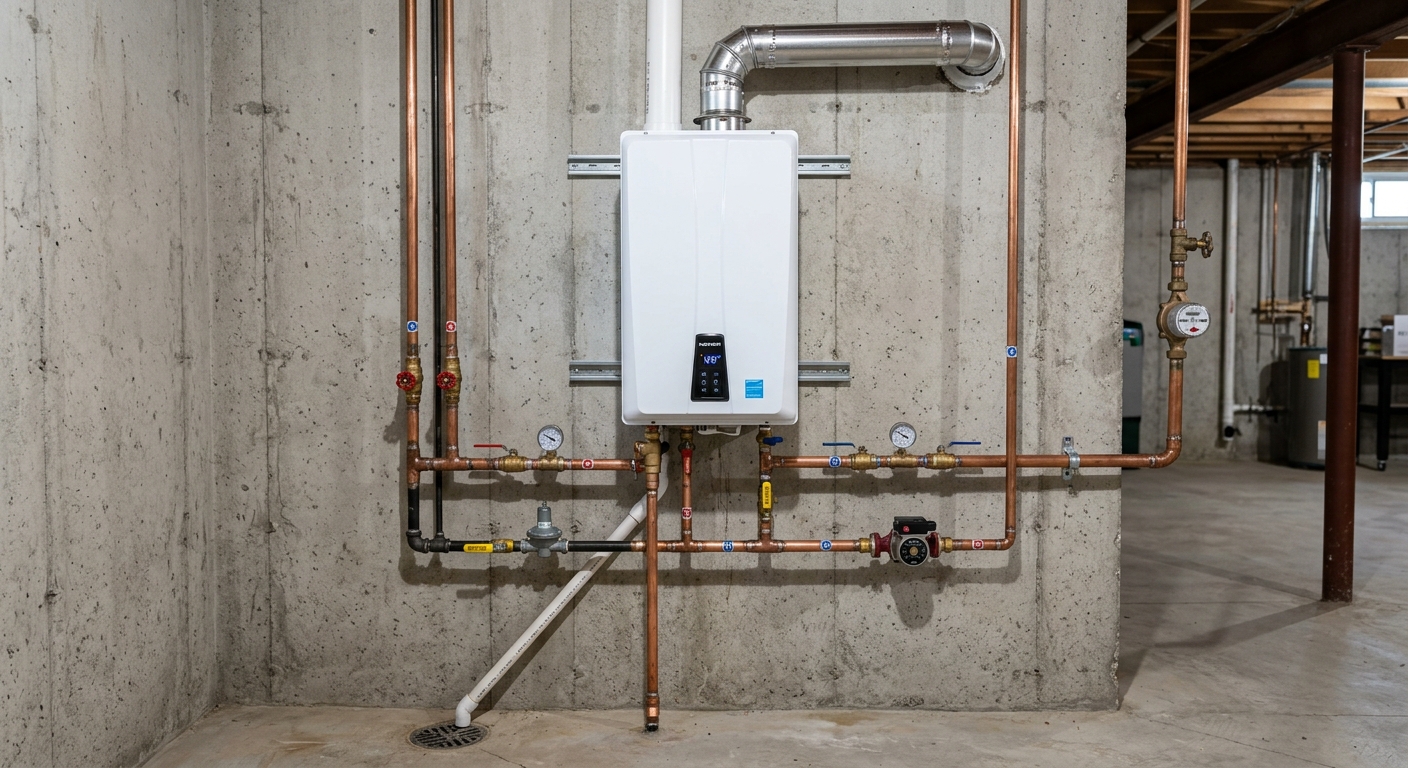
Tankless water heaters offer endless hot water and can save space, but retrofits in Lower Burrell’s older homes can be pricey. Most existing lines are sized for tank models, and switching may require a larger gas supply, an updated vent, or even an electric panel upgrade—all of which add cost above the unit itself. For a standard tank-style replacement, expect $1,200–$2,800. Tankless units can run higher, especially if rerouting pipes or boosting gas service is needed. If you rarely run out of hot water and are happy with your gas bills, stick with a traditional unit. Tankless models make the most sense if you have a large family and space is tight, or if you’re planning a full remodel. Otherwise, for most older Lower Burrell homes, replacing with a like-for-like tank usually makes the most financial sense.
Does insurance cover a burst pipe in Lower Burrell?
In Lower Burrell, most homeowner policies cover sudden and accidental water damage from burst pipes—but not problems caused by neglect, like long-term leaks or chronic freezing due to lack of maintenance. You’ll need to show you took reasonable steps to prevent freezing (insulating pipes, keeping heat on, draining outdoor lines). If approved, insurance usually covers water cleanup and property damage, but may only pay for pipe repairs if the burst was unavoidable. The emergency repair itself runs $600–$1,200, so check your deductible before filing. Remember, waiving your deductible is not permitted under Pennsylvania law. Always document the damage with photos before cleanup or repairs begin, and notify your insurance company as soon as possible.
Which utility supplies water to Lower Burrell?
Most Lower Burrell households get water from the Municipal Authority of Westmoreland County, the main provider for the area. They’re responsible for maintenance “to the curb stop” at your property line, and you own the line from that point to your house. If you suspect a leak or have a pressure concern, start by calling them first to determine if the problem is on their side. They also maintain the system’s lead service line inventory—crucial for older Lower Burrell homes, where partial replacements have been documented in some neighborhoods. If you end up needing a full water service line replacement, expect costs in the $5,500–$12,000 range, depending on the length and conditions.
How much does sewer line repair cost in Lower Burrell?
Sewer line repairs depend on the issue. A local spot fix for a failed section—relining or digging up and replacing the bad pipe—runs $2,000–$12,000 for typical Lower Burrell homes. Full replacements cost more if extensive excavation or driveway restoration is needed. Older homes nearby often have original clay tile laterals, which are prone to roots and shifting. Before agreeing to a major repair, always get camera footage that shows the break or blockage—it’s your best defense against unnecessary work. Be wary of any quote that recommends a whole new line without video or pressure test results, especially when facing a big-ticket project.
How do I prevent frozen pipes in Lower Burrell?
To protect pipes in Lower Burrell’s cold winters—where frost can reach 36 inches deep—start with insulation for all lines in exterior walls, unheated basements, crawlspaces, or garages. Install heat tape on problem areas and always shut off and drain yard spigots before the first freeze. On the coldest nights (those close to the 8 °F winter design temp), open cabinet doors and let a small trickle run from the most remote faucet, especially if you’ll be away. Even with these measures, stay vigilant: a burst pipe call can cost $600–$1,200. Prevention is far cheaper and spares you the hassle of lasting water damage or insurance headaches.
What do I do if sewage is backing up?
A sewage backup demands immediate action. In Lower Burrell’s older neighborhoods, backups are often due to roots in clay tile laterals or heavy rain overwhelming the sanitary system. Stop all water use and don’t flush—every gallon makes the problem worse. Call a plumber with camera equipment right away; a main line auger or hydro-jet may clear a typical clog for $200–$500. If a section of pipe has collapsed, be prepared for a much larger bill. Do not use chemical drain cleaners for a real backup—they don’t clear roots or major obstructions and can make repair work hazardous for your plumber. Document damage for insurance and, if you’re on city sewer, notify the authority in case of a system-wide blockage.
How much does a water heater replacement cost in Lower Burrell?
For a standard 40–50 gallon gas water heater replacement, expect to pay $1,200–$2,800 in Lower Burrell, which covers removing the old unit, installing the new one, safety testing, and haul-away of the old tank. Emergency replacements (like in the middle of winter or over a holiday) may run higher. Homes here tend to have seen two or more water heaters already, especially if built before 1980, so check your venting and supply line condition when budgeting for a new unit. Spending extra for an energy-efficient model can pay off in fuel savings, but for most residents the base install price is determined by access and the specific brand chosen, not flashy features.