What plumbers charge in Brighton
Brighton, just north of Beaver, has a housing stock where 66.6% of homes were built before 1980 and 92.6% are single-family residences (U.S. Census Bureau, ACS 2024). These homes, especially those on slabs from the 1945–1970 construction boom, often have aging galvanized or mixed-material plumbing. This history matters: older pipes mean higher risks for leaks, clogs, and failures—and the cost of your plumbing job often traces straight back to when your house was built. Most plumbing here involves working around or replacing outdated materials. For anything involving pipes buried in a slab or under a mature lawn, expect higher rates for labor and restoration.
In Brighton, every job runs in two price lanes: standard and emergency. If water is actively leaking or you’re without service on a weekend, emergency rates reflect both the urgency and the crew's overtime. A water heater swap at noon on a Tuesday costs much less than the same job at 3 a.m. on a holiday. The biggest cost swing comes with emergencies—plan when you can, but know the bands if you can’t.
| Service |
Scope |
Emergency rate |
Standard rate |
| Emergency repair — burst pipe |
locate, open, repair section, restore service |
$650–$1,250 |
$375–$1,250 |
| Water heater replacement (gas, 40–50 gal) |
remove old, install, test, haul away |
$2,000–$3,000 |
$1,250–$3,000 |
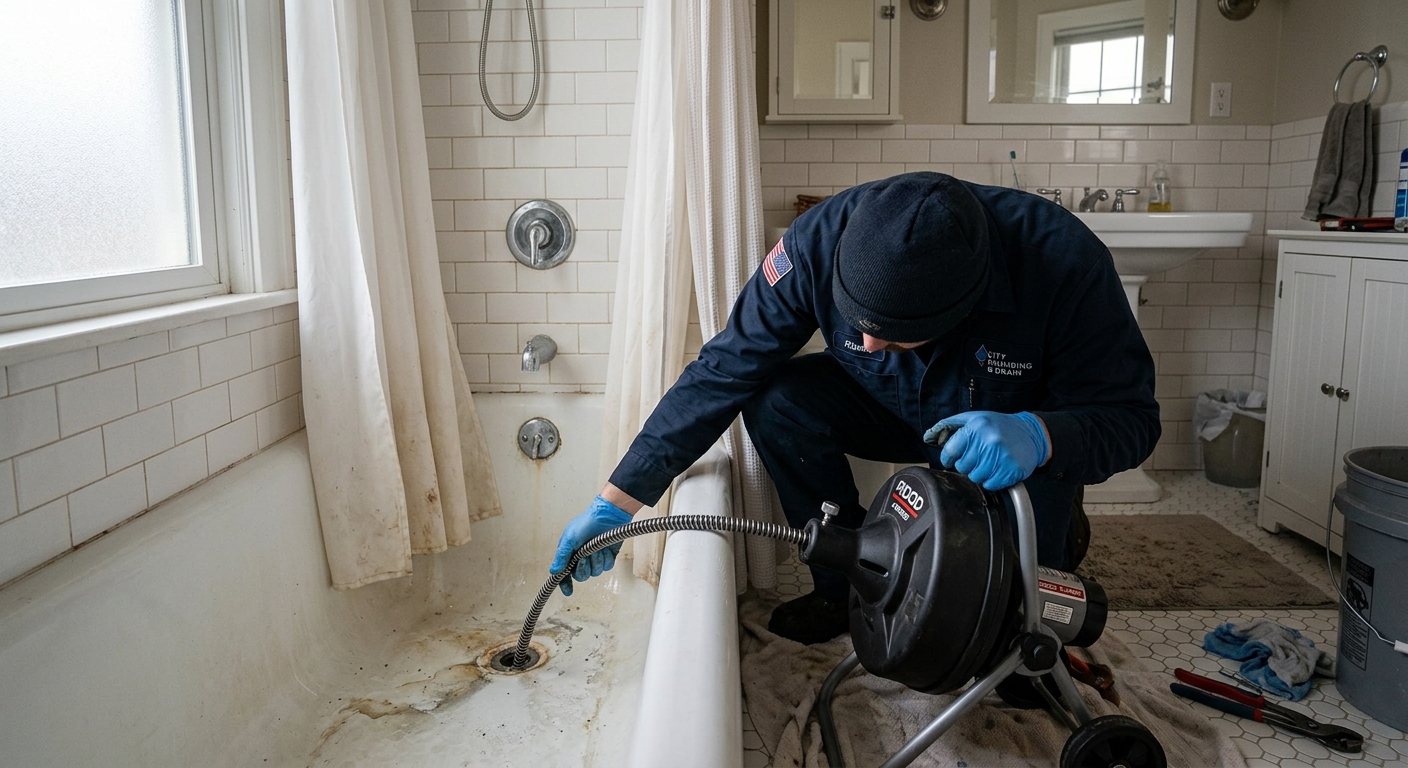
| Drain cleaning — main line |
augering or hydro-jet, camera if needed |
$350–$800 |
$200–$500 |
| Sewer line spot repair |
excavate or reline a failed section |
$2,100–$12,500 |
$2,100–$12,500 |
| Whole-house repipe |
replace supply lines throughout, patch and finish |
$3,700–$9,000 |
$3,700–$9,000 |
| Water service line replacement |
street to house, excavation and restoration |
$5,800–$12,500 |
$5,800–$12,500 |
Estimates for a typical Brighton home. Access difficulty and pipe material move these figures more than anything else.
Comparing plumbing estimates in Brighton
When you compare plumbing quotes in Brighton, understand the billing model first. Flat-rate pricing means you pay a firm total no matter how long the job takes, so the contractor carries the risk of a longer or messier job—but may price in that risk, so you pay extra for predictability. Time-and-materials can sometimes be cheaper, especially if there are no surprises, but costs can mount if complications arise. There’s nothing wrong with either model—trouble begins when you don’t know which is in play before work starts.
A good estimate spells out more than just the price. It lists whether there’s a diagnostic fee and if that fee is credited back if you go ahead with repairs. Scope is key: does the quote say exactly what’s being repaired, what gets opened, and what gets made whole, including wall and floor restoration? Is permit cost included, or left out? Brighton’s older homes on slabs may mean extra finish work—don’t let that get “silent.” A reputable plumber will list a warranty period on labor, not just parts, and after-hours surcharges will be clear before work begins.
| Line item |
What to look for |
Red flag if… |
| Billing model |
flat rate or hourly, stated up front |
unstated |
| Diagnostic fee |
$50–$120, and whether it credits |
vague |
| Scope |
what is opened, repaired and restored |
price with no scope |
| Restoration |
drywall and finish explicitly in or out |
silent |
| Permit |
included and priced |
'not needed' |
| Parts |
brand and model for fixtures |
'standard fixture' |
| Warranty |
labour period stated separately |
parts only |
Lead service lines in Brighton
Aliquippa, a short drive from Brighton, is running an active lead service line replacement program with a published inventory tracking over 1,000 lead laterals. If your water supply comes from Beaver Falls Municipal Authority (serving much of Beaver Falls, Economy, and nearby areas), you’ll want to know whether your service line—the pipe from the street main to your house—is lead, copper, or plastic. The catch is, the service line is split: the utility typically owns up to the curb stop or property line, while you own the lateral from there to your home. Replacement programs often only cover the utility's segment, leaving homeowners with the cost for the rest.
To check your pipe material, find where it enters your basement or crawlspace. Lead pipes are dull gray, easily scratched with a key, and non-magnetic. Test by lightly scratching the pipe (do not inhale or touch the dust), then check if a magnet sticks—copper and plastic won’t, and neither will lead. If in doubt, expect a professional plumber to confirm by inspection.
Removing just your side of the lead line, rather than replacing the entire stretch at once, can spike short-term lead levels by disturbing protective scale. This is a real concern, especially if young children or pregnant women live in the home. Always clarify with the utility—Aliquippa publishes its inventory, but if you live in Brighton or another municipality, call Beaver Falls Municipal Authority for specifics on replacement cost-sharing or assistance. Never assume your whole service line is being handled unless you see it in writing.
Private-side replacement costs for a Brighton home usually run $5,800–$12,500, while a whole-house repipe (including interior galvanized removal) ranges from $3,700–$9,000. Material, distance, and restoration drive the final number.
How to find a good plumber in Brighton
Pennsylvania does not license plumbers statewide; any licensing for plumbers in Brighton or broader Beaver County is handled municipally. That means a plumber licensed for Pittsburgh or Philadelphia may not hold credentials for Brighton or Aliquippa. The right approach is to confirm a company is both registered with a valid Home Improvement Contractor (HIC) number—checkable at hic.attorneygeneral.gov—and if applicable, has any required local registration. Always ask the company’s office to prove this before you sign off.
Request a certificate of general liability and workers’ compensation insurance that names your exact property address, not a generic form. Use WCAIS (wcais.pa.gov) to confirm current workers’ comp. Ask if the company runs its own crews or subs out to others—subs should be covered by the same insurance, in writing. Emergency dispatch pricing should be disclosed up front, and you should never feel rushed into approving after-hours work before seeing basic numbers.
- Valid HIC registration (verify at hic.attorneygeneral.gov)
- Local municipal license or registration, if required
- Certificate of insurance naming your property
- Current workers’ comp coverage (check WCAIS)
- Own crew vs. subcontractors—who is actually coming
- After-hours/emergency rate disclosed before dispatch
- Estimate with defined scope, not just a price
- Permits handled and included for service line/sewer jobs
- Parts and fixture brands named in contract
- Labour and parts warranty terms spelled out
- Restoration work (drywall, paint) included or specifically excluded
- Camera footage and, where possible, pressure test supplied before quoting major repipe/sewer work
Red flags in Brighton’s market include any company offering a quote for a whole-house repipe or sewer replacement without first providing camera footage or a line pressure test. In the moderate-density plumbing market of Beaver County, there’s no shortage of options, so be cautious of anyone who can’t document their findings.
The leak you can hear but can't see
If you think there’s a leak in your Brighton home, start with the water meter test—a step you can do for free. Shut off every faucet, appliance, and outdoor spigot, then watch the meter for several minutes. If the dial continues to move, there’s a leak on your supply lines. That’s useful information and will help you talk specifics with any plumber.
Professional leak detection uses several methods. Acoustic listening devices can pinpoint a pressurized pipe leak behind walls ($150–$400). Thermal imaging helps detect hot water leaks by highlighting temperature differences, often used for radiant or in-slab heating systems. Tracer gas (non-toxic, odorized) is pushed through the lines and detected with sensitive sniffers to find very small or deeply buried leaks. Slab leak location—common in postwar Brighton homes—costs more, usually $400–$900, but is less invasive than opening floors blindly. Other hard-to-find leaks in wall cavities or buried irrigation lines usually combine these tools for the best chance of accuracy.
No plumber in Beaver County should start cutting drywall or jackhammering a slab without localizing the leak first. You deserve a clear answer and some evidence of the problem before the job becomes a demolition project.
Licensing and permits for plumbing work in Brighton
In Pennsylvania, plumbing is not licensed at the state level—this is managed by each municipality. So in Brighton or anywhere else in Beaver County, you want to hire a plumber registered both as a Home Improvement Contractor with the Pennsylvania Office of Attorney General and, if required, by your specific township. Aliquippa and surrounding townships all run their own permitting offices; a plumber licensed in one may not hold recognition in another. Always ask if the company is licensed, insured, and permitted to work in your exact municipality—not just “in Pennsylvania.”
Permitting requirements also vary. In Aliquippa, you need a permit for any new or replacement water or sewer service line connection. In Beaver Falls, like-for-like replacement of existing interior fixtures is typically exempt from a permit, but any work that changes supply or drain piping likely requires local approval. Inspections are handled by the municipal code office—never by the plumber alone. For contractor insurance and workers' comp, use the official HIC number registry and WCAIS system to verify the company is current and covered for your project type at your address.
Finally, under the Home Improvement Consumer Protection Act, any contract over $500 must be in writing, with a three-day right of cancellation. This is standard consumer protection, not negotiable by any contractor.
Freeze risk and what to do about it
Brighton’s winter design temperature is 8 °F, with a ground frost depth of 36 inches. That’s cold enough that unprotected pipes are at real risk. Most bursts happen not where the pipe is frozen, but downstream between the ice plug and a closed valve—the pressure builds until something gives. Postwar slabs and split-level homes here are notorious for running supply lines along uninsulated exterior walls, crawlspaces, garages, and sometimes even through attics, all vulnerable in extended freezes. Hose bibs and irrigation lines are another weak point.
Preventing a freeze is much cheaper than repairing a burst, which in Brighton runs $375–$1,250 for emergency work. Spray-foam and fiberglass insulation on pipes in crawlspaces or exterior walls goes a long way; for highest risk runs, heat tape ($40–$150 installed per pipe) is effective if correctly applied. On the coldest nights, let a faucet trickle, especially in kitchens and baths along north walls—movement keeps water from freezing. Open cabinet doors below sinks against exterior walls to let warm air circulate. Before the first hard freeze, always shut off the supply to outdoor spigots and drain any remaining water.
If a pipe does freeze, use a hair dryer, heat gun, or a hot towel to thaw it—not a torch or open flame, which risks both fire and further damage. If you aren’t getting water from a faucet and find no evidence of a split, thaw slowly and call for professional help if needed.
Frequently asked questions — plumbing in Brighton
Should I reline or replace my sewer line?
Most Brighton homes have original clay or cast iron sewer laterals from the 1945–1970 era, which are prone to root intrusion, shifting, and collapse. Relining (CIPP) can be a smart fix if the existing pipe simply has cracks or minor offsets, and access is limited—no digging up mature landscaping or breaking floors. Full replacement makes more sense if the sewer has collapsed, has major sags (“bellies”), or multiple severe blockages. Relining often comes in between $2,100–$12,500, with price hinging on how far in the pipe the damage lies and how easy it is to reach. Always insist on a camera inspection before anyone offers you either option, and get video proof. In Brighton’s postwar slabs, if a plumber recommends replacement without footage, it’s a red flag.
How long should a water heater last in Brighton?
Most gas water heaters in Brighton, with water from Beaver Falls Municipal Authority, last 9 to 12 years—sometimes a bit longer if flushed yearly and installed on a new supply line (not old galvanized). Local water isn’t severe for sediment, but aging pipes can introduce rust, shortening the lifespan of your heater. A new 40–50 gallon gas unit runs $1,250–$3,000 including installation and haul-away. If yours is older than 10 years and showing signs of rust at the base, leaks, or runs out of hot water quickly, you are on borrowed time. Don’t wait for a mid-winter failure—replace proactively, and always get estimates in writing.
Why do plumbers charge a diagnostic fee?
In Brighton and all of Pennsylvania, a diagnostic fee (usually $50–$120) covers the time and tools required to locate the problem before recommending repairs. This isn’t just for a “look”—older plumbing often means pipes hidden in walls, under slabs, or behind finishes that take time to access and assess. Most reputable plumbers will credit this fee toward your final repair bill if you hire them, but make sure this is spelled out on the estimate up front. If a company offers free diagnostics, read the fine print—you may find higher prices built into the final bill. It’s reasonable to pay for expert analysis, and in this market, it keeps both parties honest.
What does repiping a house cost in Brighton?
A full repipe in a typical Brighton home—removing old galvanized or mixed-metal supply lines and replacing with copper or PEX—runs between $3,700–$9,000. Factors driving cost are access (slab vs. basement), the number of fixtures, and how much finish work is needed after pipes are swapped. Most postwar homes in this area are slab-on-grade, which can make pipe runs tricky. Never accept a quote for a full repipe without camera footage and a clear map. Repiping in stages (attic first, then slab) is sometimes possible, but it’s best to do the entire system once to avoid multiple disruptions and patch jobs.
Is a sewer line replacement covered by homeowner's insurance?
In Brighton, standard homeowner’s policies generally do not cover normal wear and tear or collapse of the sewer lateral between your house and the street—this pipe is considered your responsibility, unless a sudden event like a tree root causes rapid failure. There are policies with add-on endorsements for service line coverage, but these must be bought in advance. The cost of a spot sewer repair can be $2,100–$12,500, making coverage something to seriously consider, especially in older neighborhoods with original laterals. Always call your agent and read the fine print before work starts, as coverage varies by insurer.
How hard is the water in Brighton?
Brighton’s municipal water, provided to many neighborhoods by Beaver Falls Municipal Authority, is considered moderately hard. That means mineral scale will build up over time in fixtures, water heaters, and old galvanized pipes, but it’s not the worst in Pennsylvania. Softening is not mandatory, but if you see white or crusty buildup on faucets and showerheads, or if appliances aren’t lasting as long as expected, a softener can make a difference. Hardness alone doesn’t damage most copper or PEX systems, but it compounds problems in older galvanized plumbing, contributing to low flow and leaks. Water heater flushes, at $90–$200 per service, help extend appliance life here.
How do I prevent frozen pipes in Brighton?
With a winter design temperature of 8 °F and frequent freeze-thaw cycles, Brighton homes are at risk for burst pipes in crawlspaces, on exterior walls, and garages—especially postwar slab houses. Insulate exposed pipes with foam or fiberglass, use heat tape on high-risk runs, and keep cabinet doors open during cold snaps. Let a trickle run from the farthest faucet in your home during extended freezes—moving water is much harder to freeze. Make a habit of shutting off outdoor spigots and draining the line before the first hard freeze in late fall. The headache of an emergency repair—often $375–$1,250—isn’t worth it. For most, prevention costs less than one emergency call.
Does Pennsylvania license plumbers at the state level?
No. Pennsylvania has no statewide plumber license system. Instead, municipalities like Brighton Township or Aliquippa run their own licensing programs and permitting offices. For contracts over $500, a Home Improvement Contractor (HIC) registration is required, which you can check at hic.attorneygeneral.gov. Always ask your plumber if they are licensed in your specific township, as holding a license elsewhere (like Pittsburgh or Philadelphia) means nothing here. For insurance and workers’ comp, use the official WCAIS platform. Never accept “we’re licensed in PA” as a final answer—it isn’t true for this trade.
Should I wait until business hours to call?
If you have an active leak flooding the house or no water at all, call a professional immediately. Major failures don’t keep bank hours, and plumbing emergencies only get worse with time. In Brighton, urgent response is common, but you will pay emergency rates—repairing a burst pipe in the middle of the night can cost $650–$1,250, compared to a scheduled call during working hours at the lower end of the band. If the issue is stable—like a slow drip you can catch with a bucket—wait until business hours to avoid extra charges. Always ask for the emergency rate upfront before anyone rolls a truck.