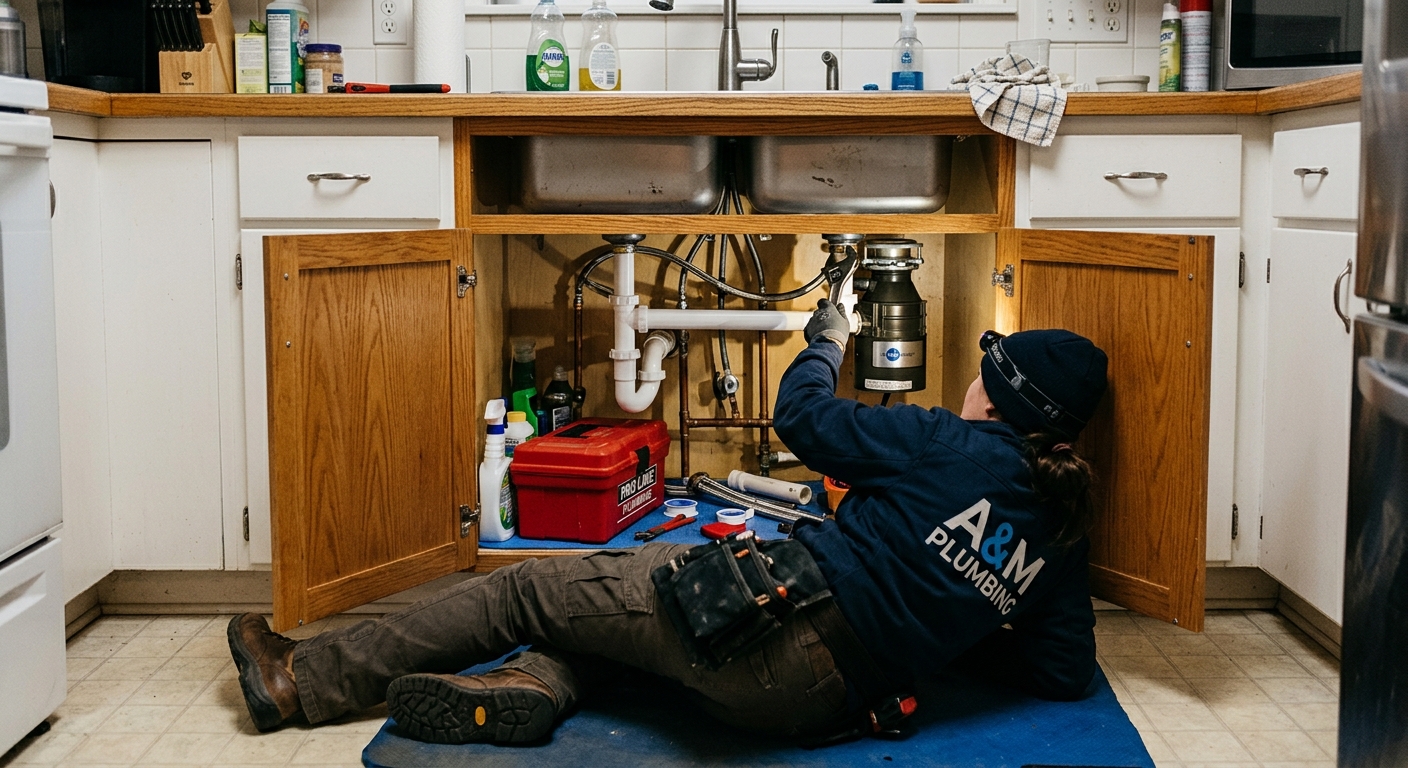
What plumbers charge in Allentown
Allentown’s plumbing rates reflect both its saturated contractor market and its aging housing stock. Most homes in Allentown were built before 1980 (U.S. Census Bureau, ACS 2024), and in South Whitehall and Upper Macungie suburban tracts, the dominant upgrades are copper-to-PEX repiping and fixture modernization. In practical terms, what your plumbing costs depends first on whether you call for help during an emergency or for a scheduled job. Emergency calls—think burst pipes or active leaks—cost more because you are paying for off-hours dispatch, overtime labor, and immediate diagnosis.
Common jobs like a water heater replacement or a minor leak repair have higher price tags at night or on weekends, sometimes by several hundred dollars. Plumbing in older homes often involves galvanized or copper piping, and working in tight, finished spaces is rarely fast. Service pricing in Allentown also swings depending on whether the job needs city permits or rests behind finished walls, since patching and restoration drive labor costs.
With a homeownership rate of 42.3% (U.S. Census Bureau, ACS 2024), many Allentown-area residents are finding themselves paying to fix supply lines or replace water heaters for the first time. Below is a transparent look at what these services cost here:
| Service |
Scope |
Emergency rate |
Standard rate |
| Emergency repair — burst pipe |
locate, open, repair section, restore service |
$600–$1,200 |
$350–$1,200 |
| Water heater replacement (gas, 40–50 gal) |
remove old, install, test, haul away |
$1,900–$2,800 |
$1,200–$2,800 |
| Drain cleaning — main line |
augering or hydro-jet, camera if needed |
$350–$800 |
$200–$500 |
| Sewer line spot repair |
excavate or reline a failed section |
$2,000–$12,000 |
$2,000–$12,000 |
| Whole-house repipe |
replace supply lines throughout, patch and finish |
$5,700–$8,400 |
$3,500–$8,400 |
| Water service line replacement |
street to house, excavation and restoration |
$7,000–$12,000 |
$5,400–$12,000 |
Estimates for a typical Allentown home. Access difficulty and pipe material move these figures more than anything else.
Who is allowed to do plumbing work in Pennsylvania
Pennsylvania does not have statewide plumbing licensing. Instead, each municipality decides who can work legally, so licensing is handled city by city. In Allentown and throughout Lehigh County, the City of Allentown Building Office controls plumbing trade licensing and issues permits, with enforcement under the Pennsylvania Uniform Construction Code (UCC). This means that a plumber may be fully licensed and legal in Allentown, but not authorized to pull permits or perform work in another township down the road. If you’re hiring for plumbing in Allentown, ask directly if the contractor is licensed with the City of Allentown—not just "licensed in Pennsylvania."
Permits are typically required for plumbing alterations or for water heater replacements. These must be inspected, usually by the municipal office or a third-party UCC agency. Very minor repairs—like swapping out a faucet or repairing a running toilet inside your dwelling—often do not require a permit within Lehigh County municipalities.
For jobs over $500, contractors need a Home Improvement Contractor (HIC) registration from the Pennsylvania Office of Attorney General. You can verify registration at hic.attorneygeneral.gov. Workers' compensation insurance is mandatory for all employers, and you should request a certificate naming you as an additional insured. You can check coverage through the WCAIS system at wcais.pa.gov. If your home was built before 1978 and work will disturb painted surfaces, make sure your contractor is certified under the federal EPA Lead RRP Rule by searching certifiedrenovatorsearch.epa.gov.
When to call now and when to wait until Monday
When you have a plumbing problem in Allentown, the first decision is whether to call for emergency service—which means you’ll pay emergency rates—or schedule for regular hours. Emergency pricing includes an after-hours dispatch fee, higher hourly labor due to overtime, a trip charge, and often a premium because urgent diagnosis moves quickly under pressure and may require digging into finished walls or floors. For example, fixing a burst pipe outside of business hours can run up to $1,200, compared to $350–$1,200 if scheduled.
Here’s how to triage:
- True emergencies—call now: active flooding (burst pipe pouring water), no water throughout the house, sewage backing up at any fixture, or a gas smell. These problems can damage your home quickly or put your health at risk.
- Can usually wait: a slow drip under a sink, a single slow drain, a toilet that runs constantly, or a small leak at a fixture that stops when the supply is turned off. These issues inconvenience, but they rarely worsen overnight if you take action.
If you can shut off water at the source, you turn many emergencies into next-business-day repairs. The main house shutoff is usually a round or lever handle where the supply pipe enters—the basement front wall in most Allentown homes. Turn the handle clockwise (right) to close. For fixture shutoffs, look under sinks or behind toilets for small valves; turn them right to stop flow. This is worth practicing once in daylight so you’re not scrambling in a crisis. Knowing your shutoff can save hundreds on a repair bill and prevent water damage while you wait for regular service.
Dating your plumbing by what it's made of
Your plumbing’s age and material can tell you what repairs to expect and roughly when. In Allentown, and especially post‑1950 suburban housing in South Whitehall and Upper Macungie, copper-to-PEX repiping is now routine; older homes may still run galvanized steel or even polybutylene. Pinpointing your supply lines is easy: galvanized pipes are dull gray, magnetic, and join with threads; copper is orange-brown and joined by solder or compression; polybutylene is flexible, gray or blue, and uses crimp fittings; PEX is flexible plastic, usually red, blue or white. For drain lines, cast iron is thick and black (won’t react to a magnet or scratch easily), clay tile looks reddish and is seen at exterior cleanouts, and PVC/ABS are bright white or black plastics with glued joints.
Each material has a window: galvanized steel loses pressure as it clogs internally, then leaks; copper generally lasts but sometimes develops pinhole leaks from water chemistry; polybutylene is highly failure-prone at its fittings and is considered uninsurable by many; PEX should bring decades of trouble-free service unless exposed to sunlight; cast iron corrodes or cracks past 50 years; and clay tile is susceptible to root penetration at its joints. Modern PVC and ABS drains, found in tract homes from the 1970s onward, have long life spans if not physically damaged.
| Material |
Typical era |
Failure mode |
Service life |
| Galvanized steel supply |
pre-1960 |
internal corrosion, pressure loss |
40–60 yrs |
| Copper supply |
1950s–present |
pinhole leaks, joint failure |
50–70 yrs |
| Polybutylene supply |
late 1970s–1995 |
fitting failure, sudden bursts |
unreliable |
| PEX supply |
2000s–present |
fitting or UV degradation |
40–50 yrs |
| Cast iron drain |
pre-1975 |
corrosion, cracking, scale |
50–75 yrs |
| Clay tile sewer lateral |
pre-1980 |
root intrusion at joints, offset |
50–60 yrs |
| PVC / ABS drain |
1970s–present |
joint separation, crushing |
50+ yrs |
If your pipes are at or beyond their expected service life, budgeting for replacement—especially supply lines—will save pain down the road. Most Allentown copper and cast iron systems are already showing age, so a proactive repipe or drain overhaul is common.
Sewer line problems in Allentown
In Allentown, the homeowner generally owns the sewer lateral all the way from the house to the city main, which often runs under the street. This means the repair cost is yours—not the city’s—if the pipe under your front lawn collapses or plugs up. Recognizing symptoms early can save you from a costly cleanout: if just one drain is slow, the blockage is usually local; if multiple fixtures are sluggish or you hear gurgling, the problem may be in the main soil line. Sewage backing up at the lowest drain (such as a basement shower) is a classic sign of a mainline blockage or a failed section of sewer lateral.
In Allentown, the city is fully sewered, but many outlying Lehigh County townships still use individual septic systems; if you’re on septic, plan for tank pumping every three to five years and a different repair process if the drainfield fails (not covered here).
The next step for city sewer problems is a camera inspection: a high-resolution video probe run from an accessible cleanout can confirm if you’re dealing with root intrusion, a collapsed clay tile joint, or a sag ("belly") holding waste water. Tree roots invading old clay tile are a constant here. Depending on findings, spot repairs might be possible—digging up and replacing only the failed section—or trenchless relining, which threads a new pipe inside the old. For most Allentown jobs, spot repair or relining costs between $2,000–$12,000, depending on scope and depth. Never accept a sewer excavation quote without reviewing the camera footage yourself; this protects you from unnecessary or oversized repairs.
Winter pipe failures in northeastern Pennsylvania
Allentown winters regularly see temperatures near the 4 °F winter design minimum, with a frost depth reaching 36 inches below grade. When water inside a pipe freezes, it expands, often forming a solid plug. The pipe actually bursts not where the ice forms, but somewhere downstream—usually between the plug and a closed fixture—because pressure builds as water has nowhere to go. This is why you’ll often find the rupture in a wall or basement, rather than at a drafty window or crawlspace where it was coldest.
The most vulnerable pipes in Lehigh County homes run through exterior walls, unconditioned crawlspaces, garages, and attics. Hose bibs and pipes on outside walls without insulation are leading failure points. Prevention steps—ranked cheapest to most costly—include insulating pipes with foam sleeves, using electric heat tape on the coldest spans, opening cabinet doors under sinks when the forecast drops below 10 °F, letting a trickle of water flow through exposed lines, and always shutting off and draining exterior spigots before Thanksgiving.
If you discover a frozen line, the safest thawing tools are a hair dryer, warm towels, or a portable heat gun—never use an open flame, which is a major fire risk. The aftermath of a burst pipe is rarely cheap: emergency repairs typically run $600–$1,200, often higher if there’s wall or ceiling restoration after flooding. A few dollars’ worth of insulation or a minute to shut off and drain can save you thousands in winter repair bills.
What a plumbing quote should contain
In Allentown and throughout Pennsylvania, you’ll see two main billing models from contractors: flat rate and time-and-materials. Flat rate means you know the cost upfront—the contractor carries the risk of surprises. Time-and-materials can be cheaper for a quick job, but it is open-ended and costs can spiral if unexpected problems come up behind your walls or floors. Neither is suspicious in itself. The only true alarm bell is not knowing which system you’ve agreed to before work starts.
Typical quotes from reputable Allentown plumbers should break down any diagnostic fee—and say if it applies to the job if you proceed—state exactly what will be opened and repaired, include or exclude wall/floor restoration, and state the warranty for labor (separate from manufacturer parts warranty). For jobs over $500, Pennsylvania’s Home Improvement Consumer Protection Act (HICPA) requires a written contract with a three-day right to cancel, and the permit line item should be clear. Emergency/after-hours rates should also be spelled out before work begins. Here’s what to check in your quote:
| Line item |
What to look for |
Red flag if… |
| Billing model |
flat rate or hourly, stated up front |
unstated |
| Diagnostic fee |
amount, and whether it credits |
vague |
| Scope |
what is opened, repaired and restored |
price with no scope |
| Restoration |
drywall and finish explicitly in or out |
silent |
| Permit |
included and priced |
'not needed' |
| Parts |
brand and model for fixtures |
'standard fixture' |
| Warranty |
labour period stated separately |
parts only |
Frequently asked questions — plumbing in Allentown
How deep do water lines need to be buried in Allentown?
In Allentown and the rest of Lehigh County, water service lines should be buried to a minimum of 36 inches to stay below the frost line—this is based on the local frost depth set for northeastern Pennsylvania, not just tradition or neighboring counties. Burying pipes shallower risks freezing during cold snaps that are not rare here. When replacing a water service line, your contractor will need to excavate accordingly and may have to dig through sidewalks or paved driveways. Typical trenching and replacement of a water service line in Allentown runs from $5,400–$12,000. Always confirm your plumber’s experience with local permit requirements and winterization during any major excavation.
Should I reline or replace my sewer line?
In Allentown, both options are common depending on what’s wrong with your sewer lateral. Relining—also called cured-in-place pipe (CIPP)—threads a new pipe inside the old one, which avoids digging up yards or driveways, and is a good option if the main pipe is still relatively straight and the damage is limited to cracks or root intrusion. Replacement (open cut) is needed if your pipe is collapsed, severely offset at joints, or lacks an adequate fall. Both methods cost about the same in this market: a typical spot repair, relined or replaced, runs $2,000–$12,000. The first step should always be a camera inspection and shared video; then you’ll know whether trenchless relining will actually fix your problem or if open-cut replacement is unavoidable.
Why do plumbers charge a diagnostic fee?
In Allentown’s busy plumbing market, diagnostic fees are standard because finding the real source of a problem—especially in older homes with layers of renovation—often takes time, skill, and specialized tools. The fee covers the visit, probing work, and sometimes camera or pressure testing. Many contractors credit this fee toward your final bill if you approve repairs; others use it to cover the cost of a truck roll and their time if you opt out. For a clogged main drain, for example, a plumber might charge $200–$500 during regular hours, which can include diagnostic time and basic cleaning. Always ask if the diagnostic fee rolls into the repair cost before giving a go-ahead.
What do I do about a burst pipe right now?
If a pipe bursts in your Allentown home, the first step—before calling anyone—is to shut off water at your main supply. The valve is usually where the pipe enters your basement (sometimes next to your water meter). Turn it clockwise to cut water to the whole house. Open faucets to drain residual pressure and reduce further flooding. If you can safely access the burst area, set up buckets or rags to minimize damage. Then call a licensed Allentown plumber for emergency help; repair costs typically run from $600–$1,200. If shutdown is impossible or water is near electrical panels, evacuate and call the utility or fire department for help.
Which utility supplies water to Allentown?
Most Allentown homes are served by the Lehigh County Authority, which provides water service under a concession with the City of Allentown. If you pay your bill through this entity and need your service shut off or restored for any plumbing work, it’s their office that coordinates with your plumber. When planning a water service line replacement—often necessary for older or lead-prone homes—expect a price between $5,400–$12,000, not including restoration of sidewalks or landscaping.
Is my water line lead?
Allentown’s Lehigh County Authority is conducting an ongoing lead service line inventory and replacement program, which means it’s possible, especially in pre-1980 homes, that you have a lead line. Lead lines are soft, dull gray (shine it up and see if you can scratch with a key), and often have bulbous bends near the water meter. If you’re unsure, your plumber or the utility can help inspect. Replacement, if needed, typically runs $5,400–$12,000. If your house is in a post-1950s development, copper or plastic are more likely, but testing is worthwhile for peace of mind.
Who owns the sewer lateral, me or the city?
In Allentown and across most of Lehigh County, the homeowner owns the sewer lateral from the home all the way to the city sewer main—even if that means the pipe runs under the sidewalk or street. If there’s a blockage, collapse, or tree root intrusion causing back-ups, repair is your responsibility, including any excavation or relining. Spot repairs on older clay or cast iron laterals here typically cost $2,000–$12,000, with full replacement even higher. Always request camera footage before approving major digging.
Do I need a permit for plumbing work in Allentown?
Yes, for most plumbing alterations or a water heater replacement inside Allentown city limits or elsewhere in Lehigh County, a permit is required under the Pennsylvania UCC. The City of Allentown Building Office handles trade licensing and permit enforcement. Very minor like-for-like fixture repairs—swapping a faucet, repairing a running toilet—can usually be done without city involvement if you perform the work inside your dwelling. But anything more substantial, or anything over $500 in contract value, triggers both a permit and a written contract requirement under Pennsylvania’s Home Improvement Consumer Protection Act. Inspections will be required before your project is complete, and permit fees are typically quoted as a line item in your plumber’s estimate. For example, water heater replacement jobs in Allentown range from $1,200–$2,800, and that quote should spell out the permit cost.
What does repiping a house cost in Allentown?
Repiping a whole house in Allentown, especially in the post‑1950 suburban tracts of South Whitehall and Upper Macungie, is common as old copper and galvanized pipes reach the end of their life. The cost for a complete repipe—including replacement of all supply lines, patching and refinishing affected walls, and code inspections—runs $3,500–$8,400 for a typical home. Access difficulty and the amount of finish work required are the biggest cost drivers. Many local plumbers now use PEX for speed and durability, but will offer copper if you prefer. Always insist on a clean scope of work and specify restoration details before signing a contract.